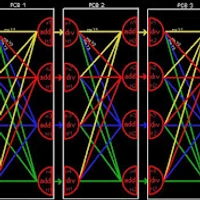
We're releasing Darwin-4B-David, the first second-generation model in the Darwin Opus family. By evolving an already-evolved model, it achieves 85.0% on GPQA Diamond — surpassing its 58.6% original ancestor and even gemma-4-31B (84.3%) — with just 4.5B parameters.
Second-Generation Evolution Most merges start from a base model and produce a single offspring. Darwin-4B-David breaks this pattern. The Father (Darwin-4B-Opus) was already evolved from gemma-4-E4B-it with Claude Opus reasoning distillation — a Gen-1 model. The Mother (DavidAU's DECKARD-Expresso-Universe) brings Unsloth deep tuning across 5 in-house datasets with thinking mode by default. Crossbreeding these two produced the first Gen-2 Darwin model.
Darwin V6's Model MRI scanned both parents across all 42 layers, assigning independent optimal ratios per layer. The Mother's creativity and Korean language hotspot (Layer 22-25, weight 0.95) was maximally absorbed, while the Father's reasoning core (Layer 30-40, weight 0.48) was preserved. This is "Merge = Evolve" applied recursively — evolution of evolution.
Benchmarks Darwin-4B-David scores 85.0% on GPQA Diamond (+26.4%p over original 58.6%), evaluated generatively with maj@8 (8 generations per question, majority vote), Epoch AI prompt format, thinking mode enabled, 50 sampled questions. On ARC-Challenge (25-shot, loglikelihood), both score 64.93% — expected, as loglikelihood doesn't capture thinking-mode reasoning differences.
Why This Matters gemma-4-31B (30.7B) scores 84.3%. Darwin-4B-David surpasses it at 1/7th the size — no training, no RL, just 45 minutes of MRI-guided DARE-TIES on one H100. The name "David" honors Mother creator DavidAU and evokes David vs. Goliath.
🧬 Darwin V6: Diagnostic-Guided Evolutionary Model Merging
We are releasing Darwin-31B-Opus — a reasoning-enhanced model merging Google's Gemma-4-31B-it and TeichAI's Claude Opus Distill using the Darwin V6 engine.
Conventional merging tools (mergekit, etc.) apply a single ratio to all tensors. Set ratio=0.5 and all 1,188 tensors blend identically, with no distinction between which tensors matter for reasoning versus coding.
Darwin V6 diagnoses both parents at the tensor level before merging. It measures Shannon entropy, standard deviation, and L2 norm for every tensor, then passes 5 diagnostic probes (REASONING, CODE, MATH, KNOWLEDGE, LANGUAGE) through the model to determine layer-wise functional importance. Each of the 1,188 tensors receives an independent optimal ratio.
combined = static(entropy/std/norm) x 0.4 + probe(cosine_distance) x 0.6 final_ratio = mri_ratio x mri_trust + genome_ratio x (1 - mri_trust)
When one parent is overwhelmingly superior for a tensor (ratio < 0.15 or > 0.85), Darwin transplants it directly without interpolation. The mri_trust parameter itself is optimized by CMA-ES evolutionary search, so optimal transplant intensity is determined automatically. After merging, a Health Check compares the child against both parents layer-by-layer to detect interference or function loss.