

johnlockejrr/LightOnOCR-2-1B-base-samaritan-GGUF
Image-Text-to-Text • 0.6B • Updated • 22
Error code:   ConfigNamesError
Exception:    TypeError
Message:      list_() takes at least 1 positional argument (0 given)
Traceback:    Traceback (most recent call last):
                File "/src/services/worker/src/worker/job_runners/dataset/config_names.py", line 66, in compute_config_names_response
                  config_names = get_dataset_config_names(
                                 ^^^^^^^^^^^^^^^^^^^^^^^^^
                File "/usr/local/lib/python3.12/site-packages/datasets/inspect.py", line 161, in get_dataset_config_names
                  dataset_module = dataset_module_factory(
                                   ^^^^^^^^^^^^^^^^^^^^^^^
                File "/usr/local/lib/python3.12/site-packages/datasets/load.py", line 1031, in dataset_module_factory
                  raise e1 from None
                File "/usr/local/lib/python3.12/site-packages/datasets/load.py", line 1004, in dataset_module_factory
                  ).get_module()
                    ^^^^^^^^^^^^
                File "/usr/local/lib/python3.12/site-packages/datasets/load.py", line 605, in get_module
                  dataset_infos = DatasetInfosDict.from_dataset_card_data(dataset_card_data)
                                  ^^^^^^^^^^^^^^^^^^^^^^^^^^^^^^^^^^^^^^^^^^^^^^^^^^^^^^^^^^
                File "/usr/local/lib/python3.12/site-packages/datasets/info.py", line 386, in from_dataset_card_data
                  dataset_info = DatasetInfo._from_yaml_dict(dataset_card_data["dataset_info"])
                                 ^^^^^^^^^^^^^^^^^^^^^^^^^^^^^^^^^^^^^^^^^^^^^^^^^^^^^^^^^^^^^^
                File "/usr/local/lib/python3.12/site-packages/datasets/info.py", line 317, in _from_yaml_dict
                  yaml_data["features"] = Features._from_yaml_list(yaml_data["features"])
                                          ^^^^^^^^^^^^^^^^^^^^^^^^^^^^^^^^^^^^^^^^^^^^^^^
                File "/usr/local/lib/python3.12/site-packages/datasets/features/features.py", line 2031, in _from_yaml_list
                  return cls.from_dict(from_yaml_inner(yaml_data))
                                       ^^^^^^^^^^^^^^^^^^^^^^^^^^
                File "/usr/local/lib/python3.12/site-packages/datasets/features/features.py", line 2027, in from_yaml_inner
                  return {name: from_yaml_inner(_feature) for name, _feature in zip(names, obj)}
                                ^^^^^^^^^^^^^^^^^^^^^^^^^
                File "/usr/local/lib/python3.12/site-packages/datasets/features/features.py", line 2016, in from_yaml_inner
                  Value(obj["dtype"])
                File "<string>", line 5, in __init__
                File "/usr/local/lib/python3.12/site-packages/datasets/features/features.py", line 540, in __post_init__
                  self.pa_type = string_to_arrow(self.dtype)
                                 ^^^^^^^^^^^^^^^^^^^^^^^^^^^
                File "/usr/local/lib/python3.12/site-packages/datasets/features/features.py", line 150, in string_to_arrow
                  return pa.__dict__[datasets_dtype + "_"]()
                         ^^^^^^^^^^^^^^^^^^^^^^^^^^^^^^^^^^^
                File "pyarrow/types.pxi", line 4942, in pyarrow.lib.list_
              TypeError: list_() takes at least 1 positional argument (0 given)
Need help to make the dataset viewer work? Make sure to review how to configure the dataset viewer, and open a discussion for direct support.
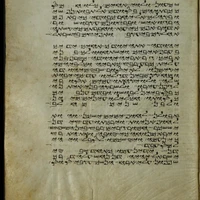
The Samaritan Hebrew OCR Dataset is a specialized dataset for fine-tuning OCR models on Samaritan Hebrew manuscripts. This dataset contains 46,860 annotated samples extracted from 1,374 manuscript pages, converted from PAGE-XML format to the LightOnOCR-2 training format.
The dataset includes three types of samples:
This mixed-content approach provides diverse training examples at different granularities, similar to datasets like IAM, enabling robust OCR model training.
Each sample in the dataset contains the following fields:
images (List[Image]): A list containing a single PIL Image object representing the cropped image region (line, paragraph, or full page)texts (List[Dict]): A list containing a conversation-style dictionary with:user: Prompt/question (typically empty or ignored during training)assistant: The ground truth transcription text (Unicode-normalized Hebrew text)source (string): Source file identifier (XML filename)type (string): Sample type indicator ("line", "paragraph", or "page")The dataset is split into three subsets:
| Split | Samples | Percentage | Description |
|---|---|---|---|
| Train | 39,831 | 85.0% | Training data for model fine-tuning |
| Validation | 4,686 | 10.0% | Validation data for hyperparameter tuning and early stopping |
| Test | 2,343 | 5.0% | Test data for final model evaluation |
Total Samples: 46,860
This dataset was created from Samaritan Hebrew manuscripts that were originally transcribed in Samaritan script but have been transliterated to Hebrew characters. The manuscripts span various historical periods and contain diverse textual content.
The dataset underwent the following preprocessing steps:
This dataset was created to enable fine-tuning of OCR models specifically for Samaritan Hebrew manuscripts. The mixed-content approach (lines, paragraphs, and full pages) provides diverse training examples that help models learn to handle:
The source data consists of aligned manuscript images with PAGE-XML annotations. The original manuscripts are historical Samaritan Hebrew texts that have been digitized and manually annotated.
Annotations were provided in PAGE-XML format with:
This dataset contains historical manuscript transcriptions. No modern personal information is included.
This dataset is intended for:
This dataset may not be suitable for:
This dataset supports:
from datasets import load_dataset

# Load the dataset
dataset = load_dataset("your-username/samaritan_hebrew_dataset")

# Access splits
train_dataset = dataset["train"]
val_dataset = dataset["validation"]
test_dataset = dataset["test"]

# Example: Access a sample
sample = train_dataset[0]
image = sample["images"][0]  # PIL Image
transcription = sample["texts"][0]["assistant"]  # Ground truth text
sample_type = sample["type"]  # "line", "paragraph", or "page"
This dataset is designed to work with the LightOnOCR-2 fine-tuning scripts:
from datasets import load_dataset
from transformers import LightOnOcrProcessor, LightOnOcrForConditionalGeneration

# Load dataset
dataset = load_dataset("your-username/samaritan_hebrew_dataset")

# Load processor and model
processor = LightOnOcrProcessor.from_pretrained("lightonai/LightOnOCR-2-1B-base")
model = LightOnOcrForConditionalGeneration.from_pretrained("lightonai/LightOnOCR-2-1B-base")

# Process samples (example)
sample = dataset["train"][0]
image = sample["images"][0]
text = sample["texts"][0]["assistant"]

# Prepare for training
inputs = processor(images=image, text=text, return_tensors="pt")
You can filter samples by type if needed:
# Filter only line-level samples
line_samples = dataset["train"].filter(lambda x: x["type"] == "line")

# Filter only paragraph samples
paragraph_samples = dataset["train"].filter(lambda x: x["type"] == "paragraph")

# Filter only full-page samples
page_samples = dataset["train"].filter(lambda x: x["type"] == "page")
.arrow files)datasets libraryThe dataset was created using the convert_pagexml_to_lightonocr.py script, which:
For more information on dataset creation, see the project repository.
If you use this dataset in your research, please cite:
@dataset{samaritan_hebrew_LightOnOcr,
  title={Samaritan Hebrew OCR Dataset},
  author={John Locke},
  year={2026},
  publisher={Hugging Face},
  url={https://huggingface.co/datasets/samaritan-ai/samaritan_hebrew_LightOnOcr}
}
[Please specify the license for your dataset. Common options include:]
Note: Please ensure you have the right to distribute the source manuscript images and transcriptions under your chosen license.
For questions, issues, or contributions, please:
Task: Optical Character Recognition (OCR)
Language: Hebrew (transliterated from Samaritan script)
Multimodal: Yes (Image + Text)
Size: 46,860 samples
Splits: Train (85%), Validation (10%), Test (5%)
Format: HuggingFace datasets (Arrow format)