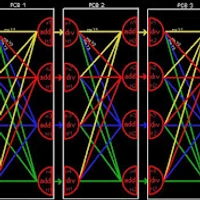
We present a methodology for training small language models on CPU at FP32 precision that achieves capability-per-dollar efficiency orders of magnitude beyond GPU-based training. Across15modelsspanningfournovelarchitecturefamilies—MixtureofAttentions(MoA),cross- architecture fusion (Qemma), swarm intelligence (SAGI), and metric-space causal language models (DiscoverLM)—total compute cost was $24 on a single AMD EPYC 9454P proces- sor. We introduce seven methodological pillars: (1) FP32 precision preservation, with exper- iments demonstrating 5,810×single-operation error and 23,225×compounding error ratio for FP16 at network depth; (2) sparse cognitive architectures where 0.02–7% of parameters activate per token, matching CPU branching rather than GPU SIMD; (3) developmental curriculum training progressing from language to logic to transfer to depth; (4) continuous belt-fed data ingestion eliminating truncation waste; (5) hardware-native optimization for AMD Zen 4 via AOCL/OpenMP/NUMA-aware allocation; (6) self-regulating thermodynamic governance with emergent temperature measurement grounded in L2-star discrepancy; and (7) open-standard compute (AVX2 SIMD at FP32) free of proprietary vendor dependency. We argue that transformers were designed for GPU hardware rather than mathematical optimality, and that architecture designed for geometric correctness—metric-space attention, triangle inequality enforcement, sparse expert routing—naturally favor CPU execution. For sub-2B parameter models, CPU training produces more capable models at a fraction of the cost.
Today we’re publicly releasing Kanon 2 Enricher, and with it, an entirely new class of AI model that we’re calling a hierarchical graphitization model. This is fundamentally different from both universal extraction models and generative models.
As a hierarchical graphitization model, Kanon 2 Enricher natively outputs a 𝗸𝗻𝗼𝘄𝗹𝗲𝗱𝗴𝗲 𝗴𝗿𝗮𝗽𝗵 rather than tokens, which makes it architecturally incapable of hallucinating or inventing text that wasn’t present in the input.
What that enables in practice is unlike any other model or ML architecture on the market:
• 𝗡𝗼 𝗵𝗮𝗹𝗹𝘂𝗰𝗶𝗻𝗮𝘁𝗶𝗼𝗻𝘀 🤖 It cannot hallucinate. All references and links are stored as spans, meaning exact character offsets anchored to the original text.
• 𝗛𝗶𝗲𝗿𝗮𝗿𝗰𝗵𝗶𝗰𝗮𝗹 𝘀𝗲𝗴𝗺𝗲𝗻𝘁𝗮𝘁𝗶𝗼𝗻, 𝗻𝗼𝘁 𝗷𝘂𝘀𝘁 𝗲𝘅𝘁𝗿𝗮𝗰𝘁𝗶𝗼𝗻 📑 It deconstructs a document’s full nested hierarchy, down to chapters, sections, clauses, schedules, signatures, and even singular sentences, and classifies each span with dozens of contextual features.
• 𝗘𝗻𝘁𝗶𝘁𝘆 𝗲𝘅𝘁𝗿𝗮𝗰𝘁𝗶𝗼𝗻, 𝗱𝗶𝘀𝗮𝗺𝗯𝗶𝗴𝘂𝗮𝘁𝗶𝗼𝗻, 𝗮𝗻𝗱 𝗹𝗶𝗻𝗸𝗶𝗻𝗴 🔗 It resolves what references actually point to, then links entities, citations, and cross-references into a single coherent graph.
• 𝗚𝗿𝗮𝗽𝗵-𝗳𝗶𝗿𝘀𝘁 𝗲𝗳𝗳𝗶𝗰𝗶𝗲𝗻𝗰𝘆 🏃➡️ Small enough to run locally on a consumer PC with sub-second latency, and it stays reliable on long documents where front
Finally NVFP4 models has arrived to ComfyUI thus SwarmUI with CUDA 13. NVFP4 models are literally 100%+ faster with minimal impact on quality. I have done grid quality comparison to show you the difference on FLUX 2, Z Image Turbo and FLUX 1 of NVFP4 versions. To make CUDA 13 work, I have compiled Flash Attention, Sage Attention & xFormers for both Windows and Linux with all of the CUDA archs to support literally all GPUs starting from GTX 1650 series, RTX 2000, 3000, 4000, 5000 series and more.
In this full tutorial, I will show you how to upgrade your ComfyUI and thus SwarmUI to use latest CUDA 13 with latest libraries and Torch 2.9.1. Moreover, our compiled libraries such as Sage Attention works with all models on all GPUs without generating black images or videos such as Qwen Image or Wan 2.2 models. Hopefully LTX 2 presets and tutorial coming soon too. Finally, I introduce a new private cloud GPU platform called as SimplePod like RunPod. This platform has all the features of RunPod same way but much faster and cheaper.