new

Get trending papers in your email inbox!

Subscribe

Daily Papers

byAK and the research community

Apr 16

GS-ProCams: Gaussian Splatting-based Projector-Camera Systems

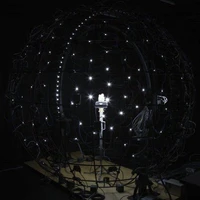
We present GS-ProCams, the first Gaussian Splatting-based framework for projector-camera systems (ProCams). GS-ProCams is not only view-agnostic but also significantly enhances the efficiency of projection mapping (PM) that requires establishing geometric and radiometric mappings between the projector and the camera. Previous CNN-based ProCams are constrained to a specific viewpoint, limiting their applicability to novel perspectives. In contrast, NeRF-based ProCams support view-agnostic projection mapping, however, they require an additional co-located light source and demand significant computational and memory resources. To address this issue, we propose GS-ProCams that employs 2D Gaussian for scene representations, and enables efficient view-agnostic ProCams applications. In particular, we explicitly model the complex geometric and photometric mappings of ProCams using projector responses, the projection surface's geometry and materials represented by Gaussians, and the global illumination component. Then, we employ differentiable physically-based rendering to jointly estimate them from captured multi-view projections. Compared to state-of-the-art NeRF-based methods, our GS-ProCams eliminates the need for additional devices, achieving superior ProCams simulation quality. It also uses only 1/10 of the GPU memory for training and is 900 times faster in inference speed. Please refer to our project page for the code and dataset: https://realqingyue.github.io/GS-ProCams/.

  • 4 authors
·
Dec 16, 2024

Splat the Net: Radiance Fields with Splattable Neural Primitives

Radiance fields have emerged as a predominant representation for modeling 3D scene appearance. Neural formulations such as Neural Radiance Fields provide high expressivity but require costly ray marching for rendering, whereas primitive-based methods such as 3D Gaussian Splatting offer real-time efficiency through splatting, yet at the expense of representational power. Inspired by advances in both these directions, we introduce splattable neural primitives, a new volumetric representation that reconciles the expressivity of neural models with the efficiency of primitive-based splatting. Each primitive encodes a bounded neural density field parameterized by a shallow neural network. Our formulation admits an exact analytical solution for line integrals, enabling efficient computation of perspectively accurate splatting kernels. As a result, our representation supports integration along view rays without the need for costly ray marching. The primitives flexibly adapt to scene geometry and, being larger than prior analytic primitives, reduce the number required per scene. On novel-view synthesis benchmarks, our approach matches the quality and speed of 3D Gaussian Splatting while using 10times fewer primitives and 6times fewer parameters. These advantages arise directly from the representation itself, without reliance on complex control or adaptation frameworks. The project page is https://vcai.mpi-inf.mpg.de/projects/SplatNet/.

  • 6 authors
·
Oct 9, 2025

Approximately Piecewise E(3) Equivariant Point Networks

Integrating a notion of symmetry into point cloud neural networks is a provably effective way to improve their generalization capability. Of particular interest are E(3) equivariant point cloud networks where Euclidean transformations applied to the inputs are preserved in the outputs. Recent efforts aim to extend networks that are E(3) equivariant, to accommodate inputs made of multiple parts, each of which exhibits local E(3) symmetry. In practical settings, however, the partitioning into individually transforming regions is unknown a priori. Errors in the partition prediction would unavoidably map to errors in respecting the true input symmetry. Past works have proposed different ways to predict the partition, which may exhibit uncontrolled errors in their ability to maintain equivariance to the actual partition. To this end, we introduce APEN: a general framework for constructing approximate piecewise-E(3) equivariant point networks. Our primary insight is that functions that are equivariant with respect to a finer partition will also maintain equivariance in relation to the true partition. Leveraging this observation, we propose a design where the equivariance approximation error at each layers can be bounded solely in terms of (i) uncertainty quantification of the partition prediction, and (ii) bounds on the probability of failing to suggest a proper subpartition of the ground truth one. We demonstrate the effectiveness of APEN using two data types exemplifying part-based symmetry: (i) real-world scans of room scenes containing multiple furniture-type objects; and, (ii) human motions, characterized by articulated parts exhibiting rigid movement. Our empirical results demonstrate the advantage of integrating piecewise E(3) symmetry into network design, showing a distinct improvement in generalization compared to prior works for both classification and segmentation tasks.

  • 4 authors
·
Feb 13, 2024

Spatial Pyramid Pooling in Deep Convolutional Networks for Visual Recognition

Existing deep convolutional neural networks (CNNs) require a fixed-size (e.g., 224x224) input image. This requirement is "artificial" and may reduce the recognition accuracy for the images or sub-images of an arbitrary size/scale. In this work, we equip the networks with another pooling strategy, "spatial pyramid pooling", to eliminate the above requirement. The new network structure, called SPP-net, can generate a fixed-length representation regardless of image size/scale. Pyramid pooling is also robust to object deformations. With these advantages, SPP-net should in general improve all CNN-based image classification methods. On the ImageNet 2012 dataset, we demonstrate that SPP-net boosts the accuracy of a variety of CNN architectures despite their different designs. On the Pascal VOC 2007 and Caltech101 datasets, SPP-net achieves state-of-the-art classification results using a single full-image representation and no fine-tuning. The power of SPP-net is also significant in object detection. Using SPP-net, we compute the feature maps from the entire image only once, and then pool features in arbitrary regions (sub-images) to generate fixed-length representations for training the detectors. This method avoids repeatedly computing the convolutional features. In processing test images, our method is 24-102x faster than the R-CNN method, while achieving better or comparable accuracy on Pascal VOC 2007. In ImageNet Large Scale Visual Recognition Challenge (ILSVRC) 2014, our methods rank #2 in object detection and #3 in image classification among all 38 teams. This manuscript also introduces the improvement made for this competition.

  • 4 authors
·
Jun 18, 2014

360-GS: Layout-guided Panoramic Gaussian Splatting For Indoor Roaming

3D Gaussian Splatting (3D-GS) has recently attracted great attention with real-time and photo-realistic renderings. This technique typically takes perspective images as input and optimizes a set of 3D elliptical Gaussians by splatting them onto the image planes, resulting in 2D Gaussians. However, applying 3D-GS to panoramic inputs presents challenges in effectively modeling the projection onto the spherical surface of {360^circ} images using 2D Gaussians. In practical applications, input panoramas are often sparse, leading to unreliable initialization of 3D Gaussians and subsequent degradation of 3D-GS quality. In addition, due to the under-constrained geometry of texture-less planes (e.g., walls and floors), 3D-GS struggles to model these flat regions with elliptical Gaussians, resulting in significant floaters in novel views. To address these issues, we propose 360-GS, a novel 360^{circ} Gaussian splatting for a limited set of panoramic inputs. Instead of splatting 3D Gaussians directly onto the spherical surface, 360-GS projects them onto the tangent plane of the unit sphere and then maps them to the spherical projections. This adaptation enables the representation of the projection using Gaussians. We guide the optimization of 360-GS by exploiting layout priors within panoramas, which are simple to obtain and contain strong structural information about the indoor scene. Our experimental results demonstrate that 360-GS allows panoramic rendering and outperforms state-of-the-art methods with fewer artifacts in novel view synthesis, thus providing immersive roaming in indoor scenarios.

  • 6 authors
·
Feb 1, 2024

GSDF: 3DGS Meets SDF for Improved Rendering and Reconstruction

Presenting a 3D scene from multiview images remains a core and long-standing challenge in computer vision and computer graphics. Two main requirements lie in rendering and reconstruction. Notably, SOTA rendering quality is usually achieved with neural volumetric rendering techniques, which rely on aggregated point/primitive-wise color and neglect the underlying scene geometry. Learning of neural implicit surfaces is sparked from the success of neural rendering. Current works either constrain the distribution of density fields or the shape of primitives, resulting in degraded rendering quality and flaws on the learned scene surfaces. The efficacy of such methods is limited by the inherent constraints of the chosen neural representation, which struggles to capture fine surface details, especially for larger, more intricate scenes. To address these issues, we introduce GSDF, a novel dual-branch architecture that combines the benefits of a flexible and efficient 3D Gaussian Splatting (3DGS) representation with neural Signed Distance Fields (SDF). The core idea is to leverage and enhance the strengths of each branch while alleviating their limitation through mutual guidance and joint supervision. We show on diverse scenes that our design unlocks the potential for more accurate and detailed surface reconstructions, and at the meantime benefits 3DGS rendering with structures that are more aligned with the underlying geometry.

  • 6 authors
·
Mar 25, 2024

SphereDiff: Tuning-free Omnidirectional Panoramic Image and Video Generation via Spherical Latent Representation

The increasing demand for AR/VR applications has highlighted the need for high-quality 360-degree panoramic content. However, generating high-quality 360-degree panoramic images and videos remains a challenging task due to the severe distortions introduced by equirectangular projection (ERP). Existing approaches either fine-tune pretrained diffusion models on limited ERP datasets or attempt tuning-free methods that still rely on ERP latent representations, leading to discontinuities near the poles. In this paper, we introduce SphereDiff, a novel approach for seamless 360-degree panoramic image and video generation using state-of-the-art diffusion models without additional tuning. We define a spherical latent representation that ensures uniform distribution across all perspectives, mitigating the distortions inherent in ERP. We extend MultiDiffusion to spherical latent space and propose a spherical latent sampling method to enable direct use of pretrained diffusion models. Moreover, we introduce distortion-aware weighted averaging to further improve the generation quality in the projection process. Our method outperforms existing approaches in generating 360-degree panoramic content while maintaining high fidelity, making it a robust solution for immersive AR/VR applications. The code is available here. https://github.com/pmh9960/SphereDiff

kaist-ai KAIST AI
·
Apr 19, 2025 2

VIST3A: Text-to-3D by Stitching a Multi-view Reconstruction Network to a Video Generator

The rapid progress of large, pretrained models for both visual content generation and 3D reconstruction opens up new possibilities for text-to-3D generation. Intuitively, one could obtain a formidable 3D scene generator if one were able to combine the power of a modern latent text-to-video model as "generator" with the geometric abilities of a recent (feedforward) 3D reconstruction system as "decoder". We introduce VIST3A, a general framework that does just that, addressing two main challenges. First, the two components must be joined in a way that preserves the rich knowledge encoded in their weights. We revisit model stitching, i.e., we identify the layer in the 3D decoder that best matches the latent representation produced by the text-to-video generator and stitch the two parts together. That operation requires only a small dataset and no labels. Second, the text-to-video generator must be aligned with the stitched 3D decoder, to ensure that the generated latents are decodable into consistent, perceptually convincing 3D scene geometry. To that end, we adapt direct reward finetuning, a popular technique for human preference alignment. We evaluate the proposed VIST3A approach with different video generators and 3D reconstruction models. All tested pairings markedly improve over prior text-to-3D models that output Gaussian splats. Moreover, by choosing a suitable 3D base model, VIST3A also enables high-quality text-to-pointmap generation.

  • 6 authors
·
Oct 15, 2025 2

From One to More: Contextual Part Latents for 3D Generation

Recent advances in 3D generation have transitioned from multi-view 2D rendering approaches to 3D-native latent diffusion frameworks that exploit geometric priors in ground truth data. Despite progress, three key limitations persist: (1) Single-latent representations fail to capture complex multi-part geometries, causing detail degradation; (2) Holistic latent coding neglects part independence and interrelationships critical for compositional design; (3) Global conditioning mechanisms lack fine-grained controllability. Inspired by human 3D design workflows, we propose CoPart - a part-aware diffusion framework that decomposes 3D objects into contextual part latents for coherent multi-part generation. This paradigm offers three advantages: i) Reduces encoding complexity through part decomposition; ii) Enables explicit part relationship modeling; iii) Supports part-level conditioning. We further develop a mutual guidance strategy to fine-tune pre-trained diffusion models for joint part latent denoising, ensuring both geometric coherence and foundation model priors. To enable large-scale training, we construct Partverse - a novel 3D part dataset derived from Objaverse through automated mesh segmentation and human-verified annotations. Extensive experiments demonstrate CoPart's superior capabilities in part-level editing, articulated object generation, and scene composition with unprecedented controllability.

  • 13 authors
·
Jul 11, 2025 3

MatSpray: Fusing 2D Material World Knowledge on 3D Geometry

Manual modeling of material parameters and 3D geometry is a time consuming yet essential task in the gaming and film industries. While recent advances in 3D reconstruction have enabled accurate approximations of scene geometry and appearance, these methods often fall short in relighting scenarios due to the lack of precise, spatially varying material parameters. At the same time, diffusion models operating on 2D images have shown strong performance in predicting physically based rendering (PBR) properties such as albedo, roughness, and metallicity. However, transferring these 2D material maps onto reconstructed 3D geometry remains a significant challenge. We propose a framework for fusing 2D material data into 3D geometry using a combination of novel learning-based and projection-based approaches. We begin by reconstructing scene geometry via Gaussian Splatting. From the input images, a diffusion model generates 2D maps for albedo, roughness, and metallic parameters. Any existing diffusion model that can convert images or videos to PBR materials can be applied. The predictions are further integrated into the 3D representation either by optimizing an image-based loss or by directly projecting the material parameters onto the Gaussians using Gaussian ray tracing. To enhance fine-scale accuracy and multi-view consistency, we further introduce a light-weight neural refinement step (Neural Merger), which takes ray-traced material features as input and produces detailed adjustments. Our results demonstrate that the proposed methods outperform existing techniques in both quantitative metrics and perceived visual realism. This enables more accurate, relightable, and photorealistic renderings from reconstructed scenes, significantly improving the realism and efficiency of asset creation workflows in content production pipelines.

CGTuebingen CG Tübingen
·
Dec 20, 2025 2

DSVT: Dynamic Sparse Voxel Transformer with Rotated Sets

Designing an efficient yet deployment-friendly 3D backbone to handle sparse point clouds is a fundamental problem in 3D perception. Compared with the customized sparse convolution, the attention mechanism in Transformers is more appropriate for flexibly modeling long-range relationships and is easier to be deployed in real-world applications. However, due to the sparse characteristics of point clouds, it is non-trivial to apply a standard transformer on sparse points. In this paper, we present Dynamic Sparse Voxel Transformer (DSVT), a single-stride window-based voxel Transformer backbone for outdoor 3D perception. In order to efficiently process sparse points in parallel, we propose Dynamic Sparse Window Attention, which partitions a series of local regions in each window according to its sparsity and then computes the features of all regions in a fully parallel manner. To allow the cross-set connection, we design a rotated set partitioning strategy that alternates between two partitioning configurations in consecutive self-attention layers. To support effective downsampling and better encode geometric information, we also propose an attention-style 3D pooling module on sparse points, which is powerful and deployment-friendly without utilizing any customized CUDA operations. Our model achieves state-of-the-art performance with a broad range of 3D perception tasks. More importantly, DSVT can be easily deployed by TensorRT with real-time inference speed (27Hz). Code will be available at https://github.com/Haiyang-W/DSVT.

  • 8 authors
·
Jan 15, 2023

3D Convex Splatting: Radiance Field Rendering with 3D Smooth Convexes

Recent advances in radiance field reconstruction, such as 3D Gaussian Splatting (3DGS), have achieved high-quality novel view synthesis and fast rendering by representing scenes with compositions of Gaussian primitives. However, 3D Gaussians present several limitations for scene reconstruction. Accurately capturing hard edges is challenging without significantly increasing the number of Gaussians, creating a large memory footprint. Moreover, they struggle to represent flat surfaces, as they are diffused in space. Without hand-crafted regularizers, they tend to disperse irregularly around the actual surface. To circumvent these issues, we introduce a novel method, named 3D Convex Splatting (3DCS), which leverages 3D smooth convexes as primitives for modeling geometrically-meaningful radiance fields from multi-view images. Smooth convex shapes offer greater flexibility than Gaussians, allowing for a better representation of 3D scenes with hard edges and dense volumes using fewer primitives. Powered by our efficient CUDA-based rasterizer, 3DCS achieves superior performance over 3DGS on benchmarks such as Mip-NeRF360, Tanks and Temples, and Deep Blending. Specifically, our method attains an improvement of up to 0.81 in PSNR and 0.026 in LPIPS compared to 3DGS while maintaining high rendering speeds and reducing the number of required primitives. Our results highlight the potential of 3D Convex Splatting to become the new standard for high-quality scene reconstruction and novel view synthesis. Project page: convexsplatting.github.io.

  • 9 authors
·
Nov 22, 2024 5

FullPart: Generating each 3D Part at Full Resolution

Part-based 3D generation holds great potential for various applications. Previous part generators that represent parts using implicit vector-set tokens often suffer from insufficient geometric details. Another line of work adopts an explicit voxel representation but shares a global voxel grid among all parts; this often causes small parts to occupy too few voxels, leading to degraded quality. In this paper, we propose FullPart, a novel framework that combines both implicit and explicit paradigms. It first derives the bounding box layout through an implicit box vector-set diffusion process, a task that implicit diffusion handles effectively since box tokens contain little geometric detail. Then, it generates detailed parts, each within its own fixed full-resolution voxel grid. Instead of sharing a global low-resolution space, each part in our method - even small ones - is generated at full resolution, enabling the synthesis of intricate details. We further introduce a center-point encoding strategy to address the misalignment issue when exchanging information between parts of different actual sizes, thereby maintaining global coherence. Moreover, to tackle the scarcity of reliable part data, we present PartVerse-XL, the largest human-annotated 3D part dataset to date with 40K objects and 320K parts. Extensive experiments demonstrate that FullPart achieves state-of-the-art results in 3D part generation. We will release all code, data, and model to benefit future research in 3D part generation.

  • 13 authors
·
Oct 30, 2025 1

MetaFormer Is Actually What You Need for Vision

Transformers have shown great potential in computer vision tasks. A common belief is their attention-based token mixer module contributes most to their competence. However, recent works show the attention-based module in Transformers can be replaced by spatial MLPs and the resulted models still perform quite well. Based on this observation, we hypothesize that the general architecture of the Transformers, instead of the specific token mixer module, is more essential to the model's performance. To verify this, we deliberately replace the attention module in Transformers with an embarrassingly simple spatial pooling operator to conduct only basic token mixing. Surprisingly, we observe that the derived model, termed as PoolFormer, achieves competitive performance on multiple computer vision tasks. For example, on ImageNet-1K, PoolFormer achieves 82.1% top-1 accuracy, surpassing well-tuned Vision Transformer/MLP-like baselines DeiT-B/ResMLP-B24 by 0.3%/1.1% accuracy with 35%/52% fewer parameters and 50%/62% fewer MACs. The effectiveness of PoolFormer verifies our hypothesis and urges us to initiate the concept of "MetaFormer", a general architecture abstracted from Transformers without specifying the token mixer. Based on the extensive experiments, we argue that MetaFormer is the key player in achieving superior results for recent Transformer and MLP-like models on vision tasks. This work calls for more future research dedicated to improving MetaFormer instead of focusing on the token mixer modules. Additionally, our proposed PoolFormer could serve as a starting baseline for future MetaFormer architecture design. Code is available at https://github.com/sail-sg/poolformer.

  • 8 authors
·
Nov 22, 2021

TRIPS: Trilinear Point Splatting for Real-Time Radiance Field Rendering

Point-based radiance field rendering has demonstrated impressive results for novel view synthesis, offering a compelling blend of rendering quality and computational efficiency. However, also latest approaches in this domain are not without their shortcomings. 3D Gaussian Splatting [Kerbl and Kopanas et al. 2023] struggles when tasked with rendering highly detailed scenes, due to blurring and cloudy artifacts. On the other hand, ADOP [R\"uckert et al. 2022] can accommodate crisper images, but the neural reconstruction network decreases performance, it grapples with temporal instability and it is unable to effectively address large gaps in the point cloud. In this paper, we present TRIPS (Trilinear Point Splatting), an approach that combines ideas from both Gaussian Splatting and ADOP. The fundamental concept behind our novel technique involves rasterizing points into a screen-space image pyramid, with the selection of the pyramid layer determined by the projected point size. This approach allows rendering arbitrarily large points using a single trilinear write. A lightweight neural network is then used to reconstruct a hole-free image including detail beyond splat resolution. Importantly, our render pipeline is entirely differentiable, allowing for automatic optimization of both point sizes and positions. Our evaluation demonstrate that TRIPS surpasses existing state-of-the-art methods in terms of rendering quality while maintaining a real-time frame rate of 60 frames per second on readily available hardware. This performance extends to challenging scenarios, such as scenes featuring intricate geometry, expansive landscapes, and auto-exposed footage.

  • 4 authors
·
Jan 11, 2024

FlexGen: Flexible Multi-View Generation from Text and Image Inputs

In this work, we introduce FlexGen, a flexible framework designed to generate controllable and consistent multi-view images, conditioned on a single-view image, or a text prompt, or both. FlexGen tackles the challenges of controllable multi-view synthesis through additional conditioning on 3D-aware text annotations. We utilize the strong reasoning capabilities of GPT-4V to generate 3D-aware text annotations. By analyzing four orthogonal views of an object arranged as tiled multi-view images, GPT-4V can produce text annotations that include 3D-aware information with spatial relationship. By integrating the control signal with proposed adaptive dual-control module, our model can generate multi-view images that correspond to the specified text. FlexGen supports multiple controllable capabilities, allowing users to modify text prompts to generate reasonable and corresponding unseen parts. Additionally, users can influence attributes such as appearance and material properties, including metallic and roughness. Extensive experiments demonstrate that our approach offers enhanced multiple controllability, marking a significant advancement over existing multi-view diffusion models. This work has substantial implications for fields requiring rapid and flexible 3D content creation, including game development, animation, and virtual reality. Project page: https://xxu068.github.io/flexgen.github.io/.

  • 8 authors
·
Oct 14, 2024

Surface Reconstruction from Gaussian Splatting via Novel Stereo Views

The Gaussian splatting for radiance field rendering method has recently emerged as an efficient approach for accurate scene representation. It optimizes the location, size, color, and shape of a cloud of 3D Gaussian elements to visually match, after projection, or splatting, a set of given images taken from various viewing directions. And yet, despite the proximity of Gaussian elements to the shape boundaries, direct surface reconstruction of objects in the scene is a challenge. We propose a novel approach for surface reconstruction from Gaussian splatting models. Rather than relying on the Gaussian elements' locations as a prior for surface reconstruction, we leverage the superior novel-view synthesis capabilities of 3DGS. To that end, we use the Gaussian splatting model to render pairs of stereo-calibrated novel views from which we extract depth profiles using a stereo matching method. We then combine the extracted RGB-D images into a geometrically consistent surface. The resulting reconstruction is more accurate and shows finer details when compared to other methods for surface reconstruction from Gaussian splatting models, while requiring significantly less compute time compared to other surface reconstruction methods. We performed extensive testing of the proposed method on in-the-wild scenes, taken by a smartphone, showcasing its superior reconstruction abilities. Additionally, we tested the proposed method on the Tanks and Temples benchmark, and it has surpassed the current leading method for surface reconstruction from Gaussian splatting models. Project page: https://gs2mesh.github.io/.

  • 3 authors
·
Apr 2, 2024

Splatent: Splatting Diffusion Latents for Novel View Synthesis

Radiance field representations have recently been explored in the latent space of VAEs that are commonly used by diffusion models. This direction offers efficient rendering and seamless integration with diffusion-based pipelines. However, these methods face a fundamental limitation: The VAE latent space lacks multi-view consistency, leading to blurred textures and missing details during 3D reconstruction. Existing approaches attempt to address this by fine-tuning the VAE, at the cost of reconstruction quality, or by relying on pre-trained diffusion models to recover fine-grained details, at the risk of some hallucinations. We present Splatent, a diffusion-based enhancement framework designed to operate on top of 3D Gaussian Splatting (3DGS) in the latent space of VAEs. Our key insight departs from the conventional 3D-centric view: rather than reconstructing fine-grained details in 3D space, we recover them in 2D from input views through multi-view attention mechanisms. This approach preserves the reconstruction quality of pretrained VAEs while achieving faithful detail recovery. Evaluated across multiple benchmarks, Splatent establishes a new state-of-the-art for VAE latent radiance field reconstruction. We further demonstrate that integrating our method with existing feed-forward frameworks, consistently improves detail preservation, opening new possibilities for high-quality sparse-view 3D reconstruction.

  • 9 authors
·
Dec 10, 2025

LucidDreaming: Controllable Object-Centric 3D Generation

With the recent development of generative models, Text-to-3D generations have also seen significant growth. Nonetheless, achieving precise control over 3D generation continues to be an arduous task, as using text to control often leads to missing objects and imprecise locations. Contemporary strategies for enhancing controllability in 3D generation often entail the introduction of additional parameters, such as customized diffusion models. This often induces hardness in adapting to different diffusion models or creating distinct objects. In this paper, we present LucidDreaming as an effective pipeline capable of fine-grained control over 3D generation. It requires only minimal input of 3D bounding boxes, which can be deduced from a simple text prompt using a Large Language Model. Specifically, we propose clipped ray sampling to separately render and optimize objects with user specifications. We also introduce object-centric density blob bias, fostering the separation of generated objects. With individual rendering and optimizing of objects, our method excels not only in controlled content generation from scratch but also within the pre-trained NeRF scenes. In such scenarios, existing generative approaches often disrupt the integrity of the original scene, and current editing methods struggle to synthesize new content in empty spaces. We show that our method exhibits remarkable adaptability across a spectrum of mainstream Score Distillation Sampling-based 3D generation frameworks, and achieves superior alignment of 3D content when compared to baseline approaches. We also provide a dataset of prompts with 3D bounding boxes, benchmarking 3D spatial controllability.

  • 3 authors
·
Nov 30, 2023

Stable Part Diffusion 4D: Multi-View RGB and Kinematic Parts Video Generation

We present Stable Part Diffusion 4D (SP4D), a framework for generating paired RGB and kinematic part videos from monocular inputs. Unlike conventional part segmentation methods that rely on appearance-based semantic cues, SP4D learns to produce kinematic parts - structural components aligned with object articulation and consistent across views and time. SP4D adopts a dual-branch diffusion model that jointly synthesizes RGB frames and corresponding part segmentation maps. To simplify the architecture and flexibly enable different part counts, we introduce a spatial color encoding scheme that maps part masks to continuous RGB-like images. This encoding allows the segmentation branch to share the latent VAE from the RGB branch, while enabling part segmentation to be recovered via straightforward post-processing. A Bidirectional Diffusion Fusion (BiDiFuse) module enhances cross-branch consistency, supported by a contrastive part consistency loss to promote spatial and temporal alignment of part predictions. We demonstrate that the generated 2D part maps can be lifted to 3D to derive skeletal structures and harmonic skinning weights with few manual adjustments. To train and evaluate SP4D, we construct KinematicParts20K, a curated dataset of over 20K rigged objects selected and processed from Objaverse XL (Deitke et al., 2023), each paired with multi-view RGB and part video sequences. Experiments show that SP4D generalizes strongly to diverse scenarios, including real-world videos, novel generated objects, and rare articulated poses, producing kinematic-aware outputs suitable for downstream animation and motion-related tasks.

  • 5 authors
·
Sep 12, 2025 2

Coordinate Transformer: Achieving Single-stage Multi-person Mesh Recovery from Videos

Multi-person 3D mesh recovery from videos is a critical first step towards automatic perception of group behavior in virtual reality, physical therapy and beyond. However, existing approaches rely on multi-stage paradigms, where the person detection and tracking stages are performed in a multi-person setting, while temporal dynamics are only modeled for one person at a time. Consequently, their performance is severely limited by the lack of inter-person interactions in the spatial-temporal mesh recovery, as well as by detection and tracking defects. To address these challenges, we propose the Coordinate transFormer (CoordFormer) that directly models multi-person spatial-temporal relations and simultaneously performs multi-mesh recovery in an end-to-end manner. Instead of partitioning the feature map into coarse-scale patch-wise tokens, CoordFormer leverages a novel Coordinate-Aware Attention to preserve pixel-level spatial-temporal coordinate information. Additionally, we propose a simple, yet effective Body Center Attention mechanism to fuse position information. Extensive experiments on the 3DPW dataset demonstrate that CoordFormer significantly improves the state-of-the-art, outperforming the previously best results by 4.2%, 8.8% and 4.7% according to the MPJPE, PAMPJPE, and PVE metrics, respectively, while being 40% faster than recent video-based approaches. The released code can be found at https://github.com/Li-Hao-yuan/CoordFormer.

  • 7 authors
·
Aug 20, 2023

MTPano: Multi-Task Panoramic Scene Understanding via Label-Free Integration of Dense Prediction Priors

Comprehensive panoramic scene understanding is critical for immersive applications, yet it remains challenging due to the scarcity of high-resolution, multi-task annotations. While perspective foundation models have achieved success through data scaling, directly adapting them to the panoramic domain often fails due to severe geometric distortions and coordinate system discrepancies. Furthermore, the underlying relations between diverse dense prediction tasks in spherical spaces are underexplored. To address these challenges, we propose MTPano, a robust multi-task panoramic foundation model established by a label-free training pipeline. First, to circumvent data scarcity, we leverage powerful perspective dense priors. We project panoramic images into perspective patches to generate accurate, domain-gap-free pseudo-labels using off-the-shelf foundation models, which are then re-projected to serve as patch-wise supervision. Second, to tackle the interference between task types, we categorize tasks into rotation-invariant (e.g., depth, segmentation) and rotation-variant (e.g., surface normals) groups. We introduce the Panoramic Dual BridgeNet, which disentangles these feature streams via geometry-aware modulation layers that inject absolute position and ray direction priors. To handle the distortion from equirectangular projections (ERP), we incorporate ERP token mixers followed by a dual-branch BridgeNet for interactions with gradient truncation, facilitating beneficial cross-task information sharing while blocking conflicting gradients from incompatible task attributes. Additionally, we introduce auxiliary tasks (image gradient, point map, etc.) to fertilize the cross-task learning process. Extensive experiments demonstrate that MTPano achieves state-of-the-art performance on multiple benchmarks and delivers competitive results against task-specific panoramic specialist foundation models.

  • 8 authors
·
Feb 5

LAYOUTDREAMER: Physics-guided Layout for Text-to-3D Compositional Scene Generation

Recently, the field of text-guided 3D scene generation has garnered significant attention. High-quality generation that aligns with physical realism and high controllability is crucial for practical 3D scene applications. However, existing methods face fundamental limitations: (i) difficulty capturing complex relationships between multiple objects described in the text, (ii) inability to generate physically plausible scene layouts, and (iii) lack of controllability and extensibility in compositional scenes. In this paper, we introduce LayoutDreamer, a framework that leverages 3D Gaussian Splatting (3DGS) to facilitate high-quality, physically consistent compositional scene generation guided by text. Specifically, given a text prompt, we convert it into a directed scene graph and adaptively adjust the density and layout of the initial compositional 3D Gaussians. Subsequently, dynamic camera adjustments are made based on the training focal point to ensure entity-level generation quality. Finally, by extracting directed dependencies from the scene graph, we tailor physical and layout energy to ensure both realism and flexibility. Comprehensive experiments demonstrate that LayoutDreamer outperforms other compositional scene generation quality and semantic alignment methods. Specifically, it achieves state-of-the-art (SOTA) performance in the multiple objects generation metric of T3Bench.

  • 4 authors
·
Feb 3, 2025

MSF: Motion-guided Sequential Fusion for Efficient 3D Object Detection from Point Cloud Sequences

Point cloud sequences are commonly used to accurately detect 3D objects in applications such as autonomous driving. Current top-performing multi-frame detectors mostly follow a Detect-and-Fuse framework, which extracts features from each frame of the sequence and fuses them to detect the objects in the current frame. However, this inevitably leads to redundant computation since adjacent frames are highly correlated. In this paper, we propose an efficient Motion-guided Sequential Fusion (MSF) method, which exploits the continuity of object motion to mine useful sequential contexts for object detection in the current frame. We first generate 3D proposals on the current frame and propagate them to preceding frames based on the estimated velocities. The points-of-interest are then pooled from the sequence and encoded as proposal features. A novel Bidirectional Feature Aggregation (BiFA) module is further proposed to facilitate the interactions of proposal features across frames. Besides, we optimize the point cloud pooling by a voxel-based sampling technique so that millions of points can be processed in several milliseconds. The proposed MSF method achieves not only better efficiency than other multi-frame detectors but also leading accuracy, with 83.12% and 78.30% mAP on the LEVEL1 and LEVEL2 test sets of Waymo Open Dataset, respectively. Codes can be found at https://github.com/skyhehe123/MSF.

  • 5 authors
·
Mar 14, 2023

Pano3DComposer: Feed-Forward Compositional 3D Scene Generation from Single Panoramic Image

Current compositional image-to-3D scene generation approaches construct 3D scenes by time-consuming iterative layout optimization or inflexible joint object-layout generation. Moreover, most methods rely on limited field-of-view perspective images, hindering the creation of complete 360-degree environments. To address these limitations, we design Pano3DComposer, an efficient feed-forward framework for panoramic images. To decouple object generation from layout estimation, we propose a plug-and-play Object-World Transformation Predictor. This module converts the 3D objects generated by off-the-shelf image-to-3D models from local to world coordinates. To achieve this, we adapt the VGGT architecture to Alignment-VGGT by using target object crop, multi-view object renderings and camera parameters to predict the transformation. The predictor is trained using pseudo-geometric supervision to address the shape discrepancy between generated and ground-truth objects. For input images from unseen domains, we further introduce a Coarse-to-Fine (C2F) alignment mechanism for Pano3DComposer that iteratively refines geometric consistency with feedback of scene rendering. Our method achieves superior geometric accuracy for image/text-to-3D tasks on synthetic and real-world datasets. It can generate a high-fidelity 3D scene in approximately 20 seconds on an RTX 4090 GPU. Project page: https://qiuzidian.github.io/pano3dcomposer-page/.

  • 2 authors
·
Mar 5

A Survey on 3D Gaussian Splatting

3D Gaussian splatting (GS) has recently emerged as a transformative technique in the realm of explicit radiance field and computer graphics. This innovative approach, characterized by the utilization of millions of learnable 3D Gaussians, represents a significant departure from mainstream neural radiance field approaches, which predominantly use implicit, coordinate-based models to map spatial coordinates to pixel values. 3D GS, with its explicit scene representation and differentiable rendering algorithm, not only promises real-time rendering capability but also introduces unprecedented levels of editability. This positions 3D GS as a potential game-changer for the next generation of 3D reconstruction and representation. In the present paper, we provide the first systematic overview of the recent developments and critical contributions in the domain of 3D GS. We begin with a detailed exploration of the underlying principles and the driving forces behind the emergence of 3D GS, laying the groundwork for understanding its significance. A focal point of our discussion is the practical applicability of 3D GS. By enabling unprecedented rendering speed, 3D GS opens up a plethora of applications, ranging from virtual reality to interactive media and beyond. This is complemented by a comparative analysis of leading 3D GS models, evaluated across various benchmark tasks to highlight their performance and practical utility. The survey concludes by identifying current challenges and suggesting potential avenues for future research in this domain. Through this survey, we aim to provide a valuable resource for both newcomers and seasoned researchers, fostering further exploration and advancement in applicable and explicit radiance field representation.

  • 2 authors
·
Jan 8, 2024

GVGEN: Text-to-3D Generation with Volumetric Representation

In recent years, 3D Gaussian splatting has emerged as a powerful technique for 3D reconstruction and generation, known for its fast and high-quality rendering capabilities. To address these shortcomings, this paper introduces a novel diffusion-based framework, GVGEN, designed to efficiently generate 3D Gaussian representations from text input. We propose two innovative techniques:(1) Structured Volumetric Representation. We first arrange disorganized 3D Gaussian points as a structured form GaussianVolume. This transformation allows the capture of intricate texture details within a volume composed of a fixed number of Gaussians. To better optimize the representation of these details, we propose a unique pruning and densifying method named the Candidate Pool Strategy, enhancing detail fidelity through selective optimization. (2) Coarse-to-fine Generation Pipeline. To simplify the generation of GaussianVolume and empower the model to generate instances with detailed 3D geometry, we propose a coarse-to-fine pipeline. It initially constructs a basic geometric structure, followed by the prediction of complete Gaussian attributes. Our framework, GVGEN, demonstrates superior performance in qualitative and quantitative assessments compared to existing 3D generation methods. Simultaneously, it maintains a fast generation speed (sim7 seconds), effectively striking a balance between quality and efficiency.

  • 9 authors
·
Mar 19, 2024 1

Pushing Auto-regressive Models for 3D Shape Generation at Capacity and Scalability

Auto-regressive models have achieved impressive results in 2D image generation by modeling joint distributions in grid space. In this paper, we extend auto-regressive models to 3D domains, and seek a stronger ability of 3D shape generation by improving auto-regressive models at capacity and scalability simultaneously. Firstly, we leverage an ensemble of publicly available 3D datasets to facilitate the training of large-scale models. It consists of a comprehensive collection of approximately 900,000 objects, with multiple properties of meshes, points, voxels, rendered images, and text captions. This diverse labeled dataset, termed Objaverse-Mix, empowers our model to learn from a wide range of object variations. However, directly applying 3D auto-regression encounters critical challenges of high computational demands on volumetric grids and ambiguous auto-regressive order along grid dimensions, resulting in inferior quality of 3D shapes. To this end, we then present a novel framework Argus3D in terms of capacity. Concretely, our approach introduces discrete representation learning based on a latent vector instead of volumetric grids, which not only reduces computational costs but also preserves essential geometric details by learning the joint distributions in a more tractable order. The capacity of conditional generation can thus be realized by simply concatenating various conditioning inputs to the latent vector, such as point clouds, categories, images, and texts. In addition, thanks to the simplicity of our model architecture, we naturally scale up our approach to a larger model with an impressive 3.6 billion parameters, further enhancing the quality of versatile 3D generation. Extensive experiments on four generation tasks demonstrate that Argus3D can synthesize diverse and faithful shapes across multiple categories, achieving remarkable performance.

  • 12 authors
·
Feb 19, 2024 1

VolSplat: Rethinking Feed-Forward 3D Gaussian Splatting with Voxel-Aligned Prediction

Feed-forward 3D Gaussian Splatting (3DGS) has emerged as a highly effective solution for novel view synthesis. Existing methods predominantly rely on a pixel-aligned Gaussian prediction paradigm, where each 2D pixel is mapped to a 3D Gaussian. We rethink this widely adopted formulation and identify several inherent limitations: it renders the reconstructed 3D models heavily dependent on the number of input views, leads to view-biased density distributions, and introduces alignment errors, particularly when source views contain occlusions or low texture. To address these challenges, we introduce VolSplat, a new multi-view feed-forward paradigm that replaces pixel alignment with voxel-aligned Gaussians. By directly predicting Gaussians from a predicted 3D voxel grid, it overcomes pixel alignment's reliance on error-prone 2D feature matching, ensuring robust multi-view consistency. Furthermore, it enables adaptive control over Gaussian density based on 3D scene complexity, yielding more faithful Gaussian point clouds, improved geometric consistency, and enhanced novel-view rendering quality. Experiments on widely used benchmarks including RealEstate10K and ScanNet demonstrate that VolSplat achieves state-of-the-art performance while producing more plausible and view-consistent Gaussian reconstructions. In addition to superior results, our approach establishes a more scalable framework for feed-forward 3D reconstruction with denser and more robust representations, paving the way for further research in wider communities. The video results, code and trained models are available on our project page: https://lhmd.top/volsplat.

  • 10 authors
·
Sep 23, 2025 4

Feature 3DGS: Supercharging 3D Gaussian Splatting to Enable Distilled Feature Fields

3D scene representations have gained immense popularity in recent years. Methods that use Neural Radiance fields are versatile for traditional tasks such as novel view synthesis. In recent times, some work has emerged that aims to extend the functionality of NeRF beyond view synthesis, for semantically aware tasks such as editing and segmentation using 3D feature field distillation from 2D foundation models. However, these methods have two major limitations: (a) they are limited by the rendering speed of NeRF pipelines, and (b) implicitly represented feature fields suffer from continuity artifacts reducing feature quality. Recently, 3D Gaussian Splatting has shown state-of-the-art performance on real-time radiance field rendering. In this work, we go one step further: in addition to radiance field rendering, we enable 3D Gaussian splatting on arbitrary-dimension semantic features via 2D foundation model distillation. This translation is not straightforward: naively incorporating feature fields in the 3DGS framework leads to warp-level divergence. We propose architectural and training changes to efficiently avert this problem. Our proposed method is general, and our experiments showcase novel view semantic segmentation, language-guided editing and segment anything through learning feature fields from state-of-the-art 2D foundation models such as SAM and CLIP-LSeg. Across experiments, our distillation method is able to provide comparable or better results, while being significantly faster to both train and render. Additionally, to the best of our knowledge, we are the first method to enable point and bounding-box prompting for radiance field manipulation, by leveraging the SAM model. Project website at: https://feature-3dgs.github.io/

  • 10 authors
·
Dec 5, 2023

Flex3D: Feed-Forward 3D Generation With Flexible Reconstruction Model And Input View Curation

Generating high-quality 3D content from text, single images, or sparse view images remains a challenging task with broad applications.Existing methods typically employ multi-view diffusion models to synthesize multi-view images, followed by a feed-forward process for 3D reconstruction. However, these approaches are often constrained by a small and fixed number of input views, limiting their ability to capture diverse viewpoints and, even worse, leading to suboptimal generation results if the synthesized views are of poor quality. To address these limitations, we propose Flex3D, a novel two-stage framework capable of leveraging an arbitrary number of high-quality input views. The first stage consists of a candidate view generation and curation pipeline. We employ a fine-tuned multi-view image diffusion model and a video diffusion model to generate a pool of candidate views, enabling a rich representation of the target 3D object. Subsequently, a view selection pipeline filters these views based on quality and consistency, ensuring that only the high-quality and reliable views are used for reconstruction. In the second stage, the curated views are fed into a Flexible Reconstruction Model (FlexRM), built upon a transformer architecture that can effectively process an arbitrary number of inputs. FlemRM directly outputs 3D Gaussian points leveraging a tri-plane representation, enabling efficient and detailed 3D generation. Through extensive exploration of design and training strategies, we optimize FlexRM to achieve superior performance in both reconstruction and generation tasks. Our results demonstrate that Flex3D achieves state-of-the-art performance, with a user study winning rate of over 92% in 3D generation tasks when compared to several of the latest feed-forward 3D generative models.

  • 5 authors
·
Oct 1, 2024 5

PLA4D: Pixel-Level Alignments for Text-to-4D Gaussian Splatting

As text-conditioned diffusion models (DMs) achieve breakthroughs in image, video, and 3D generation, the research community's focus has shifted to the more challenging task of text-to-4D synthesis, which introduces a temporal dimension to generate dynamic 3D objects. In this context, we identify Score Distillation Sampling (SDS), a widely used technique for text-to-3D synthesis, as a significant hindrance to text-to-4D performance due to its Janus-faced and texture-unrealistic problems coupled with high computational costs. In this paper, we propose Pixel-Level Alignments for Text-to-4D Gaussian Splatting (PLA4D), a novel method that utilizes text-to-video frames as explicit pixel alignment targets to generate static 3D objects and inject motion into them. Specifically, we introduce Focal Alignment to calibrate camera poses for rendering and GS-Mesh Contrastive Learning to distill geometry priors from rendered image contrasts at the pixel level. Additionally, we develop Motion Alignment using a deformation network to drive changes in Gaussians and implement Reference Refinement for smooth 4D object surfaces. These techniques enable 4D Gaussian Splatting to align geometry, texture, and motion with generated videos at the pixel level. Compared to previous methods, PLA4D produces synthesized outputs with better texture details in less time and effectively mitigates the Janus-faced problem. PLA4D is fully implemented using open-source models, offering an accessible, user-friendly, and promising direction for 4D digital content creation. Our project page: https://github.com/MiaoQiaowei/PLA4D.github.io{https://github.com/MiaoQiaowei/PLA4D.github.io}.

  • 3 authors
·
May 30, 2024

GSFixer: Improving 3D Gaussian Splatting with Reference-Guided Video Diffusion Priors

Reconstructing 3D scenes using 3D Gaussian Splatting (3DGS) from sparse views is an ill-posed problem due to insufficient information, often resulting in noticeable artifacts. While recent approaches have sought to leverage generative priors to complete information for under-constrained regions, they struggle to generate content that remains consistent with input observations. To address this challenge, we propose GSFixer, a novel framework designed to improve the quality of 3DGS representations reconstructed from sparse inputs. The core of our approach is the reference-guided video restoration model, built upon a DiT-based video diffusion model trained on paired artifact 3DGS renders and clean frames with additional reference-based conditions. Considering the input sparse views as references, our model integrates both 2D semantic features and 3D geometric features of reference views extracted from the visual geometry foundation model, enhancing the semantic coherence and 3D consistency when fixing artifact novel views. Furthermore, considering the lack of suitable benchmarks for 3DGS artifact restoration evaluation, we present DL3DV-Res which contains artifact frames rendered using low-quality 3DGS. Extensive experiments demonstrate our GSFixer outperforms current state-of-the-art methods in 3DGS artifact restoration and sparse-view 3D reconstruction. Project page: https://github.com/GVCLab/GSFixer.

  • 9 authors
·
Aug 13, 2025 2

StreamGS: Online Generalizable Gaussian Splatting Reconstruction for Unposed Image Streams

The advent of 3D Gaussian Splatting (3DGS) has advanced 3D scene reconstruction and novel view synthesis. With the growing interest of interactive applications that need immediate feedback, online 3DGS reconstruction in real-time is in high demand. However, none of existing methods yet meet the demand due to three main challenges: the absence of predetermined camera parameters, the need for generalizable 3DGS optimization, and the necessity of reducing redundancy. We propose StreamGS, an online generalizable 3DGS reconstruction method for unposed image streams, which progressively transform image streams to 3D Gaussian streams by predicting and aggregating per-frame Gaussians. Our method overcomes the limitation of the initial point reconstruction dust3r in tackling out-of-domain (OOD) issues by introducing a content adaptive refinement. The refinement enhances cross-frame consistency by establishing reliable pixel correspondences between adjacent frames. Such correspondences further aid in merging redundant Gaussians through cross-frame feature aggregation. The density of Gaussians is thereby reduced, empowering online reconstruction by significantly lowering computational and memory costs. Extensive experiments on diverse datasets have demonstrated that StreamGS achieves quality on par with optimization-based approaches but does so 150 times faster, and exhibits superior generalizability in handling OOD scenes.

  • 7 authors
·
Mar 8, 2025

VideoRFSplat: Direct Scene-Level Text-to-3D Gaussian Splatting Generation with Flexible Pose and Multi-View Joint Modeling

We propose VideoRFSplat, a direct text-to-3D model leveraging a video generation model to generate realistic 3D Gaussian Splatting (3DGS) for unbounded real-world scenes. To generate diverse camera poses and unbounded spatial extent of real-world scenes, while ensuring generalization to arbitrary text prompts, previous methods fine-tune 2D generative models to jointly model camera poses and multi-view images. However, these methods suffer from instability when extending 2D generative models to joint modeling due to the modality gap, which necessitates additional models to stabilize training and inference. In this work, we propose an architecture and a sampling strategy to jointly model multi-view images and camera poses when fine-tuning a video generation model. Our core idea is a dual-stream architecture that attaches a dedicated pose generation model alongside a pre-trained video generation model via communication blocks, generating multi-view images and camera poses through separate streams. This design reduces interference between the pose and image modalities. Additionally, we propose an asynchronous sampling strategy that denoises camera poses faster than multi-view images, allowing rapidly denoised poses to condition multi-view generation, reducing mutual ambiguity and enhancing cross-modal consistency. Trained on multiple large-scale real-world datasets (RealEstate10K, MVImgNet, DL3DV-10K, ACID), VideoRFSplat outperforms existing text-to-3D direct generation methods that heavily depend on post-hoc refinement via score distillation sampling, achieving superior results without such refinement.

everex EverEx
·
Mar 20, 2025 2

RayGauss: Volumetric Gaussian-Based Ray Casting for Photorealistic Novel View Synthesis

Differentiable volumetric rendering-based methods made significant progress in novel view synthesis. On one hand, innovative methods have replaced the Neural Radiance Fields (NeRF) network with locally parameterized structures, enabling high-quality renderings in a reasonable time. On the other hand, approaches have used differentiable splatting instead of NeRF's ray casting to optimize radiance fields rapidly using Gaussian kernels, allowing for fine adaptation to the scene. However, differentiable ray casting of irregularly spaced kernels has been scarcely explored, while splatting, despite enabling fast rendering times, is susceptible to clearly visible artifacts. Our work closes this gap by providing a physically consistent formulation of the emitted radiance c and density {\sigma}, decomposed with Gaussian functions associated with Spherical Gaussians/Harmonics for all-frequency colorimetric representation. We also introduce a method enabling differentiable ray casting of irregularly distributed Gaussians using an algorithm that integrates radiance fields slab by slab and leverages a BVH structure. This allows our approach to finely adapt to the scene while avoiding splatting artifacts. As a result, we achieve superior rendering quality compared to the state-of-the-art while maintaining reasonable training times and achieving inference speeds of 25 FPS on the Blender dataset. Project page with videos and code: https://raygauss.github.io/

  • 3 authors
·
Aug 6, 2024 2

Towards Realistic Example-based Modeling via 3D Gaussian Stitching

Using parts of existing models to rebuild new models, commonly termed as example-based modeling, is a classical methodology in the realm of computer graphics. Previous works mostly focus on shape composition, making them very hard to use for realistic composition of 3D objects captured from real-world scenes. This leads to combining multiple NeRFs into a single 3D scene to achieve seamless appearance blending. However, the current SeamlessNeRF method struggles to achieve interactive editing and harmonious stitching for real-world scenes due to its gradient-based strategy and grid-based representation. To this end, we present an example-based modeling method that combines multiple Gaussian fields in a point-based representation using sample-guided synthesis. Specifically, as for composition, we create a GUI to segment and transform multiple fields in real time, easily obtaining a semantically meaningful composition of models represented by 3D Gaussian Splatting (3DGS). For texture blending, due to the discrete and irregular nature of 3DGS, straightforwardly applying gradient propagation as SeamlssNeRF is not supported. Thus, a novel sampling-based cloning method is proposed to harmonize the blending while preserving the original rich texture and content. Our workflow consists of three steps: 1) real-time segmentation and transformation of a Gaussian model using a well-tailored GUI, 2) KNN analysis to identify boundary points in the intersecting area between the source and target models, and 3) two-phase optimization of the target model using sampling-based cloning and gradient constraints. Extensive experimental results validate that our approach significantly outperforms previous works in terms of realistic synthesis, demonstrating its practicality. More demos are available at https://ingra14m.github.io/gs_stitching_website.

  • 6 authors
·
Aug 28, 2024 3

PartGen: Part-level 3D Generation and Reconstruction with Multi-View Diffusion Models

Text- or image-to-3D generators and 3D scanners can now produce 3D assets with high-quality shapes and textures. These assets typically consist of a single, fused representation, like an implicit neural field, a Gaussian mixture, or a mesh, without any useful structure. However, most applications and creative workflows require assets to be made of several meaningful parts that can be manipulated independently. To address this gap, we introduce PartGen, a novel approach that generates 3D objects composed of meaningful parts starting from text, an image, or an unstructured 3D object. First, given multiple views of a 3D object, generated or rendered, a multi-view diffusion model extracts a set of plausible and view-consistent part segmentations, dividing the object into parts. Then, a second multi-view diffusion model takes each part separately, fills in the occlusions, and uses those completed views for 3D reconstruction by feeding them to a 3D reconstruction network. This completion process considers the context of the entire object to ensure that the parts integrate cohesively. The generative completion model can make up for the information missing due to occlusions; in extreme cases, it can hallucinate entirely invisible parts based on the input 3D asset. We evaluate our method on generated and real 3D assets and show that it outperforms segmentation and part-extraction baselines by a large margin. We also showcase downstream applications such as 3D part editing.

  • 7 authors
·
Dec 24, 2024 2

ShapeSplat: A Large-scale Dataset of Gaussian Splats and Their Self-Supervised Pretraining

3D Gaussian Splatting (3DGS) has become the de facto method of 3D representation in many vision tasks. This calls for the 3D understanding directly in this representation space. To facilitate the research in this direction, we first build a large-scale dataset of 3DGS using the commonly used ShapeNet and ModelNet datasets. Our dataset ShapeSplat consists of 65K objects from 87 unique categories, whose labels are in accordance with the respective datasets. The creation of this dataset utilized the compute equivalent of 2 GPU years on a TITAN XP GPU. We utilize our dataset for unsupervised pretraining and supervised finetuning for classification and segmentation tasks. To this end, we introduce \textit{Gaussian-MAE}, which highlights the unique benefits of representation learning from Gaussian parameters. Through exhaustive experiments, we provide several valuable insights. In particular, we show that (1) the distribution of the optimized GS centroids significantly differs from the uniformly sampled point cloud (used for initialization) counterpart; (2) this change in distribution results in degradation in classification but improvement in segmentation tasks when using only the centroids; (3) to leverage additional Gaussian parameters, we propose Gaussian feature grouping in a normalized feature space, along with splats pooling layer, offering a tailored solution to effectively group and embed similar Gaussians, which leads to notable improvement in finetuning tasks.

  • 8 authors
·
Aug 20, 2024 2

Unposed 3DGS Reconstruction with Probabilistic Procrustes Mapping

3D Gaussian Splatting (3DGS) has emerged as a core technique for 3D representation. Its effectiveness largely depends on precise camera poses and accurate point cloud initialization, which are often derived from pretrained Multi-View Stereo (MVS) models. However, in unposed reconstruction task from hundreds of outdoor images, existing MVS models may struggle with memory limits and lose accuracy as the number of input images grows. To address this limitation, we propose a novel unposed 3DGS reconstruction framework that integrates pretrained MVS priors with the probabilistic Procrustes mapping strategy. The method partitions input images into subsets, maps submaps into a global space, and jointly optimizes geometry and poses with 3DGS. Technically, we formulate the mapping of tens of millions of point clouds as a probabilistic Procrustes problem and solve a closed-form alignment. By employing probabilistic coupling along with a soft dustbin mechanism to reject uncertain correspondences, our method globally aligns point clouds and poses within minutes across hundreds of images. Moreover, we propose a joint optimization framework for 3DGS and camera poses. It constructs Gaussians from confidence-aware anchor points and integrates 3DGS differentiable rendering with an analytical Jacobian to jointly refine scene and poses, enabling accurate reconstruction and pose estimation. Experiments on Waymo and KITTI datasets show that our method achieves accurate reconstruction from unposed image sequences, setting a new state of the art for unposed 3DGS reconstruction.

  • 6 authors
·
Jul 24, 2025

Vox-E: Text-guided Voxel Editing of 3D Objects

Large scale text-guided diffusion models have garnered significant attention due to their ability to synthesize diverse images that convey complex visual concepts. This generative power has more recently been leveraged to perform text-to-3D synthesis. In this work, we present a technique that harnesses the power of latent diffusion models for editing existing 3D objects. Our method takes oriented 2D images of a 3D object as input and learns a grid-based volumetric representation of it. To guide the volumetric representation to conform to a target text prompt, we follow unconditional text-to-3D methods and optimize a Score Distillation Sampling (SDS) loss. However, we observe that combining this diffusion-guided loss with an image-based regularization loss that encourages the representation not to deviate too strongly from the input object is challenging, as it requires achieving two conflicting goals while viewing only structure-and-appearance coupled 2D projections. Thus, we introduce a novel volumetric regularization loss that operates directly in 3D space, utilizing the explicit nature of our 3D representation to enforce correlation between the global structure of the original and edited object. Furthermore, we present a technique that optimizes cross-attention volumetric grids to refine the spatial extent of the edits. Extensive experiments and comparisons demonstrate the effectiveness of our approach in creating a myriad of edits which cannot be achieved by prior works.

  • 4 authors
·
Mar 21, 2023

DSplats: 3D Generation by Denoising Splats-Based Multiview Diffusion Models

Generating high-quality 3D content requires models capable of learning robust distributions of complex scenes and the real-world objects within them. Recent Gaussian-based 3D reconstruction techniques have achieved impressive results in recovering high-fidelity 3D assets from sparse input images by predicting 3D Gaussians in a feed-forward manner. However, these techniques often lack the extensive priors and expressiveness offered by Diffusion Models. On the other hand, 2D Diffusion Models, which have been successfully applied to denoise multiview images, show potential for generating a wide range of photorealistic 3D outputs but still fall short on explicit 3D priors and consistency. In this work, we aim to bridge these two approaches by introducing DSplats, a novel method that directly denoises multiview images using Gaussian Splat-based Reconstructors to produce a diverse array of realistic 3D assets. To harness the extensive priors of 2D Diffusion Models, we incorporate a pretrained Latent Diffusion Model into the reconstructor backbone to predict a set of 3D Gaussians. Additionally, the explicit 3D representation embedded in the denoising network provides a strong inductive bias, ensuring geometrically consistent novel view generation. Our qualitative and quantitative experiments demonstrate that DSplats not only produces high-quality, spatially consistent outputs, but also sets a new standard in single-image to 3D reconstruction. When evaluated on the Google Scanned Objects dataset, DSplats achieves a PSNR of 20.38, an SSIM of 0.842, and an LPIPS of 0.109.

  • 7 authors
·
Dec 11, 2024

SAGS: Structure-Aware 3D Gaussian Splatting

Following the advent of NeRFs, 3D Gaussian Splatting (3D-GS) has paved the way to real-time neural rendering overcoming the computational burden of volumetric methods. Following the pioneering work of 3D-GS, several methods have attempted to achieve compressible and high-fidelity performance alternatives. However, by employing a geometry-agnostic optimization scheme, these methods neglect the inherent 3D structure of the scene, thereby restricting the expressivity and the quality of the representation, resulting in various floating points and artifacts. In this work, we propose a structure-aware Gaussian Splatting method (SAGS) that implicitly encodes the geometry of the scene, which reflects to state-of-the-art rendering performance and reduced storage requirements on benchmark novel-view synthesis datasets. SAGS is founded on a local-global graph representation that facilitates the learning of complex scenes and enforces meaningful point displacements that preserve the scene's geometry. Additionally, we introduce a lightweight version of SAGS, using a simple yet effective mid-point interpolation scheme, which showcases a compact representation of the scene with up to 24times size reduction without the reliance on any compression strategies. Extensive experiments across multiple benchmark datasets demonstrate the superiority of SAGS compared to state-of-the-art 3D-GS methods under both rendering quality and model size. Besides, we demonstrate that our structure-aware method can effectively mitigate floating artifacts and irregular distortions of previous methods while obtaining precise depth maps. Project page https://eververas.github.io/SAGS/.

  • 5 authors
·
Apr 29, 2024 1

PointGS: Point Attention-Aware Sparse View Synthesis with Gaussian Splatting

3D Gaussian splatting (3DGS) is an innovative rendering technique that surpasses the neural radiance field (NeRF) in both rendering speed and visual quality by leveraging an explicit 3D scene representation. Existing 3DGS approaches require a large number of calibrated views to generate a consistent and complete scene representation. When input views are limited, 3DGS tends to overfit the training views, leading to noticeable degradation in rendering quality. To address this limitation, we propose a Point-wise Feature-Aware Gaussian Splatting framework that enables real-time, high-quality rendering from sparse training views. Specifically, we first employ the latest stereo foundation model to estimate accurate camera poses and reconstruct a dense point cloud for Gaussian initialization. We then encode the colour attributes of each 3D Gaussian by sampling and aggregating multiscale 2D appearance features from sparse inputs. To enhance point-wise appearance representation, we design a point interaction network based on a self-attention mechanism, allowing each Gaussian point to interact with its nearest neighbors. These enriched features are subsequently decoded into Gaussian parameters through two lightweight multi-layer perceptrons (MLPs) for final rendering. Extensive experiments on diverse benchmarks demonstrate that our method significantly outperforms NeRF-based approaches and achieves competitive performance under few-shot settings compared to the state-of-the-art 3DGS methods.

  • 5 authors
·
Jun 12, 2025

One4D: Unified 4D Generation and Reconstruction via Decoupled LoRA Control

We present One4D, a unified framework for 4D generation and reconstruction that produces dynamic 4D content as synchronized RGB frames and pointmaps. By consistently handling varying sparsities of conditioning frames through a Unified Masked Conditioning (UMC) mechanism, One4D can seamlessly transition between 4D generation from a single image, 4D reconstruction from a full video, and mixed generation and reconstruction from sparse frames. Our framework adapts a powerful video generation model for joint RGB and pointmap generation, with carefully designed network architectures. The commonly used diffusion finetuning strategies for depthmap or pointmap reconstruction often fail on joint RGB and pointmap generation, quickly degrading the base video model. To address this challenge, we introduce Decoupled LoRA Control (DLC), which employs two modality-specific LoRA adapters to form decoupled computation branches for RGB frames and pointmaps, connected by lightweight, zero-initialized control links that gradually learn mutual pixel-level consistency. Trained on a mixture of synthetic and real 4D datasets under modest computational budgets, One4D produces high-quality RGB frames and accurate pointmaps across both generation and reconstruction tasks. This work represents a step toward general, high-quality geometry-based 4D world modeling using video diffusion models. Project page: https://mizhenxing.github.io/One4D

  • 3 authors
·
Nov 24, 2025 2

Dream3DAvatar: Text-Controlled 3D Avatar Reconstruction from a Single Image

With the rapid advancement of 3D representation techniques and generative models, substantial progress has been made in reconstructing full-body 3D avatars from a single image. However, this task remains fundamentally ill-posedness due to the limited information available from monocular input, making it difficult to control the geometry and texture of occluded regions during generation. To address these challenges, we redesign the reconstruction pipeline and propose Dream3DAvatar, an efficient and text-controllable two-stage framework for 3D avatar generation. In the first stage, we develop a lightweight, adapter-enhanced multi-view generation model. Specifically, we introduce the Pose-Adapter to inject SMPL-X renderings and skeletal information into SDXL, enforcing geometric and pose consistency across views. To preserve facial identity, we incorporate ID-Adapter-G, which injects high-resolution facial features into the generation process. Additionally, we leverage BLIP2 to generate high-quality textual descriptions of the multi-view images, enhancing text-driven controllability in occluded regions. In the second stage, we design a feedforward Transformer model equipped with a multi-view feature fusion module to reconstruct high-fidelity 3D Gaussian Splat representations (3DGS) from the generated images. Furthermore, we introduce ID-Adapter-R, which utilizes a gating mechanism to effectively fuse facial features into the reconstruction process, improving high-frequency detail recovery. Extensive experiments demonstrate that our method can generate realistic, animation-ready 3D avatars without any post-processing and consistently outperforms existing baselines across multiple evaluation metrics.

  • 6 authors
·
Sep 16, 2025

Fast, Expressive SE(n) Equivariant Networks through Weight-Sharing in Position-Orientation Space

Based on the theory of homogeneous spaces we derive geometrically optimal edge attributes to be used within the flexible message-passing framework. We formalize the notion of weight sharing in convolutional networks as the sharing of message functions over point-pairs that should be treated equally. We define equivalence classes of point-pairs that are identical up to a transformation in the group and derive attributes that uniquely identify these classes. Weight sharing is then obtained by conditioning message functions on these attributes. As an application of the theory, we develop an efficient equivariant group convolutional network for processing 3D point clouds. The theory of homogeneous spaces tells us how to do group convolutions with feature maps over the homogeneous space of positions R^3, position and orientations R^3 {times} S^2, and the group SE(3) itself. Among these, R^3 {times} S^2 is an optimal choice due to the ability to represent directional information, which R^3 methods cannot, and it significantly enhances computational efficiency compared to indexing features on the full SE(3) group. We support this claim with state-of-the-art results -- in accuracy and speed -- on five different benchmarks in 2D and 3D, including interatomic potential energy prediction, trajectory forecasting in N-body systems, and generating molecules via equivariant diffusion models.

  • 5 authors
·
Oct 4, 2023

Triangle Splatting+: Differentiable Rendering with Opaque Triangles

Reconstructing 3D scenes and synthesizing novel views has seen rapid progress in recent years. Neural Radiance Fields demonstrated that continuous volumetric radiance fields can achieve high-quality image synthesis, but their long training and rendering times limit practicality. 3D Gaussian Splatting (3DGS) addressed these issues by representing scenes with millions of Gaussians, enabling real-time rendering and fast optimization. However, Gaussian primitives are not natively compatible with the mesh-based pipelines used in VR headsets, and real-time graphics applications. Existing solutions attempt to convert Gaussians into meshes through post-processing or two-stage pipelines, which increases complexity and degrades visual quality. In this work, we introduce Triangle Splatting+, which directly optimizes triangles, the fundamental primitive of computer graphics, within a differentiable splatting framework. We formulate triangle parametrization to enable connectivity through shared vertices, and we design a training strategy that enforces opaque triangles. The final output is immediately usable in standard graphics engines without post-processing. Experiments on the Mip-NeRF360 and Tanks & Temples datasets show that Triangle Splatting+achieves state-of-the-art performance in mesh-based novel view synthesis. Our method surpasses prior splatting approaches in visual fidelity while remaining efficient and fast to training. Moreover, the resulting semi-connected meshes support downstream applications such as physics-based simulation or interactive walkthroughs. The project page is https://trianglesplatting2.github.io/trianglesplatting2/.

  • 9 authors
·
Sep 29, 2025 2

EG4D: Explicit Generation of 4D Object without Score Distillation

In recent years, the increasing demand for dynamic 3D assets in design and gaming applications has given rise to powerful generative pipelines capable of synthesizing high-quality 4D objects. Previous methods generally rely on score distillation sampling (SDS) algorithm to infer the unseen views and motion of 4D objects, thus leading to unsatisfactory results with defects like over-saturation and Janus problem. Therefore, inspired by recent progress of video diffusion models, we propose to optimize a 4D representation by explicitly generating multi-view videos from one input image. However, it is far from trivial to handle practical challenges faced by such a pipeline, including dramatic temporal inconsistency, inter-frame geometry and texture diversity, and semantic defects brought by video generation results. To address these issues, we propose DG4D, a novel multi-stage framework that generates high-quality and consistent 4D assets without score distillation. Specifically, collaborative techniques and solutions are developed, including an attention injection strategy to synthesize temporal-consistent multi-view videos, a robust and efficient dynamic reconstruction method based on Gaussian Splatting, and a refinement stage with diffusion prior for semantic restoration. The qualitative results and user preference study demonstrate that our framework outperforms the baselines in generation quality by a considerable margin. Code will be released at https://github.com/jasongzy/EG4D.




  • 8 authors
·
May 28, 2024

Compact 3D Scene Representation via Self-Organizing Gaussian Grids

3D Gaussian Splatting has recently emerged as a highly promising technique for modeling of static 3D scenes. In contrast to Neural Radiance Fields, it utilizes efficient rasterization allowing for very fast rendering at high-quality. However, the storage size is significantly higher, which hinders practical deployment, e.g.~on resource constrained devices. In this paper, we introduce a compact scene representation organizing the parameters of 3D Gaussian Splatting (3DGS) into a 2D grid with local homogeneity, ensuring a drastic reduction in storage requirements without compromising visual quality during rendering. Central to our idea is the explicit exploitation of perceptual redundancies present in natural scenes. In essence, the inherent nature of a scene allows for numerous permutations of Gaussian parameters to equivalently represent it. To this end, we propose a novel highly parallel algorithm that regularly arranges the high-dimensional Gaussian parameters into a 2D grid while preserving their neighborhood structure. During training, we further enforce local smoothness between the sorted parameters in the grid. The uncompressed Gaussians use the same structure as 3DGS, ensuring a seamless integration with established renderers. Our method achieves a reduction factor of 8x to 26x in size for complex scenes with no increase in training time, marking a substantial leap forward in the domain of 3D scene distribution and consumption. Additional information can be found on our project page: https://fraunhoferhhi.github.io/Self-Organizing-Gaussians/

  • 4 authors
·
Dec 19, 2023

Towards Fine-Grained Text-to-3D Quality Assessment: A Benchmark and A Two-Stage Rank-Learning Metric

Recent advances in Text-to-3D (T23D) generative models have enabled the synthesis of diverse, high-fidelity 3D assets from textual prompts. However, existing challenges restrict the development of reliable T23D quality assessment (T23DQA). First, existing benchmarks are outdated, fragmented, and coarse-grained, making fine-grained metric training infeasible. Moreover, current objective metrics exhibit inherent design limitations, resulting in non-representative feature extraction and diminished metric robustness. To address these limitations, we introduce T23D-CompBench, a comprehensive benchmark for compositional T23D generation. We define five components with twelve sub-components for compositional prompts, which are used to generate 3,600 textured meshes from ten state-of-the-art generative models. A large-scale subjective experiment is conducted to collect 129,600 reliable human ratings across different perspectives. Based on T23D-CompBench, we further propose Rank2Score, an effective evaluator with two-stage training for T23DQA. Rank2Score enhances pairwise training via supervised contrastive regression and curriculum learning in the first stage, and subsequently refines predictions using mean opinion scores to achieve closer alignment with human judgments in the second stage. Extensive experiments and downstream applications demonstrate that Rank2Score consistently outperforms existing metrics across multiple dimensions and can additionally serve as a reward function to optimize generative models. The project is available at https://cbysjtu.github.io/Rank2Score/.

  • 5 authors
·
Sep 28, 2025