new

Get trending papers in your email inbox!

Subscribe

Daily Papers

byAK and the research community

Apr 20

Searching for Materials with High Refractive Index and Wide Band Gap: A First-Principles High-Throughput Study

Materials combining both a high refractive index and a wide band gap are of great interest for optoelectronic and sensor applications. However, these two properties are typically described by an inverse correlation with high refractive index appearing in small gap materials and vice-versa. Here, we conduct a first-principles high-throughput study on more than 4000 semiconductors (with a special focus on oxides). Our data confirm the general inverse trend between refractive index and band gap but interesting outliers are also identified. The data are then analyzed through a simple model involving two main descriptors: the average optical gap and the effective frequency. The former can be determined directly from the electronic structure of the compounds, but the latter cannot. This calls for further analysis in order to obtain a predictive model. Nonetheless, it turns out that the negative effect of a large band gap on the refractive index can counterbalanced in two ways: (i) by limiting the difference between the direct band gap and the average optical gap which can be realized by a narrow distribution in energy of the optical transitions and (ii) by increasing the effective frequency which can be achieved through either a high number of transitions from the top of the valence band to the bottom of the conduction or a high average probability for these transitions. Focusing on oxides, we use our data to investigate how the chemistry influences this inverse relationship and rationalize why certain classes of materials would perform better. Our findings can be used to search for new compounds in many optical applications both in the linear and non-linear regime (waveguides, optical modulators, laser, frequency converter, etc.).

  • 6 authors
·
Sep 4, 2018

First Light And Reionisation Epoch Simulations (FLARES) VI: The colour evolution of galaxies z=5-15

With its exquisite sensitivity, wavelength coverage, and spatial and spectral resolution, the James Webb Space Telescope is poised to revolutionise our view of the distant, high-redshift (z>5) Universe. While Webb's spectroscopic observations will be transformative for the field, photometric observations play a key role in identifying distant objects and providing more comprehensive samples than accessible to spectroscopy alone. In addition to identifying objects, photometric observations can also be used to infer physical properties and thus be used to constrain galaxy formation models. However, inferred physical properties from broadband photometric observations, particularly in the absence of spectroscopic redshifts, often have large uncertainties. With the development of new tools for forward modelling simulations it is now routinely possible to predict observational quantities, enabling a direct comparison with observations. With this in mind, in this work, we make predictions for the colour evolution of galaxies at z=5-15 using the FLARES: First Light And Reionisation Epoch Simulations cosmological hydrodynamical simulation suite. We predict a complex evolution, driven predominantly by strong nebular line emission passing through individual bands. These predictions are in good agreement with existing constraints from Hubble and Spitzer as well as some of the first results from Webb. We also contrast our predictions with other models in the literature: while the general trends are similar we find key differences, particularly in the strength of features associated with strong nebular line emission. This suggests photometric observations alone should provide useful discriminating power between different models.

  • 9 authors
·
Jul 22, 2022

Euclid Quick Data Release (Q1). Active galactic nuclei identification using diffusion-based inpainting of Euclid VIS images

Light emission from galaxies exhibit diverse brightness profiles, influenced by factors such as galaxy type, structural features and interactions with other galaxies. Elliptical galaxies feature more uniform light distributions, while spiral and irregular galaxies have complex, varied light profiles due to their structural heterogeneity and star-forming activity. In addition, galaxies with an active galactic nucleus (AGN) feature intense, concentrated emission from gas accretion around supermassive black holes, superimposed on regular galactic light, while quasi-stellar objects (QSO) are the extreme case of the AGN emission dominating the galaxy. The challenge of identifying AGN and QSO has been discussed many times in the literature, often requiring multi-wavelength observations. This paper introduces a novel approach to identify AGN and QSO from a single image. Diffusion models have been recently developed in the machine-learning literature to generate realistic-looking images of everyday objects. Utilising the spatial resolving power of the Euclid VIS images, we created a diffusion model trained on one million sources, without using any source pre-selection or labels. The model learns to reconstruct light distributions of normal galaxies, since the population is dominated by them. We condition the prediction of the central light distribution by masking the central few pixels of each source and reconstruct the light according to the diffusion model. We further use this prediction to identify sources that deviate from this profile by examining the reconstruction error of the few central pixels regenerated in each source's core. Our approach, solely using VIS imaging, features high completeness compared to traditional methods of AGN and QSO selection, including optical, near-infrared, mid-infrared, and X-rays.

  • 274 authors
·
Mar 19, 2025

Estimation of Classical Cepheid's Physical Parameters from NIR Light Curves

Recent space-borne and ground-based observations provide photometric measurements as time series. The effect of interstellar dust extinction in the near-infrared range is only 10% of that measured in the V band. However, the sensitivity of the light curve shape to the physical parameters in the near-infrared is much lower. So, interpreting these types of data sets requires new approaches like the different large-scale surveys, which create similar problems with big data. Using a selected data set, we provide a method for applying routines implemented in R to extract most information of measurements to determine physical parameters, which can also be used in automatic classification schemes and pipeline processing. We made a multivariate classification of 131 Cepheid light curves (LC) in J, H, and K colors, where all the LCs were represented in 20D parameter space in these colors separately. Performing a Principal Component Analysis (PCA), we got an orthogonal coordinate system and squared Euclidean distances between LCs, with 6 significant eigenvalues, reducing the 20-dimension to 6. We also estimated the optimal number of partitions of similar objects and found it to be equal to 7 in each color; their dependence on the period, absolute magnitude, amplitude, and metallicity are also discussed. We computed the Spearman rank correlations, showing that periods and absolute magnitudes correlate with the first three PCs significantly. The first two PC are also found to have a relationship with the amplitude, but the metallicity effects are only marginal. The method shown can be generalized and implemented in unsupervised classification schemes and analysis of mixed and biased samples. The analysis of our Classical Cepheid near-infrared LC sample showed that the J, H, K curves are insufficient for determination of stellar metallicity, with mass being the key factor shaping them.

  • 2 authors
·
Dec 9, 2024

Impact of Static Disorder and Dephasing on Quantum Transport in LH1-RC Models

We numerically study excitation transfer in an artificial LH1-RC complex -- an N-site donor ring coupled to a central acceptor -- driven by a narrowband optical mode and evolved under a Lindblad master equation with loss and dephasing. In the absence of disorder, the light-driven system exhibits a tall, narrow on-resonance efficiency peak (near unity for our parameters); dephasing lowers and narrows this peak without shifting its position. Off resonance, the efficiency shows environmentally assisted transport with a clear non-monotonic dependence on dephasing and a finite optimum. Under static disorder, two regimes emerge: photon-ring coupling and diagonal energetic disorder mix the drive into dark ring modes, activate dissipative channels, and depress efficiency over a detuning window, whereas intra-ring coupling disorder has a much smaller impact in the tested range; increasing the intra-ring coupling g moves dark-mode crossings away from the operating detuning and restores near-peak performance. In the ordered, symmetric, single-excitation, narrowband limit we analytically derive closed-form transfer efficiencies by projecting onto the k{=}0 bright mode and solving the photon--bright mode--acceptor trimer via a Laplace/linear-algebra (determinant) formula; these expressions include a probability-conservation identity eta + sum_k L_k = 1 that benchmarks the simulations and quantitatively predicts the resonant line shape and its dephasing-induced narrowing. A minimal ring toy model further reproduces coherent trapping and its relief by moderate dephasing (ENAQT). These analytics are exact in the ordered limit and serve as mechanistic guides outside this limit, yielding practical design rules for robust, bio-inspired light-harvesting devices.

  • 4 authors
·
Sep 23, 2025

Testing the extended corona model with the optical/UV reverberation mapping of the accretion disk

The illumination of the accretion disks is frequently studied assuming that the incident X-ray flux is a point-like source. The approach is referred as lamppost model.The most recent computations of the X-ray reprocessing by the disk take into account the departure from the simple lamppost models. However, in computations of the incident flux thermalization and subsequent re-emission in the optical-UV band the lamppost approximation is most frequently assumed. We test if the UV-optical reverberation mapping and time delay measurements are sensitive to this assumption. We assume that the incident radiation originates from a region extended along the symmetry axis. To model this, we adopt a simple setup by representing the emission as two lamps irradiating the disk simultaneously from two different heights. We then compare the resulting predictions with those obtained for a single lamppost located at an intermediate height. We show at the basis of the transfer function that the deviation of the wavelength-dependent delay curve shows at most a difference of 20% in comparison to a single lamppost, assuming the black hole mass of 10^8 M_{odot}, Eddington ratio 1, and the location of the lamps at 5 and 100 rg. The maximum deviation happens for the lamp luminosity ratio sim3. When simulating light curves for a two-lamp setup and a standard lamppost with the same black hole mass and a sampling rate of 0.1 days, we find no measurable differences in the ICCF profiles between the two setups. Larger black hole mass and considerably lower Eddington ratio would allow to see larger differences between a single lamppost and a two-lampost model. UV/optical reverberation mapping is not very sensitive to the vertical extension of the corona.

  • 2 authors
·
Jan 1, 2025

RelightableHands: Efficient Neural Relighting of Articulated Hand Models

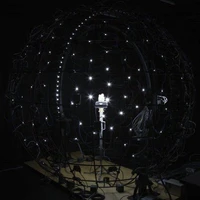
We present the first neural relighting approach for rendering high-fidelity personalized hands that can be animated in real-time under novel illumination. Our approach adopts a teacher-student framework, where the teacher learns appearance under a single point light from images captured in a light-stage, allowing us to synthesize hands in arbitrary illuminations but with heavy compute. Using images rendered by the teacher model as training data, an efficient student model directly predicts appearance under natural illuminations in real-time. To achieve generalization, we condition the student model with physics-inspired illumination features such as visibility, diffuse shading, and specular reflections computed on a coarse proxy geometry, maintaining a small computational overhead. Our key insight is that these features have strong correlation with subsequent global light transport effects, which proves sufficient as conditioning data for the neural relighting network. Moreover, in contrast to bottleneck illumination conditioning, these features are spatially aligned based on underlying geometry, leading to better generalization to unseen illuminations and poses. In our experiments, we demonstrate the efficacy of our illumination feature representations, outperforming baseline approaches. We also show that our approach can photorealistically relight two interacting hands at real-time speeds. https://sh8.io/#/relightable_hands

  • 10 authors
·
Feb 9, 2023

Outdoor-to-Indoor 28 GHz Wireless Measurements in Manhattan: Path Loss, Environmental Effects, and 90% Coverage

Outdoor-to-indoor (OtI) signal propagation further challenges the already tight link budgets at millimeter-wave (mmWave). To gain insight into OtI mmWave scenarios at 28 GHz, we conducted an extensive measurement campaign consisting of over 2,200 link measurements. In total, 43 OtI scenarios were measured in West Harlem, New York City, covering seven highly diverse buildings. The measured OtI path gain can vary by up to 40 dB for a given link distance, and the empirical path gain model for all data shows an average of 30 dB excess loss over free space at distances beyond 50 m, with an RMS fitting error of 11.7 dB. The type of glass is found to be the single dominant feature for OtI loss, with 20 dB observed difference between empirical path gain models for scenarios with low-loss and high-loss glass. The presence of scaffolding, tree foliage, or elevated subway tracks, as well as difference in floor height are each found to have an impact between 5-10 dB. We show that for urban buildings with high-loss glass, OtI coverage can support 500 Mbps for 90% of indoor user equipment (UEs) with a base station (BS) antenna placed up to 49 m away. For buildings with low-loss glass, such as our case study covering multiple classrooms of a public school, data rates over 2.5/1.2 Gbps are possible from a BS 68/175 m away from the school building, when a line-of-sight path is available. We expect these results to be useful for the deployment of mmWave networks in dense urban environments as well as the development of relevant scheduling and beam management algorithms.

  • 15 authors
·
May 19, 2022

First Light And Reionisation Epoch Simulations (FLARES) XII: The consequences of star-dust geometry on galaxies in the EoR

Using the First Light And Reionisation Epoch Simulations ({rm F{small LARES}}), a suite of hydrodynamical simulations we explore the consequences of a realistic model for star--dust geometry on the observed properties of galaxies. We find that the UV attenuation declines rapidly from the central regions of galaxies, and bright galaxies have spatially extended star formation that suffers less obscuration than their fainter counterparts, demonstrating a non-linear relationship between the UV luminosity and the UV attenuation, giving a double power-law shape to the UVLF. Spatially distinct stellar populations within galaxies experience a wide range of dust attenuation due to variations in the dust optical depth along their line-of-sight; which can range from completely dust obscured to being fully unobscured. The overall attenuation curve of a galaxy is then a complex combination of various lines-of-sight within the galaxy. We explore the manifestation of this effect to study the reliability of line ratios to infer galaxy properties, in particular the Balmer decrement and the BPT diagram. We find the Balmer decrement predicted Balmer line attenuation to be higher (factor of 1 to gtrsim10) than expected from commonly used attenuation curves. The observed BPT line ratios deviate from their intrinsic values (median difference of 0.08 (0.02) and standard deviation of 0.2 (0.05) for log_{10}([N{small II}]lambda 6585/H_{alpha}) (log_{10}([O{small III}]lambda 5008/H_{beta})). Finally, we explore the variation in observed properties (UV attenuation, UV slope and Balmer decrement) with viewing angle, finding average differences of sim0.3 magnitudes in the UV attenuation.

  • 8 authors
·
Mar 7, 2023

Learning Multiple-Scattering Solutions for Sphere-Tracing of Volumetric Subsurface Effects

Accurate subsurface scattering solutions require the integration of optical material properties along many complicated light paths. We present a method that learns a simple geometric approximation of random paths in a homogeneous volume of translucent material. The generated representation allows determining the absorption along the path as well as a direct lighting contribution, which is representative of all scattering events along the path. A sequence of conditional variational auto-encoders (CVAEs) is trained to model the statistical distribution of the photon paths inside a spherical region in presence of multiple scattering events. A first CVAE learns to sample the number of scattering events, occurring on a ray path inside the sphere, which effectively determines the probability of the ray being absorbed. Conditioned on this, a second model predicts the exit position and direction of the light particle. Finally, a third model generates a representative sample of photon position and direction along the path, which is used to approximate the contribution of direct illumination due to in-scattering. To accelerate the tracing of the light path through the volumetric medium toward the solid boundary, we employ a sphere-tracing strategy that considers the light absorption and is able to perform statistically accurate next-event estimation. We demonstrate efficient learning using shallow networks of only three layers and no more than 16 nodes. In combination with a GPU shader that evaluates the CVAEs' predictions, performance gains can be demonstrated for a variety of different scenarios. A quality evaluation analyzes the approximation error that is introduced by the data-driven scattering simulation and sheds light on the major sources of error in the accelerated path tracing process.

  • 3 authors
·
Nov 5, 2020

Relightable Full-Body Gaussian Codec Avatars

We propose Relightable Full-Body Gaussian Codec Avatars, a new approach for modeling relightable full-body avatars with fine-grained details including face and hands. The unique challenge for relighting full-body avatars lies in the large deformations caused by body articulation and the resulting impact on appearance caused by light transport. Changes in body pose can dramatically change the orientation of body surfaces with respect to lights, resulting in both local appearance changes due to changes in local light transport functions, as well as non-local changes due to occlusion between body parts. To address this, we decompose the light transport into local and non-local effects. Local appearance changes are modeled using learnable zonal harmonics for diffuse radiance transfer. Unlike spherical harmonics, zonal harmonics are highly efficient to rotate under articulation. This allows us to learn diffuse radiance transfer in a local coordinate frame, which disentangles the local radiance transfer from the articulation of the body. To account for non-local appearance changes, we introduce a shadow network that predicts shadows given precomputed incoming irradiance on a base mesh. This facilitates the learning of non-local shadowing between the body parts. Finally, we use a deferred shading approach to model specular radiance transfer and better capture reflections and highlights such as eye glints. We demonstrate that our approach successfully models both the local and non-local light transport required for relightable full-body avatars, with a superior generalization ability under novel illumination conditions and unseen poses.

  • 18 authors
·
Jan 24, 2025 2

Analytical sensitivity curves of the second-generation time-delay interferometry

Forthcoming space-based gravitational-wave (GW) detectors will employ second-generation time-delay interferometry (TDI) to suppress laser frequency noise and achieve the sensitivity required for GW detection. We introduce an inverse light-path operator P_{i_{1}i_{2}i_{3}ldots i_{n-1}i_{n}}, which enables simple representation of second-generation TDI combinations and a concise description of light propagation. Analytical expressions and high-accuracy approximate formulas are derived for the sky- and polarization-averaged response functions, noise power spectral densities (PSDs), and sensitivity curves of TDI Michelson, (alpha,beta,gamma), Monitor, Beacon, Relay, and Sagnac combinations, as well as their orthogonal A, E, T channels. Our results show that: (i) second-generation TDIs have the same sensitivities as their first-generation counterparts; (ii) the A, E, T sensitivities and the optimal sensitivity are independent of the TDI generation and specific combination; (iii) the A and E channels have equal averaged responses, noise PSDs, and sensitivities, while the T channel has much weaker response and sensitivity at low frequencies (2pi fL/clesssim3); (iv) except for the (alpha,beta,gamma) and zeta combinations and the T channel, all sensitivity curves exhibit a flat section in the range f_{n}<flesssim 1.5/(2pi L/c), where the noise-balance frequency f_{n} separates the proof-mass- and optical-path-dominated regimes, while the response-transition frequency sim 1.5/(2pi L/c) separates the response function's low- and high-frequency behaviors; (v) the averaged response, noise PSD, and sensitivity of zeta scales with those of the T channel. These analytical and approximate formulations provide useful benchmarks for instrument optimization and data-analysis studies for future space-based GW detectors.

  • 1 authors
·
Nov 3, 2025

Light-A-Video: Training-free Video Relighting via Progressive Light Fusion

Recent advancements in image relighting models, driven by large-scale datasets and pre-trained diffusion models, have enabled the imposition of consistent lighting. However, video relighting still lags, primarily due to the excessive training costs and the scarcity of diverse, high-quality video relighting datasets. A simple application of image relighting models on a frame-by-frame basis leads to several issues: lighting source inconsistency and relighted appearance inconsistency, resulting in flickers in the generated videos. In this work, we propose Light-A-Video, a training-free approach to achieve temporally smooth video relighting. Adapted from image relighting models, Light-A-Video introduces two key techniques to enhance lighting consistency. First, we design a Consistent Light Attention (CLA) module, which enhances cross-frame interactions within the self-attention layers to stabilize the generation of the background lighting source. Second, leveraging the physical principle of light transport independence, we apply linear blending between the source video's appearance and the relighted appearance, using a Progressive Light Fusion (PLF) strategy to ensure smooth temporal transitions in illumination. Experiments show that Light-A-Video improves the temporal consistency of relighted video while maintaining the image quality, ensuring coherent lighting transitions across frames. Project page: https://bujiazi.github.io/light-a-video.github.io/.

  • 13 authors
·
Feb 12, 2025 2

Indirect measurement of atomic magneto-optical rotation via Hilbert transform

The Kramers-Kronig relations are a pivotal foundation of linear optics and atomic physics, embedding a physical connection between the real and imaginary components of any causal response function. A mathematically equivalent, but simpler, approach instead utilises the Hilbert transform. In a previous study, the Hilbert transform was applied to absorption spectra in order to infer the sole refractive index of an atomic medium in the absence of an external magnetic field. The presence of a magnetic field causes the medium to become birefringent and dichroic, and therefore it is instead characterised by two refractive indices. In this study, we apply the same Hilbert transform technique to independently measure both refractive indices of a birefringent atomic medium, leading to an indirect measurement of atomic magneto-optical rotation. Key to this measurement is the insight that inputting specific light polarisations into an atomic medium induces absorption associated with only one of the refractive indices. We show this is true in two configurations, commonly referred to in literature as the Faraday and Voigt geometries, which differ by the magnetic field orientation with respect to the light wavevector. For both cases, we measure the two refractive indices independently for a Rb thermal vapour in a 0.6 T magnetic field, finding excellent agreement with theory. This study further emphasises the application of the Hilbert transform to the field of quantum and atomic optics in the linear regime.

  • 4 authors
·
Mar 1, 2024

DiLightNet: Fine-grained Lighting Control for Diffusion-based Image Generation

This paper presents a novel method for exerting fine-grained lighting control during text-driven diffusion-based image generation. While existing diffusion models already have the ability to generate images under any lighting condition, without additional guidance these models tend to correlate image content and lighting. Moreover, text prompts lack the necessary expressional power to describe detailed lighting setups. To provide the content creator with fine-grained control over the lighting during image generation, we augment the text-prompt with detailed lighting information in the form of radiance hints, i.e., visualizations of the scene geometry with a homogeneous canonical material under the target lighting. However, the scene geometry needed to produce the radiance hints is unknown. Our key observation is that we only need to guide the diffusion process, hence exact radiance hints are not necessary; we only need to point the diffusion model in the right direction. Based on this observation, we introduce a three stage method for controlling the lighting during image generation. In the first stage, we leverage a standard pretrained diffusion model to generate a provisional image under uncontrolled lighting. Next, in the second stage, we resynthesize and refine the foreground object in the generated image by passing the target lighting to a refined diffusion model, named DiLightNet, using radiance hints computed on a coarse shape of the foreground object inferred from the provisional image. To retain the texture details, we multiply the radiance hints with a neural encoding of the provisional synthesized image before passing it to DiLightNet. Finally, in the third stage, we resynthesize the background to be consistent with the lighting on the foreground object. We demonstrate and validate our lighting controlled diffusion model on a variety of text prompts and lighting conditions.

  • 6 authors
·
Feb 19, 2024 1

Interferometer response characterization algorithm for multi-aperture Fabry-Perot imaging spectrometers

In recent years, the demand for hyperspectral imaging devices has grown significantly, driven by their ability of capturing high-resolution spectral information. Among the several possible optical designs for acquiring hyperspectral images, there is a growing interest in interferometric spectral imaging systems based on division of aperture. These systems have the advantage of capturing snapshot acquisitions while maintaining a compact design. However, they require a careful calibration to operate properly. In this work, we present the interferometer response characterization algorithm (IRCA), a robust three-step procedure designed to characterize the transmittance response of multi-aperture imaging spectrometers based on the interferometry of Fabry-Perot. Additionally, we propose a formulation of the image formation model for such devices suitable to estimate the parameters of interest by considering the model under various regimes of finesse. The proposed algorithm processes the image output obtained from a set of monochromatic light sources and refines the results using nonlinear regression after an ad-hoc initialization. Through experimental analysis conducted on four different prototypes from the Image SPectrometer On Chip (ImSPOC) family, we validate the performance of our approach for characterization. The associated source code for this paper is available at https://github.com/danaroth83/irca.

  • 5 authors
·
Mar 24, 2023

Temporal Variations in Pulsar Spectro-Polarimetry: Findings from millisecond pulsar J2144-5237 using Parkes UWL receiver

While the temporal variations of the spectro-polarimetric nature of pulsars remains unexplored, this investigation offers significant potential for uncovering key insights into pulsar emission mechanisms, magnetic field geometry, and propagation effects within the magnetosphere. We developed a package for investigating time-varying spectral behavior for full Stokes parameters and demonstrate it on a millisecond pulsar (MSP) J2144-5237 in a binary system (orbital period ~10 days) using the Parkes UWL receiver. In this study we report rotation measure (RM) variation with orbital phase. We find that the temporal variations in the spectra of Stokes I, Q, and V are generally correlated throughout the orbit, while Stokes U exhibits intervals of both correlation and anticorrelation with Stokes I, depending on the orbital phase. We also provide a Poincare sphere representation of the polarization properties of J2144-5237, demonstrating a systematic temporal change of Poincare sphere location for the main component with orbital phase. To our knowledge, this is the first investigation of time-varying properties of the spectro-polarimetric nature of any pulsars or MSPs. Extending this study to probe the spectro-temporal nature of full Stokes data on a larger sample of MSPs or pulsars has the potential to provide vital information on emission mechanisms inside the magnetosphere, interstellar propagation effects, and binary interactions.

  • 5 authors
·
Jan 8

First Light And Reionisation Epoch Simulations (FLARES) II: The Photometric Properties of High-Redshift Galaxies

We present the photometric properties of galaxies in the First Light and Reionisation Epoch Simulations (FLARES). The simulations trace the evolution of galaxies in a range of overdensities through the Epoch of Reionistion (EoR). With a novel weighting scheme we combine these overdensities, extending significantly the dynamic range of observed composite distribution functions compared to periodic simulation boxes. FLARES predicts a significantly larger number of intrinsically bright galaxies, which can be explained through a simple model linking dust-attenuation to the metal content of the interstellar medium, using a line-of-sight (LOS) extinction model. With this model we present the photometric properties of the FLARES galaxies for z in [5,10]. We show that the ultraviolet (UV) luminosity function (LF) matches the observations at all redshifts. The function is fit by Schechter and double power-law forms, with the latter being favoured at these redshifts by the FLARES composite UV LF. We also present predictions for the UV continuum slope as well as the attenuation in the UV. The impact of environment on the UV LF is also explored, with the brightest galaxies forming in the densest environments. We then present the line luminosity and equivalent widths of some prominent nebular emission lines arising from the galaxies, finding rough agreement with available observations. We also look at the relative contribution of obscured and unobscured star formation, finding comparable contributions at these redshifts.

  • 8 authors
·
Aug 13, 2020

Relightable Gaussian Codec Avatars

The fidelity of relighting is bounded by both geometry and appearance representations. For geometry, both mesh and volumetric approaches have difficulty modeling intricate structures like 3D hair geometry. For appearance, existing relighting models are limited in fidelity and often too slow to render in real-time with high-resolution continuous environments. In this work, we present Relightable Gaussian Codec Avatars, a method to build high-fidelity relightable head avatars that can be animated to generate novel expressions. Our geometry model based on 3D Gaussians can capture 3D-consistent sub-millimeter details such as hair strands and pores on dynamic face sequences. To support diverse materials of human heads such as the eyes, skin, and hair in a unified manner, we present a novel relightable appearance model based on learnable radiance transfer. Together with global illumination-aware spherical harmonics for the diffuse components, we achieve real-time relighting with spatially all-frequency reflections using spherical Gaussians. This appearance model can be efficiently relit under both point light and continuous illumination. We further improve the fidelity of eye reflections and enable explicit gaze control by introducing relightable explicit eye models. Our method outperforms existing approaches without compromising real-time performance. We also demonstrate real-time relighting of avatars on a tethered consumer VR headset, showcasing the efficiency and fidelity of our avatars.

  • 5 authors
·
Dec 6, 2023 1

Synthetic Light Curves and Spectra for the Photospheric Phase of a 3D Stripped-Envelope Supernova Explosion Model

We present synthetic light curves and spectra from three-dimensional (3D) Monte Carlo radiative transfer simulations based on a 3D core-collapse supernova explosion model of an ultra-stripped 3.5,M_{odot} progenitor. Our calculations predict a fast and faint transient with Delta m_{15} sim 1- 2,mag and peak bolometric luminosity between -15.3,mag and -16.4,mag. Due to a large-scale unipolar asymmetry in the distribution of ^{56}Ni, there is a pronounced viewing-angle dependence with about 1,mag difference between the directions of highest and lowest luminosity. The predicted spectra for this rare class of explosions do not yet match any observed counterpart. They are dominated by prominent Mg~II lines, but features from O, C, Si, and Ca are also found. In particular, the O~I line at 7{774} appears as a blended feature together with Mg~II emission. Our model is not only faster and fainter than the observed Ib/c supernova population, but also shows a correlation between higher peak luminosity and larger Delta m_{15} that is not present in observational samples. A possible explanation is that the unusually small ejecta mass of our model accentuates the viewing-angle dependence of the photometry. We suggest that the viewing-angle dependence of the photometry may be used to constrain asymmetries in explosion models of more typical stripped-envelope supernova progenitors in future.

  • 5 authors
·
Oct 28, 2024

EvidenceMoE: A Physics-Guided Mixture-of-Experts with Evidential Critics for Advancing Fluorescence Light Detection and Ranging in Scattering Media

Fluorescence LiDAR (FLiDAR), a Light Detection and Ranging (LiDAR) technology employed for distance and depth estimation across medical, automotive, and other fields, encounters significant computational challenges in scattering media. The complex nature of the acquired FLiDAR signal, particularly in such environments, makes isolating photon time-of-flight (related to target depth) and intrinsic fluorescence lifetime exceptionally difficult, thus limiting the effectiveness of current analytical and computational methodologies. To overcome this limitation, we present a Physics-Guided Mixture-of-Experts (MoE) framework tailored for specialized modeling of diverse temporal components. In contrast to the conventional MoE approaches our expert models are informed by underlying physics, such as the radiative transport equation governing photon propagation in scattering media. Central to our approach is EvidenceMoE, which integrates Evidence-Based Dirichlet Critics (EDCs). These critic models assess the reliability of each expert's output by providing per-expert quality scores and corrective feedback. A Decider Network then leverages this information to fuse expert predictions into a robust final estimate adaptively. We validate our method using realistically simulated Fluorescence LiDAR (FLiDAR) data for non-invasive cancer cell depth detection generated from photon transport models in tissue. Our framework demonstrates strong performance, achieving a normalized root mean squared error (NRMSE) of 0.030 for depth estimation and 0.074 for fluorescence lifetime.

  • 9 authors
·
May 23, 2025

SPICE-HL3: Single-Photon, Inertial, and Stereo Camera dataset for Exploration of High-Latitude Lunar Landscapes

Exploring high-latitude lunar regions presents an extremely challenging visual environment for robots. The low sunlight elevation angle and minimal light scattering result in a visual field dominated by a high dynamic range featuring long, dynamic shadows. Reproducing these conditions on Earth requires sophisticated simulators and specialized facilities. We introduce a unique dataset recorded at the LunaLab from the SnT - University of Luxembourg, an indoor test facility designed to replicate the optical characteristics of multiple lunar latitudes. Our dataset includes images, inertial measurements, and wheel odometry data from robots navigating seven distinct trajectories under multiple illumination scenarios, simulating high-latitude lunar conditions from dawn to nighttime with and without the aid of headlights, resulting in 88 distinct sequences containing a total of 1.3M images. Data was captured using a stereo RGB-inertial sensor, a monocular monochrome camera, and for the first time, a novel single-photon avalanche diode (SPAD) camera. We recorded both static and dynamic image sequences, with robots navigating at slow (5 cm/s) and fast (50 cm/s) speeds. All data is calibrated, synchronized, and timestamped, providing a valuable resource for validating perception tasks from vision-based autonomous navigation to scientific imaging for future lunar missions targeting high-latitude regions or those intended for robots operating across perceptually degraded environments. The dataset and all supplementary material can be accessed from and found at https://github.com/spaceuma/spice-hl3.

UMASpaceRobotics UMA Space Robotics Lab
·
Jun 28, 2025

EAG-PT: Emission-Aware Gaussians and Path Tracing for Indoor Scene Reconstruction and Editing

Recent reconstruction methods based on radiance field such as NeRF and 3DGS reproduce indoor scenes with high visual fidelity, but break down under scene editing due to baked illumination and the lack of explicit light transport. In contrast, physically based inverse rendering relies on mesh representations and path tracing, which enforce correct light transport but place strong requirements on geometric fidelity, becoming a practical bottleneck for real indoor scenes. In this work, we propose Emission-Aware Gaussians and Path Tracing (EAG-PT), aiming for physically based light transport with a unified 2D Gaussian representation. Our design is based on three cores: (1) using 2D Gaussians as a unified scene representation and transport-friendly geometry proxy that avoids reconstructed mesh, (2) explicitly separating emissive and non-emissive components during reconstruction for further scene editing, and (3) decoupling reconstruction from final rendering by using efficient single-bounce optimization and high-quality multi-bounce path tracing after scene editing. Experiments on synthetic and real indoor scenes show that EAG-PT produces more natural and physically consistent renders after editing than radiant scene reconstructions, while preserving finer geometric detail and avoiding mesh-induced artifacts compared to mesh-based inverse path tracing. These results suggest promising directions for future use in interior design, XR content creation, and embodied AI.

  • 9 authors
·
Jan 30

Analysis of Two Models for the Angular Structure of the Outflows Producing the Swift/XRT "Larger-Angle Emission" of Gamma-Ray Bursts

The instantaneous emission from a relativistic surface endowed with a Lorentz factor Gamma that decreases away from the outflow symmetry axis can naturally explain the three phases observed by Swift/XRT in GRBs and their afterglows (GRB tail, afterglow plateau and post-plateau). We expand the analytical formalism of the "Larger-Angle Emission" model previously developed for "Power-Law" outflows to "n-Exponential" outflows (e.g. exponential with n=1 and Gaussian with n=2) and compare their abilities to account for the X-ray emission of XRT afterglows. We assume power-law Gamma-dependences of two spectral characteristics (peak-energy and peak intensity) and find that, unlike Power-Law outflows, n-Exponential outflows cannot account for plateaus with a temporal dynamical range larger than 100. To include all information existing in the Swift/XRT measurements of X-ray aferglows (0.3-10 keV unabsorbed flux and effective spectral slope), we calculate 0.3 keV and 10 keV light-curves using a broken power-law emission spectrum of peak-energy and low-and high-energy slopes that are derived from the effective slope measured by XRT. This economical peak-energy determination is found to be consistent with more expensive spectral fits. The angular distributions of the Lorentz factor, comoving frame peak-energy, and peak-intensity (Gamma (theta), E'_p (theta), i'_p(theta)) constrain the (yet-to-be determined) convolution of various features of the production of relativistic jets by solar-mass black-holes and of their propagation through the progenitor/circumburst medium, while the E'_p (Gamma) and i'_p (Gamma) dependences may constrain the GRB dissipation mechanism and the GRB emission process.

  • 1 authors
·
May 9, 2025

Constraining atmospheric composition from the outflow: helium observations reveal the fundamental properties of two planets straddling the radius gap

TOI-836 is a ~2-3 Gyr K dwarf with an inner super Earth (R=1.7 R_oplus, P=3.8 d) and an outer mini Neptune (R=2.6 R_oplus, P=8.6 d). JWST/NIRSpec 2.8--5.2 mum transmission spectra are flat for both planets. We present Keck/NIRSPEC observations of escaping helium for super-Earth b, which shows no excess absorption in the 1083 nm triplet to deep limits (<0.2%), and mini-Neptune c, which shows strong (0.7%) excess absorption in both visits. These results demonstrate that planet c retains at least some primordial atmosphere, while planet b is consistent with having lost its entire primordial envelope. Self-consistent 1D radiative-hydrodynamic models of planet c reveal that the helium excess absorption signal is highly sensitive to metallicity: its equivalent width collapses by a factor of 13 as metallicity increases from 10x to 100x solar, and by a further factor of 12 as it increases to 200x solar. The observed equivalent width is 88\% the model prediction for 100x metallicity, suggesting an atmospheric metallicity similar to K2-18b and TOI-270d, the first two mini-Neptunes with detected absorption features in JWST transmission spectra. We highlight the helium triplet as a potentially powerful probe of atmospheric composition, with complementary strengths and weaknesses to atmospheric retrievals. The main strength is its extreme sensitivity to metallicity in the scientifically significant range of 10--200x solar, and the main weakness is the enormous model uncertainties in outflow suppression and confinement mechanisms, such as magnetic fields and stellar winds, which can suppress the signal by at least a factor of ~several.

  • 16 authors
·
Sep 12, 2024

Pre-perihelion Development of Interstellar Comet 3I/ATLAS

We describe pre-perihelion optical observations of interstellar comet 3I/ATLAS taken during July - September 2025 using the Nordic Optical Telescope. Fixed aperture photometry of the comet is well described by a power law function of heliocentric distance, rH, with the exponent (``index") n = 3.8+/-0.3 across the 4.6 au to 1.8 au distance range (phase function 0.04+/-0.02 magnitude/degree assumed). This indicates that the dust production rates vary in proportion to rH**(-1.8+/-0.3). An rH**(-2) variation is expected of a strongly volatile material, and consistent with independent spectroscopic observations showing that carbon dioxide is the primary driver of activity. The measured heliocentric index is unremarkable in the context of solar system comets, for which n is widely dispersed, and provides no basis on which to describe 3I as either dynamically old (thermally processed) or new (pristine). The morphology of the comet changes from a Sun-facing dust fan in the early 2025 July observations, to one dominated by an antisolar dust tail at later dates. We attribute the delayed emergence of the tail to the large size (effective radius 0.1 mm) and slow ejection (5 m/s) of the optically dominant dust particles, and their consequently sluggish response to solar radiation pressure. Small (micron-sized) particles may be present but not in numbers sufficient to dominate the scattering cross-section. Their relative depletion possibly reflects interparticle cohesion, which binds small particles more effectively than large ones. A similar preponderance of 0.1 mm grains was reported in 2I/Borisov. However, 2I differed from 3I in having a much smaller (asteroid-like) heliocentric index, n = 1.9+/-0.1. Dust production rates in 3I are 180 kg/s at 2 au, compared with 70 kg/s in 2I/Borisov at the same distance.

  • 2 authors
·
Oct 21, 2025

Searching for unresolved massive black hole pairs through AGN photometric variability

Since their discovery, AGN light curves are known to be intrinsically variable. In the optical/UV band, this variability is consistent with correlated or red noise and is particularly well described by the damped random walk (DRW) model. In this work, we evaluate the feasibility of a new method for identifying spatially unresolved couples of AGN through a fully Bayesian time-domain analysis of the observed light curves (LCs). More specifically, we check whether observed LCs are better described by a single DRW, which we interpret as emitted by a single massive black hole (MBH), or a pair of independent DRWs, generated by a pair of MBHs. We test the method on mock LCs associated with a single MBH and pairs generated with different cadences and lengths of observational campaigns. We constrained the occurrence of false positives, that is, the percentage of single MBH LCs that show substantial evidence in favour of the unresolved MBH pair scenario, finding a fraction of 0.2% and 0.59% in the even and uneven sampling scenarios. We discuss how well the method recovers the model parameters, showing that about 51% and 7% of the simulated LCs have all the recovered parameters within 20% of their true values in our best scenario of evenly sampled LCs for the single MBH and MBH pair scenarios, respectively. We finally study the region of the parameter space in which the detection of an MBH pair is possible, finding that such objects can be correctly identified if the timescales of the process describing the noise are very different, with a ratio smaller than ~0.2, and the variability amplitudes are similar, with their ratio bigger than ~0.2. When limiting to such a region of the parameter space, the fraction of pairs with all the recovered parameters within 20% of the injected values increases up to about 14% and 8% for evenly and unevenly sampled LCs, respectively.

  • 5 authors
·
Mar 30

Embedding Fourier for Ultra-High-Definition Low-Light Image Enhancement

Ultra-High-Definition (UHD) photo has gradually become the standard configuration in advanced imaging devices. The new standard unveils many issues in existing approaches for low-light image enhancement (LLIE), especially in dealing with the intricate issue of joint luminance enhancement and noise removal while remaining efficient. Unlike existing methods that address the problem in the spatial domain, we propose a new solution, UHDFour, that embeds Fourier transform into a cascaded network. Our approach is motivated by a few unique characteristics in the Fourier domain: 1) most luminance information concentrates on amplitudes while noise is closely related to phases, and 2) a high-resolution image and its low-resolution version share similar amplitude patterns.Through embedding Fourier into our network, the amplitude and phase of a low-light image are separately processed to avoid amplifying noise when enhancing luminance. Besides, UHDFour is scalable to UHD images by implementing amplitude and phase enhancement under the low-resolution regime and then adjusting the high-resolution scale with few computations. We also contribute the first real UHD LLIE dataset, UHD-LL, that contains 2,150 low-noise/normal-clear 4K image pairs with diverse darkness and noise levels captured in different scenarios. With this dataset, we systematically analyze the performance of existing LLIE methods for processing UHD images and demonstrate the advantage of our solution. We believe our new framework, coupled with the dataset, would push the frontier of LLIE towards UHD. The code and dataset are available at https://li-chongyi.github.io/UHDFour.

  • 7 authors
·
Feb 23, 2023

GenLit: Reformulating Single-Image Relighting as Video Generation

Manipulating the illumination of a 3D scene within a single image represents a fundamental challenge in computer vision and graphics. This problem has traditionally been addressed using inverse rendering techniques, which involve explicit 3D asset reconstruction and costly ray-tracing simulations. Meanwhile, recent advancements in visual foundation models suggest that a new paradigm could soon be possible -- one that replaces explicit physical models with networks that are trained on large amounts of image and video data. In this paper, we exploit the physical world understanding of a video diffusion model, particularly Stable Video Diffusion, to relight a single image. We introduce GenLit, a framework that distills the ability of a graphics engine to perform light manipulation into a video-generation model, enabling users to directly insert and manipulate a point light in the 3D world within a given image, and generate results directly as a video sequence. We find that a model fine-tuned on only a small synthetic dataset generalizes to real-world scenes, enabling single-image relighting with plausible and convincing shadows. Our results highlight the ability of video foundation models to capture rich information about lighting, material, and, shape and our findings indicate that such models, with minimal training, can be used to perform relighting without explicit asset reconstruction or complex ray tracing. Project page: https://genlit.is.tue.mpg.de/.

  • 5 authors
·
Dec 15, 2024

Polarization aberrations in next-generation Giant Segmented Mirror Telescopes (GSMTs). II. Influence of segment-to-segment coating variations on high-contrast imaging and polarimetry

Direct exo-Earth imaging is a key science goal for astronomy in the next decade. This ambitious task imposes a target contrast of ~10^-7 at wavelengths from I to J-band. In our prior study, we determined that polarization aberrations can limit the achievable contrast to 10^-5 to 10^-6 in the infrared. However, these results assumed a perfect coronagraph coupled to a telescope with an ideal coating on each of the mirrors. In this study we seek to understand the influence of polarization aberrations from segment-to-segment coating variations on coronagraphy and polarimetry. We use the Poke open-source polarization ray tracing package to compute the Jones pupil of each GSMT with spatially-varying coatings applied to the segments. The influence of the resultant polarization aberrations is simulated by propagating the Jones pupil through physical optics models of coronagraphs using HCIPy. After applying wavefront control from an ideal adaptive optics system, we determine that the segment-to-segment variations applied limit the performance of coronagraphy to a raw contrast of approximately 10^-8 in I-band, which is 2-3 orders of magnitude lower the target performance for high-contrast imaging systems on the ground. This is a negligible addition to the nominal polarization aberrations for ground-based systems. We further observe negligible degradation in polarimetric imaging of debris disks from segment-to-segment aberrations above and beyond the impact of nominal polarization aberration.

  • 11 authors
·
Jan 7, 2025

Dust Attenuation Curves in the Local Universe: Demographics and New Laws for Star-forming Galaxies and High-redshift Analogs

We study dust attenuation curves of 230,000 individual galaxies in the local universe, ranging from quiescent to intensely star-forming systems, using GALEX, SDSS, and WISE photometry calibrated on Herschel-ATLAS. We use a new method of constraining SED fits with infrared luminosity (SED+LIR fitting), and parameterized attenuation curves determined with the CIGALE SED fitting code. Attenuation curve slopes and UV bump strengths are reasonably well constrained independently from one another. We find that A_λ/A_V attenuation curves exhibit a very wide range of slopes that are on average as steep as the SMC curve slope. The slope is a strong function of optical opacity. Opaque galaxies have shallower curves - in agreement with recent radiate transfer models. The dependence of slopes on the opacity produces an apparent dependence on stellar mass: more massive galaxies having shallower slopes. Attenuation curves exhibit a wide range of UV bump amplitudes, from none to MW-like; with an average strength 1/3 of the MW bump. Notably, local analogs of high-redshift galaxies have an average curve that is somewhat steeper than the SMC curve, with a modest UV bump that can be to first order ignored, as its effect on the near-UV magnitude is 0.1 mag. Neither the slopes nor the strengths of the UV bump depend on gas-phase metallicity. Functional forms for attenuation laws are presented for normal star-forming galaxies, high-z analogs and quiescent galaxies. We release the catalog of associated SFRs and stellar masses (GSWLC-2).

  • 3 authors
·
Apr 16, 2018

Learning Latent Proxies for Controllable Single-Image Relighting

Single-image relighting is highly under-constrained: small illumination changes can produce large, nonlinear variations in shading, shadows, and specularities, while geometry and materials remain unobserved. Existing diffusion-based approaches either rely on intrinsic or G-buffer pipelines that require dense and fragile supervision, or operate purely in latent space without physical grounding, making fine-grained control of direction, intensity, and color unreliable. We observe that a full intrinsic decomposition is unnecessary and redundant for accurate relighting. Instead, sparse but physically meaningful cues, indicating where illumination should change and how materials should respond, are sufficient to guide a diffusion model. Based on this insight, we introduce LightCtrl that integrates physical priors at two levels: a few-shot latent proxy encoder that extracts compact material-geometry cues from limited PBR supervision, and a lighting-aware mask that identifies sensitive illumination regions and steers the denoiser toward shading relevant pixels. To compensate for scarce PBR data, we refine the proxy branch using a DPO-based objective that enforces physical consistency in the predicted cues. We also present ScaLight, a large-scale object-level dataset with systematically varied illumination and complete camera-light metadata, enabling physically consistent and controllable training. Across object and scene level benchmarks, our method achieves photometrically faithful relighting with accurate continuous control, surpassing prior diffusion and intrinsic-based baselines, including gains of up to +2.4 dB PSNR and 35% lower RMSE under controlled lighting shifts.

  • 8 authors
·
Mar 16 2

Understanding of the properties of neural network approaches for transient light curve approximations

Modern-day time-domain photometric surveys collect a lot of observations of various astronomical objects and the coming era of large-scale surveys will provide even more information on their properties. Spectroscopic follow-ups are especially crucial for transients such as supernovae and most of these objects have not been subject to such studies. }{Flux time series are actively used as an affordable alternative for photometric classification and characterization, for instance, peak identifications and luminosity decline estimations. However, the collected time series are multidimensional and irregularly sampled, while also containing outliers and without any well-defined systematic uncertainties. This paper presents a search for the best-performing methods to approximate the observed light curves over time and wavelength for the purpose of generating time series with regular time steps in each passband.}{We examined several light curve approximation methods based on neural networks such as multilayer perceptrons, Bayesian neural networks, and normalizing flows to approximate observations of a single light curve. Test datasets include simulated PLAsTiCC and real Zwicky Transient Facility Bright Transient Survey light curves of transients.}{The tests demonstrate that even just a few observations are enough to fit the networks and improve the quality of approximation, compared to state-of-the-art models. The methods described in this work have a low computational complexity and are significantly faster than Gaussian processes. Additionally, we analyzed the performance of the approximation techniques from the perspective of further peak identification and transients classification. The study results have been released in an open and user-friendly Fulu Python library available on GitHub for the scientific community.


  • 7 authors
·
Sep 15, 2022

Promise and Peril: Stellar Contamination and Strict Limits on the Atmosphere Composition of TRAPPIST-1c from JWST NIRISS Transmission Spectra

Attempts to probe the atmospheres of rocky planets around M dwarfs present both promise and peril. While their favorable planet-to-star radius ratios enable searches for even thin secondary atmospheres, their high activity levels and high-energy outputs threaten atmosphere survival. Here, we present the 0.6--2.85\,mum transmission spectrum of the 1.1\,rm R_oplus, sim340\,K rocky planet TRAPPIST-1\,c obtained over two JWST NIRISS/SOSS transit observations. Each of the two spectra displays 100--500\,ppm signatures of stellar contamination. Despite being separated by 367\,days, the retrieved spot and faculae properties are consistent between the two visits, resulting in nearly identical transmission spectra. Jointly retrieving for stellar contamination and a planetary atmosphere reveals that our spectrum can rule out hydrogen-dominated, lesssim300times solar metallicity atmospheres with effective surface pressures down to 10\,mbar at the 3-sigma level. For high-mean molecular weight atmospheres, where O_2 or N_2 is the background gas, our spectrum disfavors partial pressures of more than sim10\,mbar for H_2O, CO, NH_3 and CH_4 at the 2-sigma level. Similarly, under the assumption of a 100\% H_2O, NH_3, CO, or CH_4 atmosphere, our spectrum disfavors thick, >1\,bar atmospheres at the 2-sigma level. These non-detections of spectral features are in line with predictions that even heavier, CO_2-rich, atmospheres would be efficiently lost on TRAPPIST-1\,c given the cumulative high-energy irradiation experienced by the planet. Our results further stress the importance of robustly accounting for stellar contamination when analyzing JWST observations of exo-Earths around M dwarfs, as well as the need for high-fidelity stellar models to search for the potential signals of thin secondary atmospheres.

  • 12 authors
·
Sep 28, 2024

Flare7K: A Phenomenological Nighttime Flare Removal Dataset

Artificial lights commonly leave strong lens flare artifacts on images captured at night. Nighttime flare not only affects the visual quality but also degrades the performance of vision algorithms. Existing flare removal methods mainly focus on removing daytime flares and fail in nighttime. Nighttime flare removal is challenging because of the unique luminance and spectrum of artificial lights and the diverse patterns and image degradation of the flares captured at night. The scarcity of nighttime flare removal datasets limits the research on this crucial task. In this paper, we introduce, Flare7K, the first nighttime flare removal dataset, which is generated based on the observation and statistics of real-world nighttime lens flares. It offers 5,000 scattering and 2,000 reflective flare images, consisting of 25 types of scattering flares and 10 types of reflective flares. The 7,000 flare patterns can be randomly added to flare-free images, forming the flare-corrupted and flare-free image pairs. With the paired data, we can train deep models to restore flare-corrupted images taken in the real world effectively. Apart from abundant flare patterns, we also provide rich annotations, including the labeling of light source, glare with shimmer, reflective flare, and streak, which are commonly absent from existing datasets. Hence, our dataset can facilitate new work in nighttime flare removal and more fine-grained analysis of flare patterns. Extensive experiments show that our dataset adds diversity to existing flare datasets and pushes the frontier of nighttime flare removal.

  • 5 authors
·
Oct 12, 2022

The critical role of nuclear heating rates, thermalization efficiencies and opacities for kilonova modelling and parameter inference

We present an improved version of the 3D Monte Carlo radiative transfer code POSSIS to model kilonovae from neutron star mergers, wherein nuclear heating rates, thermalization efficiencies and wavelength-dependent opacities depend on local properties of the ejecta and time. Using an axially-symmetric two-component ejecta model, we explore how simplistic assumptions on heating rates, thermalization efficiencies and opacities often found in the literature affect kilonova spectra and light curves. Specifically, we compute five models: one (FIDUCIAL) with an appropriate treatment of these three quantities, one (SIMPLE-HEAT) with uniform heating rates throughout the ejecta, one (SIMPLE-THERM) with a constant and uniform thermalization efficiency, one (SIMPLE-OPAC) with grey opacities and one (SIMPLE-ALL) with all these three simplistic assumptions combined. We find that deviations from the FIDUCIAL model are of several (sim1-10) magnitudes and are generally larger for the SIMPLE-OPAC and SIMPLE-ALL compared to the SIMPLE-THERM and SIMPLE-HEAT models. The discrepancies generally increase from a face-on to an edge-on view of the system, from early to late epochs and from infrared to ultraviolet/optical wavelengths. Our work indicates that kilonova studies using either of these simplistic assumptions ought to be treated with caution and that appropriate systematic uncertainties ought to be added to kilonova light curves when performing inference on ejecta parameters.

  • 1 authors
·
Nov 25, 2022

Quasi-periodic pulsations in extreme-ultraviolet brightenings

Context. Extreme-ultraviolet (EUV) observations have revealed small-scale transient brightenings that may share common physical mechanisms with larger-scale solar flares. A notable feature of solar and stellar flares is the presence of quasi-periodic pulsations (QPPs), which are considered a common and potentially intrinsic characteristic. Aims. We investigate the properties of QPPs detected in EUV brightenings, which are considered small-scale flares, and compare their statistical properties with those observed in solar and stellar flares. Methods. We extracted integrated light curves of 22,623 EUV brightenings in two quiet Sun regions observed by the Solar Orbiter/Extreme Ultraviolet Imager and identified QPPs in their light curves using Fourier analysis. Results. Approximately 2.7 % of the EUV brightenings exhibited stationary QPPs. The QPP occurrence rate increased with the surface area, lifetime, and peak brightness of the EUV brightenings. The detected QPP periods ranged from approximately 15 to 260 seconds, which is comparable to the periods observed in solar and stellar flares. Consistent with observations of QPPs in solar and stellar flares, no correlation was found between the QPP period and peak brightness. However, unlike the trend observed in solar flares, no correlation was found between the QPP period and lifetime/length scale. Conclusions. The presence of QPPs in EUV brightenings supports the interpretation that these events may be small-scale manifestations of flares, and the absence of period scaling with loop length further suggests that standing waves may not be the primary driver of QPPs in these events.

  • 8 authors
·
Apr 21, 2025

FRBNet: Revisiting Low-Light Vision through Frequency-Domain Radial Basis Network

Low-light vision remains a fundamental challenge in computer vision due to severe illumination degradation, which significantly affects the performance of downstream tasks such as detection and segmentation. While recent state-of-the-art methods have improved performance through invariant feature learning modules, they still fall short due to incomplete modeling of low-light conditions. Therefore, we revisit low-light image formation and extend the classical Lambertian model to better characterize low-light conditions. By shifting our analysis to the frequency domain, we theoretically prove that the frequency-domain channel ratio can be leveraged to extract illumination-invariant features via a structured filtering process. We then propose a novel and end-to-end trainable module named Frequency-domain Radial Basis Network (FRBNet), which integrates the frequency-domain channel ratio operation with a learnable frequency domain filter for the overall illumination-invariant feature enhancement. As a plug-and-play module, FRBNet can be integrated into existing networks for low-light downstream tasks without modifying loss functions. Extensive experiments across various downstream tasks demonstrate that FRBNet achieves superior performance, including +2.2 mAP for dark object detection and +2.9 mIoU for nighttime segmentation. Code is available at: https://github.com/Sing-Forevet/FRBNet.

  • 7 authors
·
Oct 27, 2025

Beyond the Pixel: a Photometrically Calibrated HDR Dataset for Luminance and Color Prediction

Light plays an important role in human well-being. However, most computer vision tasks treat pixels without considering their relationship to physical luminance. To address this shortcoming, we introduce the Laval Photometric Indoor HDR Dataset, the first large-scale photometrically calibrated dataset of high dynamic range 360{\deg} panoramas. Our key contribution is the calibration of an existing, uncalibrated HDR Dataset. We do so by accurately capturing RAW bracketed exposures simultaneously with a professional photometric measurement device (chroma meter) for multiple scenes across a variety of lighting conditions. Using the resulting measurements, we establish the calibration coefficients to be applied to the HDR images. The resulting dataset is a rich representation of indoor scenes which displays a wide range of illuminance and color, and varied types of light sources. We exploit the dataset to introduce three novel tasks, where: per-pixel luminance, per-pixel color and planar illuminance can be predicted from a single input image. Finally, we also capture another smaller photometric dataset with a commercial 360{\deg} camera, to experiment on generalization across cameras. We are optimistic that the release of our datasets and associated code will spark interest in physically accurate light estimation within the community. Dataset and code are available at https://lvsn.github.io/beyondthepixel/.

  • 5 authors
·
Apr 24, 2023

Unsupervised Night Image Enhancement: When Layer Decomposition Meets Light-Effects Suppression

Night images suffer not only from low light, but also from uneven distributions of light. Most existing night visibility enhancement methods focus mainly on enhancing low-light regions. This inevitably leads to over enhancement and saturation in bright regions, such as those regions affected by light effects (glare, floodlight, etc). To address this problem, we need to suppress the light effects in bright regions while, at the same time, boosting the intensity of dark regions. With this idea in mind, we introduce an unsupervised method that integrates a layer decomposition network and a light-effects suppression network. Given a single night image as input, our decomposition network learns to decompose shading, reflectance and light-effects layers, guided by unsupervised layer-specific prior losses. Our light-effects suppression network further suppresses the light effects and, at the same time, enhances the illumination in dark regions. This light-effects suppression network exploits the estimated light-effects layer as the guidance to focus on the light-effects regions. To recover the background details and reduce hallucination/artefacts, we propose structure and high-frequency consistency losses. Our quantitative and qualitative evaluations on real images show that our method outperforms state-of-the-art methods in suppressing night light effects and boosting the intensity of dark regions.

  • 3 authors
·
Jul 21, 2022

Topological Materials for Near-Field Radiative Heat Transfer

Topological materials provide a platform that utilizes the geometric characteristics of structured materials to control the flow of waves, enabling unidirectional and protected transmission that is immune to defects or impurities. The topologically designed photonic materials can carry quantum states and electromagnetic energy, benefiting nanolasers or quantum photonic systems. This article reviews recent advances in the topological applications of photonic materials for radiative heat transfer, especially in the near field. When the separation distance between media is considerably smaller than the thermal wavelength, the heat transfer exhibits super-Planckian behavior that surpasses Planck's blackbody predictions. Near-field thermal radiation in subwavelength systems supporting surface modes has various applications, including nanoscale thermal management and energy conversion. Photonic materials and structures that support topological surface states show immense potential for enhancing or suppressing near-field thermal radiation. We present various topological effects, such as periodic and quasi-periodic nanoparticle arrays, Dirac and Weyl semimetal-based materials, structures with broken global symmetries, and other topological insulators, on near-field heat transfer. Also, the possibility of realizing near-field thermal radiation in such topological materials for alternative thermal management and heat flux guiding in nano-scale systems is discussed based on the existing technology.

  • 7 authors
·
Jun 6, 2024

First Light And Reionisation Epoch Simulations (FLARES) XVI: Size Evolution of Massive Dusty Galaxies at Cosmic Dawn from UV to IR

We use the First Light And Reionisation Epoch Simulations (FLARES) to study the evolution of the rest-frame ultraviolet (UV) and far-infrared (FIR) sizes for a statistical sample of massive (gtrsim10^{9}M_{odot}) high redshift galaxies (z in [5,10]). Galaxies are post-processed using the SKIRT radiative transfer code, to self-consistently obtain the full spectral energy distribution and surface brightness distribution. We create mock observations of the galaxies for the Near Infrared Camera (NIRCam) to study the rest-frame UV 1500 xC5 morphology. We also generate mock rest-frame FIR (50 mum) photometry and mock ALMA (158 mum) (0.01"-0.03" and approx0.3" angular resolution) observations to study the dust-continuum. We find the effect of dust on observed sizes reduces with increasing wavelength from the UV to optical (sim0.6 times the UV at 0.4mum), with no evolution in FIR sizes. Observed sizes vary within 0.4-1.2 times the intrinsic sizes at different signal to noise ratios (SNR = 5-20) across redshifts. The effect of PSF and noise makes bright structures prominent, whereas fainter regions blend with noise, leading to an underestimation (factor of 0.4-0.8) of sizes at SNR=5. At SNR=15-20, the underestimation reduces (factor of 0.6-0.9) at z=5-8 but due to PSF, at z=9-10, bright cores are dominant, resulting in an overestimation (factor of 1.0-1.2). For ALMA, low resolution sizes are effected by noise which acts as extended emission. The size evolution in UV broadly agrees with current observational samples and other simulations. This work is one of the first to analyse the panchromatic sizes of a statistically significant sample of simulated high-redshift galaxies, complementing a growing body of research highlighting the importance of conducting an equivalent comparison between observed galaxies and their simulated counterparts in the early Universe.

  • 12 authors
·
Aug 20, 2024

Pattern and Origin for the Extreme γ-ray Flares of 3C 454.3 and 3C 279: An Astrophysical Critical Damper?

We apply a Gaussian process method to the extreme gamma-ray flares of 3C 454.3 and 3C 279 to discover the variable patterns and then to investigate the physical origins of the giant flares. The kernels of stochastically driven damped simple harmonic oscillator (SHO), the damped random-walk (DRW), and Matrm ern-3/2 are respectively used to describe the adaptive-binning gamma-ray light curves of the two flares. Our findings show that both the extreme gamma-ray flares of 3C 454.3 and 3C 279 clearly prefer the SHO kernel in the over-damped mode and the Matrm ern-3/2 kernel over the DRW kernel. The resulted SHO and Matrm ern-3/2 power spectral densities (PSDs) are the same for each object, with the index changing from -4 at high frequencies to 0 at low frequencies. The patterns of the two flares are both approaching the critical damping mode with the quality factor Q approx 0.4 (i.e., the damping ratio eta approx 1.25), but with slightly different damping timescales. The characteristic timescale (corresponding to the broken frequency in the PSD) for 3C 454.3 is 2-3 days and 3-5 days for 3C 279. The variable patterns found here suggest that once the system responds to the energy injection disturbance, the release of the energy in the system is finished abruptly. The obtained timescale provides a constraint on the size of energy dissipation region for each source.

  • 5 authors
·
Feb 28, 2025

BurstDeflicker: A Benchmark Dataset for Flicker Removal in Dynamic Scenes

Flicker artifacts in short-exposure images are caused by the interplay between the row-wise exposure mechanism of rolling shutter cameras and the temporal intensity variations of alternating current (AC)-powered lighting. These artifacts typically appear as uneven brightness distribution across the image, forming noticeable dark bands. Beyond compromising image quality, this structured noise also affects high-level tasks, such as object detection and tracking, where reliable lighting is crucial. Despite the prevalence of flicker, the lack of a large-scale, realistic dataset has been a significant barrier to advancing research in flicker removal. To address this issue, we present BurstDeflicker, a scalable benchmark constructed using three complementary data acquisition strategies. First, we develop a Retinex-based synthesis pipeline that redefines the goal of flicker removal and enables controllable manipulation of key flicker-related attributes (e.g., intensity, area, and frequency), thereby facilitating the generation of diverse flicker patterns. Second, we capture 4,000 real-world flicker images from different scenes, which help the model better understand the spatial and temporal characteristics of real flicker artifacts and generalize more effectively to wild scenarios. Finally, due to the non-repeatable nature of dynamic scenes, we propose a green-screen method to incorporate motion into image pairs while preserving real flicker degradation. Comprehensive experiments demonstrate the effectiveness of our dataset and its potential to advance research in flicker removal.

  • 8 authors
·
Oct 10, 2025

Enhancing Fluorescence Lifetime Parameter Estimation Accuracy with Differential Transformer Based Deep Learning Model Incorporating Pixelwise Instrument Response Function

Fluorescence Lifetime Imaging (FLI) is a critical molecular imaging modality that provides unique information about the tissue microenvironment, which is invaluable for biomedical applications. FLI operates by acquiring and analyzing photon time-of-arrival histograms to extract quantitative parameters associated with temporal fluorescence decay. These histograms are influenced by the intrinsic properties of the fluorophore, instrument parameters, time-of-flight distributions associated with pixel-wise variations in the topographic and optical characteristics of the sample. Recent advancements in Deep Learning (DL) have enabled improved fluorescence lifetime parameter estimation. However, existing models are primarily designed for planar surface samples, limiting their applicability in translational scenarios involving complex surface profiles, such as in-vivo whole-animal or imaged guided surgical applications. To address this limitation, we present MFliNet (Macroscopic FLI Network), a novel DL architecture that integrates the Instrument Response Function (IRF) as an additional input alongside experimental photon time-of-arrival histograms. Leveraging the capabilities of a Differential Transformer encoder-decoder architecture, MFliNet effectively focuses on critical input features, such as variations in photon time-of-arrival distributions. We evaluate MFliNet using rigorously designed tissue-mimicking phantoms and preclinical in-vivo cancer xenograft models. Our results demonstrate the model's robustness and suitability for complex macroscopic FLI applications, offering new opportunities for advanced biomedical imaging in diverse and challenging settings.

  • 7 authors
·
Nov 25, 2024

Towards Explainable In-the-Wild Video Quality Assessment: A Database and a Language-Prompted Approach

The proliferation of in-the-wild videos has greatly expanded the Video Quality Assessment (VQA) problem. Unlike early definitions that usually focus on limited distortion types, VQA on in-the-wild videos is especially challenging as it could be affected by complicated factors, including various distortions and diverse contents. Though subjective studies have collected overall quality scores for these videos, how the abstract quality scores relate with specific factors is still obscure, hindering VQA methods from more concrete quality evaluations (e.g. sharpness of a video). To solve this problem, we collect over two million opinions on 4,543 in-the-wild videos on 13 dimensions of quality-related factors, including in-capture authentic distortions (e.g. motion blur, noise, flicker), errors introduced by compression and transmission, and higher-level experiences on semantic contents and aesthetic issues (e.g. composition, camera trajectory), to establish the multi-dimensional Maxwell database. Specifically, we ask the subjects to label among a positive, a negative, and a neutral choice for each dimension. These explanation-level opinions allow us to measure the relationships between specific quality factors and abstract subjective quality ratings, and to benchmark different categories of VQA algorithms on each dimension, so as to more comprehensively analyze their strengths and weaknesses. Furthermore, we propose the MaxVQA, a language-prompted VQA approach that modifies vision-language foundation model CLIP to better capture important quality issues as observed in our analyses. The MaxVQA can jointly evaluate various specific quality factors and final quality scores with state-of-the-art accuracy on all dimensions, and superb generalization ability on existing datasets. Code and data available at https://github.com/VQAssessment/MaxVQA.

  • 9 authors
·
May 22, 2023

MatSpray: Fusing 2D Material World Knowledge on 3D Geometry

Manual modeling of material parameters and 3D geometry is a time consuming yet essential task in the gaming and film industries. While recent advances in 3D reconstruction have enabled accurate approximations of scene geometry and appearance, these methods often fall short in relighting scenarios due to the lack of precise, spatially varying material parameters. At the same time, diffusion models operating on 2D images have shown strong performance in predicting physically based rendering (PBR) properties such as albedo, roughness, and metallicity. However, transferring these 2D material maps onto reconstructed 3D geometry remains a significant challenge. We propose a framework for fusing 2D material data into 3D geometry using a combination of novel learning-based and projection-based approaches. We begin by reconstructing scene geometry via Gaussian Splatting. From the input images, a diffusion model generates 2D maps for albedo, roughness, and metallic parameters. Any existing diffusion model that can convert images or videos to PBR materials can be applied. The predictions are further integrated into the 3D representation either by optimizing an image-based loss or by directly projecting the material parameters onto the Gaussians using Gaussian ray tracing. To enhance fine-scale accuracy and multi-view consistency, we further introduce a light-weight neural refinement step (Neural Merger), which takes ray-traced material features as input and produces detailed adjustments. Our results demonstrate that the proposed methods outperform existing techniques in both quantitative metrics and perceived visual realism. This enables more accurate, relightable, and photorealistic renderings from reconstructed scenes, significantly improving the realism and efficiency of asset creation workflows in content production pipelines.

CGTuebingen CG Tübingen
·
Dec 20, 2025 2

The Low Mass Ratio Overcontact Binary GV Leonis and Its Circumbinary Companion

Photometric and spectroscopic observations of GV Leo were performed from 2017 to 2024. The light curves show a flat bottom at the primary eclipse and the conventional O'Connell effect. The echelle spectra reveal that the effective temperature and rotation velocity of the more massive secondary are T_{rm eff,2} = 5220pm120 K and v_2 sin i = 223pm40 km s^{-1}, respectively. Our binary modeling indicates that the program target is a W-subclass contact binary with a mass ratio of q = 5.48, an inclination angle of i = 81^circ.68, a temperature difference of (T_{rm eff,1}-T_{rm eff,2}) = 154 K, and a filling factor of f = 36 \%. The light asymmetries were reasonably modeled by a dark starspot on the secondary's photosphere. Including our 26 minimum epochs, 84 times of minimum light were used to investigate the orbital period of the system. We found that the eclipse times of GV Leo have varied by a sinusoid with a period of 14.9 years and a semi-amplitude of 0.0076 days superimposed on a downward parabola. The periodic modulation is interpreted as a light time effect produced by an unseen outer tertiary with a minimum mass of 0.26 M_odot, while the parabolic component is thought to be a combination of mass transfer (secondary to primary) and angular momentum loss driven by magnetic braking. The circumbinary tertiary would have caused the eclipsing pair of GV Leo to evolve into its current short-period contact state by removing angular momentum from the primordial widish binary.

  • 5 authors
·
Apr 13, 2025

Analytical simulations of the resonant transmission of electrons in a closed nanocircuit for terahertz applications where a tunneling junction is shunted by a metallic nanowire

Earlier, in the CINT program at Los Alamos National Laboratory, we focused ultrafast mode-locked lasers on the tip-sample junction of a scanning tunneling microscope to generate currents at hundreds of harmonics of the laser pulse repetition frequency. Each harmonic has a signal-to-noise ratio of 20 dB with a 10-dB linewidth of only 3 Hz. Now we model closed quantum nanocircuits with rectangular, triangular, or delta-function barrier, shunted by a beryllium filament for quasi-coherent electron transport over mean-free paths as great as 68 nm. The time-independent Schrödinger equation is solved with the boundary conditions that the wavefunction and its derivative are continuous at both connections. These four boundary conditions are used to form a four-by-four complex matrix equation with only zeros in the right-hand column vector which is required to have a non-trivial solution with each of the closed nanocircuits. Each model has four parameters: (1) the barrier length, (2) the height and shape of the barrier, (3) the length of the pre-barrier, and (4) the electron energy. Any three of these may be specified and then the fourth is varied to bring the determinant to zero to find the solutions on lines or surfaces in the space defined by the four parameters. First, we use a simplistic model having a rectangular barrier. The second model has a triangular barrier as a first approximation to field emission, and we are considering applying this approach for a self-contained nanoscale extension of our earlier effort to generate the harmonics at Los Alamos. The third model has a delta-function barrier, and the fourth model is an extension of the first one where the width of the rectangular barrier is varied inversely with its height.

  • 1 authors
·
Oct 24, 2023

TANet: Triplet Attention Network for All-In-One Adverse Weather Image Restoration

Adverse weather image restoration aims to remove unwanted degraded artifacts, such as haze, rain, and snow, caused by adverse weather conditions. Existing methods achieve remarkable results for addressing single-weather conditions. However, they face challenges when encountering unpredictable weather conditions, which often happen in real-world scenarios. Although different weather conditions exhibit different degradation patterns, they share common characteristics that are highly related and complementary, such as occlusions caused by degradation patterns, color distortion, and contrast attenuation due to the scattering of atmospheric particles. Therefore, we focus on leveraging common knowledge across multiple weather conditions to restore images in a unified manner. In this paper, we propose a Triplet Attention Network (TANet) to efficiently and effectively address all-in-one adverse weather image restoration. TANet consists of Triplet Attention Block (TAB) that incorporates three types of attention mechanisms: Local Pixel-wise Attention (LPA) and Global Strip-wise Attention (GSA) to address occlusions caused by non-uniform degradation patterns, and Global Distribution Attention (GDA) to address color distortion and contrast attenuation caused by atmospheric phenomena. By leveraging common knowledge shared across different weather conditions, TANet successfully addresses multiple weather conditions in a unified manner. Experimental results show that TANet efficiently and effectively achieves state-of-the-art performance in all-in-one adverse weather image restoration. The source code is available at https://github.com/xhuachris/TANet-ACCV-2024.

  • 4 authors
·
Oct 10, 2024