new

Get trending papers in your email inbox!

Subscribe

Daily Papers

byAK and the research community

Apr 20

JARVIS: A Neuro-Symbolic Commonsense Reasoning Framework for Conversational Embodied Agents

Building a conversational embodied agent to execute real-life tasks has been a long-standing yet quite challenging research goal, as it requires effective human-agent communication, multi-modal understanding, long-range sequential decision making, etc. Traditional symbolic methods have scaling and generalization issues, while end-to-end deep learning models suffer from data scarcity and high task complexity, and are often hard to explain. To benefit from both worlds, we propose JARVIS, a neuro-symbolic commonsense reasoning framework for modular, generalizable, and interpretable conversational embodied agents. First, it acquires symbolic representations by prompting large language models (LLMs) for language understanding and sub-goal planning, and by constructing semantic maps from visual observations. Then the symbolic module reasons for sub-goal planning and action generation based on task- and action-level common sense. Extensive experiments on the TEACh dataset validate the efficacy and efficiency of our JARVIS framework, which achieves state-of-the-art (SOTA) results on all three dialog-based embodied tasks, including Execution from Dialog History (EDH), Trajectory from Dialog (TfD), and Two-Agent Task Completion (TATC) (e.g., our method boosts the unseen Success Rate on EDH from 6.1\% to 15.8\%). Moreover, we systematically analyze the essential factors that affect the task performance and also demonstrate the superiority of our method in few-shot settings. Our JARVIS model ranks first in the Alexa Prize SimBot Public Benchmark Challenge.

  • 8 authors
·
Aug 28, 2022

FronTalk: Benchmarking Front-End Development as Conversational Code Generation with Multi-Modal Feedback

We present FronTalk, a benchmark for front-end code generation that pioneers the study of a unique interaction dynamic: conversational code generation with multi-modal feedback. In front-end development, visual artifacts such as sketches, mockups and annotated creenshots are essential for conveying design intent, yet their role in multi-turn code generation remains largely unexplored. To address this gap, we focus on the front-end development task and curate FronTalk, a collection of 100 multi-turn dialogues derived from real-world websites across diverse domains such as news, finance, and art. Each turn features both a textual instruction and an equivalent visual instruction, each representing the same user intent. To comprehensively evaluate model performance, we propose a novel agent-based evaluation framework leveraging a web agent to simulate users and explore the website, and thus measuring both functional correctness and user experience. Evaluation of 20 models reveals two key challenges that are under-explored systematically in the literature: (1) a significant forgetting issue where models overwrite previously implemented features, resulting in task failures, and (2) a persistent challenge in interpreting visual feedback, especially for open-source vision-language models (VLMs). We propose a strong baseline to tackle the forgetting issue with AceCoder, a method that critiques the implementation of every past instruction using an autonomous web agent. This approach significantly reduces forgetting to nearly zero and improves the performance by up to 9.3% (56.0% to 65.3%). Overall, we aim to provide a solid foundation for future research in front-end development and the general interaction dynamics of multi-turn, multi-modal code generation. Code and data are released at https://github.com/shirley-wu/frontalk

  • 7 authors
·
Dec 5, 2025

Evaluating Very Long-Term Conversational Memory of LLM Agents

Existing works on long-term open-domain dialogues focus on evaluating model responses within contexts spanning no more than five chat sessions. Despite advancements in long-context large language models (LLMs) and retrieval augmented generation (RAG) techniques, their efficacy in very long-term dialogues remains unexplored. To address this research gap, we introduce a machine-human pipeline to generate high-quality, very long-term dialogues by leveraging LLM-based agent architectures and grounding their dialogues on personas and temporal event graphs. Moreover, we equip each agent with the capability of sharing and reacting to images. The generated conversations are verified and edited by human annotators for long-range consistency and grounding to the event graphs. Using this pipeline, we collect LoCoMo, a dataset of very long-term conversations, each encompassing 300 turns and 9K tokens on avg., over up to 35 sessions. Based on LoCoMo, we present a comprehensive evaluation benchmark to measure long-term memory in models, encompassing question answering, event summarization, and multi-modal dialogue generation tasks. Our experimental results indicate that LLMs exhibit challenges in understanding lengthy conversations and comprehending long-range temporal and causal dynamics within dialogues. Employing strategies like long-context LLMs or RAG can offer improvements but these models still substantially lag behind human performance.

  • 6 authors
·
Feb 27, 2024 3

Towards Scalable Multi-domain Conversational Agents: The Schema-Guided Dialogue Dataset

Virtual assistants such as Google Assistant, Alexa and Siri provide a conversational interface to a large number of services and APIs spanning multiple domains. Such systems need to support an ever-increasing number of services with possibly overlapping functionality. Furthermore, some of these services have little to no training data available. Existing public datasets for task-oriented dialogue do not sufficiently capture these challenges since they cover few domains and assume a single static ontology per domain. In this work, we introduce the the Schema-Guided Dialogue (SGD) dataset, containing over 16k multi-domain conversations spanning 16 domains. Our dataset exceeds the existing task-oriented dialogue corpora in scale, while also highlighting the challenges associated with building large-scale virtual assistants. It provides a challenging testbed for a number of tasks including language understanding, slot filling, dialogue state tracking and response generation. Along the same lines, we present a schema-guided paradigm for task-oriented dialogue, in which predictions are made over a dynamic set of intents and slots, provided as input, using their natural language descriptions. This allows a single dialogue system to easily support a large number of services and facilitates simple integration of new services without requiring additional training data. Building upon the proposed paradigm, we release a model for dialogue state tracking capable of zero-shot generalization to new APIs, while remaining competitive in the regular setting.

  • 5 authors
·
Sep 12, 2019

WebLINX: Real-World Website Navigation with Multi-Turn Dialogue

We propose the problem of conversational web navigation, where a digital agent controls a web browser and follows user instructions to solve real-world tasks in a multi-turn dialogue fashion. To support this problem, we introduce WEBLINX - a large-scale benchmark of 100K interactions across 2300 expert demonstrations of conversational web navigation. Our benchmark covers a broad range of patterns on over 150 real-world websites and can be used to train and evaluate agents in diverse scenarios. Due to the magnitude of information present, Large Language Models (LLMs) cannot process entire web pages in real-time. To solve this bottleneck, we design a retrieval-inspired model that efficiently prunes HTML pages by ranking relevant elements. We use the selected elements, along with screenshots and action history, to assess a variety of models for their ability to replicate human behavior when navigating the web. Our experiments span from small text-only to proprietary multimodal LLMs. We find that smaller finetuned decoders surpass the best zero-shot LLMs (including GPT-4V), but also larger finetuned multimodal models which were explicitly pretrained on screenshots. However, all finetuned models struggle to generalize to unseen websites. Our findings highlight the need for large multimodal models that can generalize to novel settings. Our code, data and models are available for research: https://mcgill-nlp.github.io/weblinx

  • 3 authors
·
Feb 8, 2024 4

Multi-Agent Large Language Models for Conversational Task-Solving

In an era where single large language models have dominated the landscape of artificial intelligence for years, multi-agent systems arise as new protagonists in conversational task-solving. While previous studies have showcased their potential in reasoning tasks and creative endeavors, an analysis of their limitations concerning the conversational paradigms and the impact of individual agents is missing. It remains unascertained how multi-agent discussions perform across tasks of varying complexity and how the structure of these conversations influences the process. To fill that gap, this work systematically evaluates multi-agent systems across various discussion paradigms, assessing their strengths and weaknesses in both generative tasks and question-answering tasks. Alongside the experiments, I propose a taxonomy of 20 multi-agent research studies from 2022 to 2024, followed by the introduction of a framework for deploying multi-agent LLMs in conversational task-solving. I demonstrate that while multi-agent systems excel in complex reasoning tasks, outperforming a single model by leveraging expert personas, they fail on basic tasks. Concretely, I identify three challenges that arise: 1) While longer discussions enhance reasoning, agents fail to maintain conformity to strict task requirements, which leads to problem drift, making shorter conversations more effective for basic tasks. 2) Prolonged discussions risk alignment collapse, raising new safety concerns for these systems. 3) I showcase discussion monopolization through long generations, posing the problem of fairness in decision-making for tasks like summarization. This work uncovers both the potential and challenges that arise with multi-agent interaction and varying conversational paradigms, providing insights into how future research could improve the efficiency, performance, and safety of multi-agent LLMs.

  • 1 authors
·
Oct 30, 2024

IntellAgent: A Multi-Agent Framework for Evaluating Conversational AI Systems

Large Language Models (LLMs) are transforming artificial intelligence, evolving into task-oriented systems capable of autonomous planning and execution. One of the primary applications of LLMs is conversational AI systems, which must navigate multi-turn dialogues, integrate domain-specific APIs, and adhere to strict policy constraints. However, evaluating these agents remains a significant challenge, as traditional methods fail to capture the complexity and variability of real-world interactions. We introduce IntellAgent, a scalable, open-source multi-agent framework designed to evaluate conversational AI systems comprehensively. IntellAgent automates the creation of diverse, synthetic benchmarks by combining policy-driven graph modeling, realistic event generation, and interactive user-agent simulations. This innovative approach provides fine-grained diagnostics, addressing the limitations of static and manually curated benchmarks with coarse-grained metrics. IntellAgent represents a paradigm shift in evaluating conversational AI. By simulating realistic, multi-policy scenarios across varying levels of complexity, IntellAgent captures the nuanced interplay of agent capabilities and policy constraints. Unlike traditional methods, it employs a graph-based policy model to represent relationships, likelihoods, and complexities of policy interactions, enabling highly detailed diagnostics. IntellAgent also identifies critical performance gaps, offering actionable insights for targeted optimization. Its modular, open-source design supports seamless integration of new domains, policies, and APIs, fostering reproducibility and community collaboration. Our findings demonstrate that IntellAgent serves as an effective framework for advancing conversational AI by addressing challenges in bridging research and deployment. The framework is available at https://github.com/plurai-ai/intellagent

Plurai Plurai
·
Jan 19, 2025 2

Large Language Model-Brained GUI Agents: A Survey

GUIs have long been central to human-computer interaction, providing an intuitive and visually-driven way to access and interact with digital systems. The advent of LLMs, particularly multimodal models, has ushered in a new era of GUI automation. They have demonstrated exceptional capabilities in natural language understanding, code generation, and visual processing. This has paved the way for a new generation of LLM-brained GUI agents capable of interpreting complex GUI elements and autonomously executing actions based on natural language instructions. These agents represent a paradigm shift, enabling users to perform intricate, multi-step tasks through simple conversational commands. Their applications span across web navigation, mobile app interactions, and desktop automation, offering a transformative user experience that revolutionizes how individuals interact with software. This emerging field is rapidly advancing, with significant progress in both research and industry. To provide a structured understanding of this trend, this paper presents a comprehensive survey of LLM-brained GUI agents, exploring their historical evolution, core components, and advanced techniques. We address research questions such as existing GUI agent frameworks, the collection and utilization of data for training specialized GUI agents, the development of large action models tailored for GUI tasks, and the evaluation metrics and benchmarks necessary to assess their effectiveness. Additionally, we examine emerging applications powered by these agents. Through a detailed analysis, this survey identifies key research gaps and outlines a roadmap for future advancements in the field. By consolidating foundational knowledge and state-of-the-art developments, this work aims to guide both researchers and practitioners in overcoming challenges and unlocking the full potential of LLM-brained GUI agents.

  • 12 authors
·
Nov 27, 2024 3

Enabling Chatbots with Eyes and Ears: An Immersive Multimodal Conversation System for Dynamic Interactions

As chatbots continue to evolve toward human-like, real-world, interactions, multimodality remains an active area of research and exploration. So far, efforts to integrate multimodality into chatbots have primarily focused on image-centric tasks, such as visual dialogue and image-based instructions, placing emphasis on the "eyes" of human perception while neglecting the "ears", namely auditory aspects. Moreover, these studies often center around static interactions that focus on discussing the modality rather than naturally incorporating it into the conversation, which limits the richness of simultaneous, dynamic engagement. Furthermore, while multimodality has been explored in multi-party and multi-session conversations, task-specific constraints have hindered its seamless integration into dynamic, natural conversations. To address these challenges, this study aims to equip chatbots with "eyes and ears" capable of more immersive interactions with humans. As part of this effort, we introduce a new multimodal conversation dataset, Multimodal Multi-Session Multi-Party Conversation (M^3C), and propose a novel multimodal conversation model featuring multimodal memory retrieval. Our model, trained on the M^3C, demonstrates the ability to seamlessly engage in long-term conversations with multiple speakers in complex, real-world-like settings, effectively processing visual and auditory inputs to understand and respond appropriately. Human evaluations highlight the model's strong performance in maintaining coherent and dynamic interactions, demonstrating its potential for advanced multimodal conversational agents.

  • 5 authors
·
May 31, 2025

Multimodal Policy Internalization for Conversational Agents

Modern conversational agents like ChatGPT and Alexa+ rely on predefined policies specifying metadata, response styles, and tool-usage rules. As these LLM-based systems expand to support diverse business and user queries, such policies, often implemented as in-context prompts, are becoming increasingly complex and lengthy, making faithful adherence difficult and imposing large fixed computational costs. With the rise of multimodal agents, policies that govern visual and multimodal behaviors are critical but remain understudied. Prior prompt-compression work mainly shortens task templates and demonstrations, while existing policy-alignment studies focus only on text-based safety rules. We introduce Multimodal Policy Internalization (MPI), a new task that internalizes reasoning-intensive multimodal policies into model parameters, enabling stronger policy-following without including the policy during inference. MPI poses unique data and algorithmic challenges. We build two datasets spanning synthetic and real-world decision-making and tool-using tasks and propose TriMPI, a three-stage training framework. TriMPI first injects policy knowledge via continual pretraining, then performs supervised finetuning, and finally applies PolicyRollout, a GRPO-style reinforcement learning extension that augments rollouts with policy-aware responses for grounded exploration. TriMPI achieves notable gains in end-to-end accuracy, generalization, and robustness to forgetting. As the first work on multimodal policy internalization, we provide datasets, training recipes, and comprehensive evaluations to foster future research. Project page: https://mikewangwzhl.github.io/TriMPI.

amazon Amazon
·
Oct 10, 2025 2

Grounding Task Assistance with Multimodal Cues from a Single Demonstration

A person's demonstration often serves as a key reference for others learning the same task. However, RGB video, the dominant medium for representing these demonstrations, often fails to capture fine-grained contextual cues such as intent, safety-critical environmental factors, and subtle preferences embedded in human behavior. This sensory gap fundamentally limits the ability of Vision Language Models (VLMs) to reason about why actions occur and how they should adapt to individual users. To address this, we introduce MICA (Multimodal Interactive Contextualized Assistance), a framework that improves conversational agents for task assistance by integrating eye gaze and speech cues. MICA segments demonstrations into meaningful sub-tasks and extracts keyframes and captions that capture fine-grained intent and user-specific cues, enabling richer contextual grounding for visual question answering. Evaluations on questions derived from real-time chat-assisted task replication show that multimodal cues significantly improve response quality over frame-based retrieval. Notably, gaze cues alone achieves 93% of speech performance, and their combination yields the highest accuracy. Task type determines the effectiveness of implicit (gaze) vs. explicit (speech) cues, underscoring the need for adaptable multimodal models. These results highlight the limitations of frame-based context and demonstrate the value of multimodal signals for real-world AI task assistance.

  • 5 authors
·
May 2, 2025

U-Mind: A Unified Framework for Real-Time Multimodal Interaction with Audiovisual Generation

Full-stack multimodal interaction in real-time is a central goal in building intelligent embodied agents capable of natural, dynamic communication. However, existing systems are either limited to unimodal generation or suffer from degraded reasoning and poor cross-modal alignment, preventing coherent and perceptually grounded interactions. In this work, we introduce U-Mind, the first unified system for high-intelligence multimodal dialogue that supports real-time generation and jointly models language, speech, motion, and video synthesis within a single interactive loop. At its core, U-Mind implements a Unified Alignment and Reasoning Framework that addresses two key challenges: enhancing cross-modal synchronization via a segment-wise alignment strategy, and preserving reasoning abilities through Rehearsal-Driven Learning. During inference, U-Mind adopts a text-first decoding pipeline that performs internal chain-of-thought planning followed by temporally synchronized generation across modalities. To close the loop, we implement a real-time video rendering framework conditioned on pose and speech, enabling expressive and synchronized visual feedback. Extensive experiments demonstrate that U-Mind achieves state-of-the-art performance on a range of multimodal interaction tasks, including question answering, instruction following, and motion generation, paving the way toward intelligent, immersive conversational agents.

  • 8 authors
·
Feb 26

V-Rex: Real-Time Streaming Video LLM Acceleration via Dynamic KV Cache Retrieval

Streaming video large language models (LLMs) are increasingly used for real-time multimodal tasks such as video captioning, question answering, conversational agents, and augmented reality. However, these models face fundamental memory and computational challenges because their key-value (KV) caches grow substantially with continuous streaming video input. This process requires an iterative prefill stage, which is a unique feature of streaming video LLMs. Due to its iterative prefill stage, it suffers from significant limitations, including extensive computation, substantial data transfer, and degradation in accuracy. Crucially, this issue is exacerbated for edge deployment, which is the primary target for these models. In this work, we propose V-Rex, the first software-hardware co-designed accelerator that comprehensively addresses both algorithmic and hardware bottlenecks in streaming video LLM inference. At its core, V-Rex introduces ReSV, a training-free dynamic KV cache retrieval algorithm. ReSV exploits temporal and spatial similarity-based token clustering to reduce excessive KV cache memory across video frames. To fully realize these algorithmic benefits, V-Rex offers a compact, low-latency hardware accelerator with a dynamic KV cache retrieval engine (DRE), featuring bit-level and early-exit based computing units. V-Rex achieves unprecedented real-time of 3.9-8.3 FPS and energy-efficient streaming video LLM inference on edge deployment with negligible accuracy loss. While DRE only accounts for 2.2% power and 2.0% area, the system delivers 1.9-19.7x speedup and 3.1-18.5x energy efficiency improvements over AGX Orin GPU. This work is the first to comprehensively tackle KV cache retrieval across algorithms and hardware, enabling real-time streaming video LLM inference on resource-constrained edge devices.

  • 4 authors
·
Dec 13, 2025 2

TikTalk: A Video-Based Dialogue Dataset for Multi-Modal Chitchat in Real World

To facilitate the research on intelligent and human-like chatbots with multi-modal context, we introduce a new video-based multi-modal dialogue dataset, called TikTalk. We collect 38K videos from a popular video-sharing platform, along with 367K conversations posted by users beneath them. Users engage in spontaneous conversations based on their multi-modal experiences from watching videos, which helps recreate real-world chitchat context. Compared to previous multi-modal dialogue datasets, the richer context types in TikTalk lead to more diverse conversations, but also increase the difficulty in capturing human interests from intricate multi-modal information to generate personalized responses. Moreover, external knowledge is more frequently evoked in our dataset. These facts reveal new challenges for multi-modal dialogue models. We quantitatively demonstrate the characteristics of TikTalk, propose a video-based multi-modal chitchat task, and evaluate several dialogue baselines. Experimental results indicate that the models incorporating large language models (LLM) can generate more diverse responses, while the model utilizing knowledge graphs to introduce external knowledge performs the best overall. Furthermore, no existing model can solve all the above challenges well. There is still a large room for future improvements, even for LLM with visual extensions. Our dataset is available at https://ruc-aimind.github.io/projects/TikTalk/.

  • 11 authors
·
Jan 14, 2023

SpeechAgents: Human-Communication Simulation with Multi-Modal Multi-Agent Systems

Human communication is a complex and diverse process that not only involves multiple factors such as language, commonsense, and cultural backgrounds but also requires the participation of multimodal information, such as speech. Large Language Model (LLM)-based multi-agent systems have demonstrated promising performance in simulating human society. Can we leverage LLM-based multi-agent systems to simulate human communication? However, current LLM-based multi-agent systems mainly rely on text as the primary medium. In this paper, we propose SpeechAgents, a multi-modal LLM based multi-agent system designed for simulating human communication. SpeechAgents utilizes multi-modal LLM as the control center for individual agent and employes multi-modal signals as the medium for exchanged messages among agents. Additionally, we propose Multi-Agent Tuning to enhance the multi-agent capabilities of LLM without compromising general abilities. To strengthen and evaluate the effectiveness of human communication simulation, we build the Human-Communication Simulation Benchmark. Experimental results demonstrate that SpeechAgents can simulate human communication dialogues with consistent content, authentic rhythm, and rich emotions and demonstrate excellent scalability even with up to 25 agents, which can apply to tasks such as drama creation and audio novels generation. Code and models will be open-sourced at https://github. com/0nutation/SpeechAgents

  • 6 authors
·
Jan 8, 2024

Adaptive Multi-Agent Response Refinement in Conversational Systems

Large Language Models (LLMs) have demonstrated remarkable success in conversational systems by generating human-like responses. However, they can fall short, especially when required to account for personalization or specific knowledge. In real-life settings, it is impractical to rely on users to detect these errors and request a new response. One way to address this problem is to refine the response before returning it to the user. While existing approaches focus on refining responses within a single LLM, this method struggles to consider diverse aspects needed for effective conversations. In this work, we propose refining responses through a multi-agent framework, where each agent is assigned a specific role for each aspect. We focus on three key aspects crucial to conversational quality: factuality, personalization, and coherence. Each agent is responsible for reviewing and refining one of these aspects, and their feedback is then merged to improve the overall response. To enhance collaboration among them, we introduce a dynamic communication strategy. Instead of following a fixed sequence of agents, our approach adaptively selects and coordinates the most relevant agents based on the specific requirements of each query. We validate our framework on challenging conversational datasets, demonstrating that ours significantly outperforms relevant baselines, particularly in tasks involving knowledge or user's persona, or both.

amazon Amazon
·
Nov 11, 2025 2

MuMA-ToM: Multi-modal Multi-Agent Theory of Mind

Understanding people's social interactions in complex real-world scenarios often relies on intricate mental reasoning. To truly understand how and why people interact with one another, we must infer the underlying mental states that give rise to the social interactions, i.e., Theory of Mind reasoning in multi-agent interactions. Additionally, social interactions are often multi-modal -- we can watch people's actions, hear their conversations, and/or read about their past behaviors. For AI systems to successfully and safely interact with people in real-world environments, they also need to understand people's mental states as well as their inferences about each other's mental states based on multi-modal information about their interactions. For this, we introduce MuMA-ToM, a Multi-modal Multi-Agent Theory of Mind benchmark. MuMA-ToM is the first multi-modal Theory of Mind benchmark that evaluates mental reasoning in embodied multi-agent interactions. In MuMA-ToM, we provide video and text descriptions of people's multi-modal behavior in realistic household environments. Based on the context, we then ask questions about people's goals, beliefs, and beliefs about others' goals. We validated MuMA-ToM in a human experiment and provided a human baseline. We also proposed a novel multi-modal, multi-agent ToM model, LIMP (Language model-based Inverse Multi-agent Planning). Our experimental results show that LIMP significantly outperforms state-of-the-art methods, including large multi-modal models (e.g., GPT-4o, Gemini-1.5 Pro) and a recent multi-modal ToM model, BIP-ALM.

  • 7 authors
·
Aug 22, 2024

Freeze-Omni: A Smart and Low Latency Speech-to-speech Dialogue Model with Frozen LLM

Rapidly developing large language models (LLMs) have brought tremendous intelligent applications. Especially, the GPT-4o's excellent duplex speech interaction ability has brought impressive experience to users. Researchers have recently proposed several multi-modal LLMs in this direction that can achieve user-agent speech-to-speech conversations. This paper proposes a novel speech-text multimodal LLM architecture called Freeze-Omni. Our main contribution is that the speech input and output modalities can be easily connected to a textual LLM while keeping the LLM's parameters frozen throughout the training process. We design a three-stage training strategy for modeling both the speech input and output, enabling Freeze-Omni to obtain speech-to-speech conversation ability using text-speech paired data (such as ASR and TTS data) and only 60,000 multi-round text Q&A data on 8 GPUs. Moreover, we can effectively ensure that the intelligence of the Freeze-Omni in the speech modality is at the same level compared with that in the text modality of its backbone LLM, while achieving low latency end-to-end spoken response. In addition, we also designed a method to achieve duplex dialogue ability through multi-task training, giving Freeze-Omni a more natural style of dialogue ability between users and agents. In summary, Freeze-Omni holds great potential to conduct speech-to-speech dialogue based on a multimodal LLM under the condition of a frozen LLM, avoiding the catastrophic forgetting problem caused by limited data and training resources.

  • 8 authors
·
Nov 1, 2024

Training-Free Multimodal Large Language Model Orchestration

Different Multimodal Large Language Models (MLLMs) cannot be integrated into a unified multimodal input-output system directly. In previous work, training has been considered as an inevitable component due to challenges in modal alignment, Text-to-Speech efficiency and other integration issues. In this paper, we introduce Multimodal Large Language Model Orchestration, an effective approach for creating interactive multimodal AI systems without additional training. MLLM Orchestration leverages the inherent reasoning capabilities of large language models to coordinate specialized models through explicit workflows, enabling natural multimodal interactions while maintaining modularity, improving interpretability, and significantly enhancing computational efficiency. Our orchestration framework is built upon three key innovations: (1) a central controller LLM that analyzes user inputs and dynamically routes tasks to appropriate specialized models through carefully designed agents; (2) a parallel Text-to-Speech architecture that enables true full-duplex interaction with seamless interruption handling and natural conversational flow; and (3) a cross-modal memory integration system that maintains coherent context across modalities through intelligent information synthesis and retrieval, selectively avoiding unnecessary modality calls in certain scenarios to improve response speed. Extensive evaluations demonstrate that MLLM Orchestration achieves comprehensive multimodal capabilities without additional training, performance improvements of up to 7.8% over traditional jointly-trained approaches on standard benchmarks, reduced latency by 10.3%, and significantly enhanced interpretability through explicit orchestration processes.

  • 5 authors
·
Aug 6, 2025

Generative Expressive Conversational Speech Synthesis

Conversational Speech Synthesis (CSS) aims to express a target utterance with the proper speaking style in a user-agent conversation setting. Existing CSS methods employ effective multi-modal context modeling techniques to achieve empathy understanding and expression. However, they often need to design complex network architectures and meticulously optimize the modules within them. In addition, due to the limitations of small-scale datasets containing scripted recording styles, they often fail to simulate real natural conversational styles. To address the above issues, we propose a novel generative expressive CSS system, termed GPT-Talker.We transform the multimodal information of the multi-turn dialogue history into discrete token sequences and seamlessly integrate them to form a comprehensive user-agent dialogue context. Leveraging the power of GPT, we predict the token sequence, that includes both semantic and style knowledge, of response for the agent. After that, the expressive conversational speech is synthesized by the conversation-enriched VITS to deliver feedback to the user.Furthermore, we propose a large-scale Natural CSS Dataset called NCSSD, that includes both naturally recorded conversational speech in improvised styles and dialogues extracted from TV shows. It encompasses both Chinese and English languages, with a total duration of 236 hours.We conducted comprehensive experiments on the reliability of the NCSSD and the effectiveness of our GPT-Talker. Both subjective and objective evaluations demonstrate that our model outperforms other state-of-the-art CSS systems significantly in terms of naturalness and expressiveness. The Code, Dataset, and Pre-trained Model are available at: https://github.com/AI-S2-Lab/GPT-Talker.

  • 5 authors
·
Jul 31, 2024

Dialogue Agents 101: A Beginner's Guide to Critical Ingredients for Designing Effective Conversational Systems

Sharing ideas through communication with peers is the primary mode of human interaction. Consequently, extensive research has been conducted in the area of conversational AI, leading to an increase in the availability and diversity of conversational tasks, datasets, and methods. However, with numerous tasks being explored simultaneously, the current landscape of conversational AI becomes fragmented. Therefore, initiating a well-thought-out model for a dialogue agent can pose significant challenges for a practitioner. Towards highlighting the critical ingredients needed for a practitioner to design a dialogue agent from scratch, the current study provides a comprehensive overview of the primary characteristics of a dialogue agent, the supporting tasks, their corresponding open-domain datasets, and the methods used to benchmark these datasets. We observe that different methods have been used to tackle distinct dialogue tasks. However, building separate models for each task is costly and does not leverage the correlation among the several tasks of a dialogue agent. As a result, recent trends suggest a shift towards building unified foundation models. To this end, we propose UNIT, a UNified dIalogue dataseT constructed from conversations of existing datasets for different dialogue tasks capturing the nuances for each of them. We also examine the evaluation strategies used to measure the performance of dialogue agents and highlight the scope for future research in the area of conversational AI.

  • 4 authors
·
Jul 14, 2023

Small Language Models are the Future of Agentic AI

Large language models (LLMs) are often praised for exhibiting near-human performance on a wide range of tasks and valued for their ability to hold a general conversation. The rise of agentic AI systems is, however, ushering in a mass of applications in which language models perform a small number of specialized tasks repetitively and with little variation. Here we lay out the position that small language models (SLMs) are sufficiently powerful, inherently more suitable, and necessarily more economical for many invocations in agentic systems, and are therefore the future of agentic AI. Our argumentation is grounded in the current level of capabilities exhibited by SLMs, the common architectures of agentic systems, and the economy of LM deployment. We further argue that in situations where general-purpose conversational abilities are essential, heterogeneous agentic systems (i.e., agents invoking multiple different models) are the natural choice. We discuss the potential barriers for the adoption of SLMs in agentic systems and outline a general LLM-to-SLM agent conversion algorithm. Our position, formulated as a value statement, highlights the significance of the operational and economic impact even a partial shift from LLMs to SLMs is to have on the AI agent industry. We aim to stimulate the discussion on the effective use of AI resources and hope to advance the efforts to lower the costs of AI of the present day. Calling for both contributions to and critique of our position, we commit to publishing all such correspondence at https://research.nvidia.com/labs/lpr/slm-agents.

  • 8 authors
·
Jun 2, 2025 2

A Mixture-of-Expert Approach to RL-based Dialogue Management

Despite recent advancements in language models (LMs), their application to dialogue management (DM) problems and ability to carry on rich conversations remain a challenge. We use reinforcement learning (RL) to develop a dialogue agent that avoids being short-sighted (outputting generic utterances) and maximizes overall user satisfaction. Most existing RL approaches to DM train the agent at the word-level, and thus, have to deal with a combinatorially complex action space even for a medium-size vocabulary. As a result, they struggle to produce a successful and engaging dialogue even if they are warm-started with a pre-trained LM. To address this issue, we develop a RL-based DM using a novel mixture of expert language model (MoE-LM) that consists of (i) a LM capable of learning diverse semantics for conversation histories, (ii) a number of {\em specialized} LMs (or experts) capable of generating utterances corresponding to a particular attribute or personality, and (iii) a RL-based DM that performs dialogue planning with the utterances generated by the experts. Our MoE approach provides greater flexibility to generate sensible utterances with different intents and allows RL to focus on conversational-level DM. We compare it with SOTA baselines on open-domain dialogues and demonstrate its effectiveness both in terms of the diversity and sensibility of the generated utterances and the overall DM performance.

  • 6 authors
·
May 31, 2022

IMAD: IMage-Augmented multi-modal Dialogue

Currently, dialogue systems have achieved high performance in processing text-based communication. However, they have not yet effectively incorporated visual information, which poses a significant challenge. Furthermore, existing models that incorporate images in dialogue generation focus on discussing the image itself. Our proposed approach presents a novel perspective on multi-modal dialogue systems, which interprets the image in the context of the dialogue. By doing so, we aim to expand the capabilities of current dialogue systems and transition them from single modality (text) to multi-modality. However, there is a lack of validated English datasets that contain both images and dialogue contexts for this task. Thus, we propose a two-stage approach to automatically construct a multi-modal dialogue dataset. In the first stage, we utilize text-to-image similarity and sentence similarity to identify which utterances could be replaced with an image. In the second stage, we replace those utterances by selecting a subset of relevant images and filtering them with a visual question answering model. We used this approach, along with additional labeling, to create the IMage Augmented multi-modal Dialogue dataset (IMAD), which can serve as a validated dataset for this task. Furthermore, we propose a baseline model trained on this dataset, which outperforms model trained on the same data without images and BlenderBot.

  • 3 authors
·
May 17, 2023

MIRIX: Multi-Agent Memory System for LLM-Based Agents

Although memory capabilities of AI agents are gaining increasing attention, existing solutions remain fundamentally limited. Most rely on flat, narrowly scoped memory components, constraining their ability to personalize, abstract, and reliably recall user-specific information over time. To this end, we introduce MIRIX, a modular, multi-agent memory system that redefines the future of AI memory by solving the field's most critical challenge: enabling language models to truly remember. Unlike prior approaches, MIRIX transcends text to embrace rich visual and multimodal experiences, making memory genuinely useful in real-world scenarios. MIRIX consists of six distinct, carefully structured memory types: Core, Episodic, Semantic, Procedural, Resource Memory, and Knowledge Vault, coupled with a multi-agent framework that dynamically controls and coordinates updates and retrieval. This design enables agents to persist, reason over, and accurately retrieve diverse, long-term user data at scale. We validate MIRIX in two demanding settings. First, on ScreenshotVQA, a challenging multimodal benchmark comprising nearly 20,000 high-resolution computer screenshots per sequence, requiring deep contextual understanding and where no existing memory systems can be applied, MIRIX achieves 35% higher accuracy than the RAG baseline while reducing storage requirements by 99.9%. Second, on LOCOMO, a long-form conversation benchmark with single-modal textual input, MIRIX attains state-of-the-art performance of 85.4%, far surpassing existing baselines. These results show that MIRIX sets a new performance standard for memory-augmented LLM agents. To allow users to experience our memory system, we provide a packaged application powered by MIRIX. It monitors the screen in real time, builds a personalized memory base, and offers intuitive visualization and secure local storage to ensure privacy.

  • 2 authors
·
Jul 10, 2025 1

Towards Building Large Scale Multimodal Domain-Aware Conversation Systems

While multimodal conversation agents are gaining importance in several domains such as retail, travel etc., deep learning research in this area has been limited primarily due to the lack of availability of large-scale, open chatlogs. To overcome this bottleneck, in this paper we introduce the task of multimodal, domain-aware conversations, and propose the MMD benchmark dataset. This dataset was gathered by working in close coordination with large number of domain experts in the retail domain. These experts suggested various conversations flows and dialog states which are typically seen in multimodal conversations in the fashion domain. Keeping these flows and states in mind, we created a dataset consisting of over 150K conversation sessions between shoppers and sales agents, with the help of in-house annotators using a semi-automated manually intense iterative process. With this dataset, we propose 5 new sub-tasks for multimodal conversations along with their evaluation methodology. We also propose two multimodal neural models in the encode-attend-decode paradigm and demonstrate their performance on two of the sub-tasks, namely text response generation and best image response selection. These experiments serve to establish baseline performance and open new research directions for each of these sub-tasks. Further, for each of the sub-tasks, we present a `per-state evaluation' of 9 most significant dialog states, which would enable more focused research into understanding the challenges and complexities involved in each of these states.

  • 3 authors
·
Apr 1, 2017

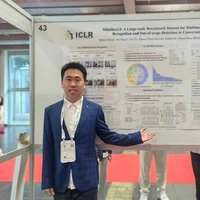
MIntRec2.0: A Large-scale Benchmark Dataset for Multimodal Intent Recognition and Out-of-scope Detection in Conversations

Multimodal intent recognition poses significant challenges, requiring the incorporation of non-verbal modalities from real-world contexts to enhance the comprehension of human intentions. Existing benchmark datasets are limited in scale and suffer from difficulties in handling out-of-scope samples that arise in multi-turn conversational interactions. We introduce MIntRec2.0, a large-scale benchmark dataset for multimodal intent recognition in multi-party conversations. It contains 1,245 dialogues with 15,040 samples, each annotated within a new intent taxonomy of 30 fine-grained classes. Besides 9,304 in-scope samples, it also includes 5,736 out-of-scope samples appearing in multi-turn contexts, which naturally occur in real-world scenarios. Furthermore, we provide comprehensive information on the speakers in each utterance, enriching its utility for multi-party conversational research. We establish a general framework supporting the organization of single-turn and multi-turn dialogue data, modality feature extraction, multimodal fusion, as well as in-scope classification and out-of-scope detection. Evaluation benchmarks are built using classic multimodal fusion methods, ChatGPT, and human evaluators. While existing methods incorporating nonverbal information yield improvements, effectively leveraging context information and detecting out-of-scope samples remains a substantial challenge. Notably, large language models exhibit a significant performance gap compared to humans, highlighting the limitations of machine learning methods in the cognitive intent understanding task. We believe that MIntRec2.0 will serve as a valuable resource, providing a pioneering foundation for research in human-machine conversational interactions, and significantly facilitating related applications. The full dataset and codes are available at https://github.com/thuiar/MIntRec2.0.

  • 9 authors
·
Mar 16, 2024

SpeakRL: Synergizing Reasoning, Speaking, and Acting in Language Models with Reinforcement Learning

Effective human-agent collaboration is increasingly prevalent in real-world applications. Current trends in such collaborations are predominantly unidirectional, with users providing instructions or posing questions to agents, where agents respond directly without seeking necessary clarifications or confirmations. However, the evolving capabilities of these agents require more proactive engagement, where agents should dynamically participate in conversations to clarify user intents, resolve ambiguities, and adapt to changing circumstances. Existing prior work under-utilize the conversational capabilities of language models (LMs), thereby optimizing agents as better followers rather than effective speakers. In this work, we introduce SpeakRL, a reinforcement learning (RL) method that enhances agents' conversational capabilities by rewarding proactive interactions with users, such as asking right clarification questions when necessary. To support this, we curate SpeakER, a synthetic dataset that includes diverse scenarios from task-oriented dialogues, where tasks are resolved through interactive clarification questions. We present a systematic analysis of reward design for conversational proactivity and propose a principled reward formulation for teaching agents to balance asking with acting. Empirical evaluations demonstrate that our approach achieves a 20.14% absolute improvement in task completion over base models without increasing conversation turns even surpassing even much larger proprietary models, demonstrating the promise of clarification-centric user-agent interactions.

  • 10 authors
·
Dec 15, 2025

A Multi-Agent Conversational Recommender System

Due to strong capabilities in conducting fluent, multi-turn conversations with users, Large Language Models (LLMs) have the potential to further improve the performance of Conversational Recommender System (CRS). Unlike the aimless chit-chat that LLM excels at, CRS has a clear target. So it is imperative to control the dialogue flow in the LLM to successfully recommend appropriate items to the users. Furthermore, user feedback in CRS can assist the system in better modeling user preferences, which has been ignored by existing studies. However, simply prompting LLM to conduct conversational recommendation cannot address the above two key challenges. In this paper, we propose Multi-Agent Conversational Recommender System (MACRS) which contains two essential modules. First, we design a multi-agent act planning framework, which can control the dialogue flow based on four LLM-based agents. This cooperative multi-agent framework will generate various candidate responses based on different dialogue acts and then choose the most appropriate response as the system response, which can help MACRS plan suitable dialogue acts. Second, we propose a user feedback-aware reflection mechanism which leverages user feedback to reason errors made in previous turns to adjust the dialogue act planning, and higher-level user information from implicit semantics. We conduct extensive experiments based on user simulator to demonstrate the effectiveness of MACRS in recommendation and user preferences collection. Experimental results illustrate that MACRS demonstrates an improvement in user interaction experience compared to directly using LLMs.

  • 6 authors
·
Feb 1, 2024

MMAT-1M: A Large Reasoning Dataset for Multimodal Agent Tuning

Large Language Models (LLMs), enhanced through agent tuning, have demonstrated remarkable capabilities in Chain-of-Thought (CoT) and tool utilization, significantly surpassing the performance of standalone models. However, the multimodal domain still lacks a large-scale, high-quality agent tuning dataset to unlock the full potential of multimodal large language models. To bridge this gap, we introduce MMAT-1M, the first million-scale multimodal agent tuning dataset designed to support CoT, reflection, and dynamic tool usage. Our dataset is constructed through a novel four-stage data engine: 1) We first curate publicly available multimodal datasets containing question-answer pairs; 2) Then, leveraging GPT-4o, we generate rationales for the original question-answer pairs and dynamically integrate API calls and Retrieval Augmented Generation (RAG) information through a multi-turn paradigm; 3) Furthermore, we refine the rationales through reflection to ensure logical consistency and accuracy, creating a multi-turn dialogue dataset with both Rationale and Reflection (RR); 4) Finally, to enhance efficiency, we optionally compress multi-turn dialogues into a One-turn Rationale and Reflection (ORR) format. By fine-tuning open-source multimodal models on the MMAT-1M, we observe significant performance gains. For instance, the InternVL2.5-8B-RR model achieves an average improvement of 2.7% across eight public benchmarks and 8.8% on the RAG benchmark Dyn-VQA, demonstrating the dataset's effectiveness in enhancing multimodal reasoning and tool-based capabilities. The dataset is publicly available at https://github.com/VIS-MPU-Agent/MMAT-1M.


  • 6 authors
·
Jul 29, 2025

DeepDialogue: A Multi-Turn Emotionally-Rich Spoken Dialogue Dataset

Recent advances in conversational AI have demonstrated impressive capabilities in single-turn responses, yet multi-turn dialogues remain challenging for even the most sophisticated language models. Current dialogue datasets are limited in their emotional range, domain diversity, turn depth, and are predominantly text-only, hindering progress in developing more human-like conversational systems across modalities. To address these limitations, we present DeepDialogue, a large-scale multimodal dataset containing 40,150 high-quality multi-turn dialogues spanning 41 domains and incorporating 20 distinct emotions with coherent emotional progressions. Our approach pairs 9 different language models (4B-72B parameters) to generate 65,600 initial conversations, which we then evaluate through a combination of human annotation and LLM-based quality filtering. The resulting dataset reveals fundamental insights: smaller models fail to maintain coherence beyond 6 dialogue turns; concrete domains (e.g., "cars," "travel") yield more meaningful conversations than abstract ones (e.g., "philosophy"); and cross-model interactions produce more coherent dialogues than same-model conversations. A key contribution of DeepDialogue is its speech component, where we synthesize emotion-consistent voices for all 40,150 dialogues, creating the first large-scale open-source multimodal dialogue dataset that faithfully preserves emotional context across multi-turn conversations.

  • 3 authors
·
May 26, 2025

Interactive Dialogue Agents via Reinforcement Learning on Hindsight Regenerations

Recent progress on large language models (LLMs) has enabled dialogue agents to generate highly naturalistic and plausible text. However, current LLM language generation focuses on responding accurately to questions and requests with a single effective response. In reality, many real dialogues are interactive, meaning an agent's utterances will influence their conversational partner, elicit information, or change their opinion. Accounting for how an agent can effectively steer a conversation is a crucial ability in many dialogue tasks, from healthcare to preference elicitation. Existing methods for fine-tuning dialogue agents to accomplish such tasks would rely on curating some amount of expert data. However, doing so often requires understanding the underlying cognitive processes of the conversational partner, which is a skill neither humans nor LLMs trained on human data can reliably do. Our key insight is that while LLMs may not be adept at identifying effective strategies for steering conversations a priori, or in the middle of an ongoing conversation, they can do so post-hoc, or in hindsight, after seeing how their conversational partner responds. We use this fact to rewrite and augment existing suboptimal data, and train via offline reinforcement learning (RL) an agent that outperforms both prompting and learning from unaltered human demonstrations. We apply our approach to two domains that require understanding human mental state, intelligent interaction, and persuasion: mental health support, and soliciting charitable donations. Our results in a user study with real humans show that our approach greatly outperforms existing state-of-the-art dialogue agents.

  • 4 authors
·
Nov 7, 2024

Towards Zero-Shot, Controllable Dialog Planning with LLMs

Recently, Large Language Models (LLMs) have emerged as an alternative to training task-specific dialog agents, due to their broad reasoning capabilities and performance in zero-shot learning scenarios. However, many LLM-based dialog systems fall short in planning towards an overarching dialog goal and therefore cannot steer the conversation appropriately. Furthermore, these models struggle with hallucination, making them unsuitable for information access in sensitive domains, such as legal or medical domains, where correctness of information given to users is critical. The recently introduced task Conversational Tree Search (CTS) proposes the use of dialog graphs to avoid hallucination in sensitive domains, however, state-of-the-art agents are Reinforcement Learning (RL) based and require long training times, despite excelling at dialog strategy. This paper introduces a novel zero-shot method for controllable CTS agents, where LLMs guide the dialog planning through domain graphs by searching and pruning relevant graph nodes based on user interaction preferences. We show that these agents significantly outperform state-of-the-art CTS agents (p<0.0001; Barnard Exact test) in simulation. This generalizes to all available CTS domains. Finally, we perform user evaluation to test the agent's performance in the wild, showing that our policy significantly (p<0.05; Barnard Exact) improves task-success compared to the state-of-the-art RL-based CTS agent.

  • 2 authors
·
Oct 8, 2024

Beyond Single-Turn: A Survey on Multi-Turn Interactions with Large Language Models

Recent advancements in large language models (LLMs) have revolutionized their ability to handle single-turn tasks, yet real-world applications demand sophisticated multi-turn interactions. This survey provides a comprehensive review of recent advancements in evaluating and enhancing multi-turn interactions in LLMs. Focusing on task-specific scenarios, from instruction following in diverse domains such as math and coding to complex conversational engagements in roleplay, healthcare, education, and even adversarial jailbreak settings, we systematically examine the challenges of maintaining context, coherence, fairness, and responsiveness over prolonged dialogues. The paper organizes current benchmarks and datasets into coherent categories that reflect the evolving landscape of multi-turn dialogue evaluation. In addition, we review a range of enhancement methodologies under multi-turn settings, including model-centric strategies (contextual learning, supervised fine-tuning, reinforcement learning, and new architectures), external integration approaches (memory-augmented, retrieval-based methods, and knowledge graph), and agent-based techniques for collaborative interactions. Finally, we discuss open challenges and propose future directions for research to further advance the robustness and effectiveness of multi-turn interactions in LLMs. Related resources and papers are available at https://github.com/yubol-cmu/Awesome-Multi-Turn-LLMs.

  • 7 authors
·
Apr 7, 2025

Evolutionary Perspectives on the Evaluation of LLM-Based AI Agents: A Comprehensive Survey

The advent of large language models (LLMs), such as GPT, Gemini, and DeepSeek, has significantly advanced natural language processing, giving rise to sophisticated chatbots capable of diverse language-related tasks. The transition from these traditional LLM chatbots to more advanced AI agents represents a pivotal evolutionary step. However, existing evaluation frameworks often blur the distinctions between LLM chatbots and AI agents, leading to confusion among researchers selecting appropriate benchmarks. To bridge this gap, this paper introduces a systematic analysis of current evaluation approaches, grounded in an evolutionary perspective. We provide a detailed analytical framework that clearly differentiates AI agents from LLM chatbots along five key aspects: complex environment, multi-source instructor, dynamic feedback, multi-modal perception, and advanced capability. Further, we categorize existing evaluation benchmarks based on external environments driving forces, and resulting advanced internal capabilities. For each category, we delineate relevant evaluation attributes, presented comprehensively in practical reference tables. Finally, we synthesize current trends and outline future evaluation methodologies through four critical lenses: environment, agent, evaluator, and metrics. Our findings offer actionable guidance for researchers, facilitating the informed selection and application of benchmarks in AI agent evaluation, thus fostering continued advancement in this rapidly evolving research domain.

  • 12 authors
·
Jun 6, 2025

InterMT: Multi-Turn Interleaved Preference Alignment with Human Feedback

As multimodal large models (MLLMs) continue to advance across challenging tasks, a key question emerges: What essential capabilities are still missing? A critical aspect of human learning is continuous interaction with the environment -- not limited to language, but also involving multimodal understanding and generation. To move closer to human-level intelligence, models must similarly support multi-turn, multimodal interaction. In particular, they should comprehend interleaved multimodal contexts and respond coherently in ongoing exchanges. In this work, we present an initial exploration through the InterMT -- the first preference dataset for multi-turn multimodal interaction, grounded in real human feedback. In this exploration, we particularly emphasize the importance of human oversight, introducing expert annotations to guide the process, motivated by the fact that current MLLMs lack such complex interactive capabilities. InterMT captures human preferences at both global and local levels into nine sub-dimensions, consists of 15.6k prompts, 52.6k multi-turn dialogue instances, and 32.4k human-labeled preference pairs. To compensate for the lack of capability for multi-modal understanding and generation, we introduce an agentic workflow that leverages tool-augmented MLLMs to construct multi-turn QA instances. To further this goal, we introduce InterMT-Bench to assess the ability of MLLMs in assisting judges with multi-turn, multimodal tasks. We demonstrate the utility of \InterMT through applications such as judge moderation and further reveal the multi-turn scaling law of judge model. We hope the open-source of our data can help facilitate further research on aligning current MLLMs to the next step. Our project website can be found at https://pku-intermt.github.io .

  • 15 authors
·
May 29, 2025

Synthetic Dialogue Dataset Generation using LLM Agents

Linear programming (LP) problems are pervasive in real-life applications. However, despite their apparent simplicity, an untrained user may find it difficult to determine the linear model of their specific problem. We envisage the creation of a goal-oriented conversational agent that will engage in conversation with the user to elicit all information required so that a subsequent agent can generate the linear model. In this paper, we present an approach for the generation of sample dialogues that can be used to develop and train such a conversational agent. Using prompt engineering, we develop two agents that "talk" to each other, one acting as the conversational agent, and the other acting as the user. Using a set of text descriptions of linear problems from NL4Opt available to the user only, the agent and the user engage in conversation until the agent has retrieved all key information from the original problem description. We also propose an extrinsic evaluation of the dialogues by assessing how well the summaries generated by the dialogues match the original problem descriptions. We conduct human and automatic evaluations, including an evaluation approach that uses GPT-4 to mimic the human evaluation metrics. The evaluation results show an overall good quality of the dialogues, though research is still needed to improve the quality of the GPT-4 evaluation metrics. The resulting dialogues, including the human annotations of a subset, are available to the research community. The conversational agent used for the generation of the dialogues can be used as a baseline.

  • 5 authors
·
Jan 30, 2024

VSearcher: Long-Horizon Multimodal Search Agent via Reinforcement Learning

Large models are increasingly becoming autonomous agents that interact with real-world environments and use external tools to augment their static capabilities. However, most recent progress has focused on text-only large language models, which are limited to a single modality and therefore have narrower application scenarios. On the other hand, multimodal large models, while offering stronger perceptual capabilities, remain limited to static knowledge and lack the ability to access and leverage up-to-date web information. In this paper, we propose VSearcher, turning static multimodal model into multimodal search agent capable of long-horizon, multi-turn tool use in real-world web environments, including text search, image search, and web browsing, via reinforcement learning. Specifically, we introduce Iterative Injection Data Synthesis pipeline to generate large-scale, complex multimodal QA questions, which are further filtered with comprehensive metrics to ensure high quality and sufficient difficulty. We then adopt an SFT-then-RL training pipeline to turn base multimodal models to agent capable of multi-turn tool calling in real-world web environments. Besides, we propose a multimodal search benchmark MM-SearchExam dedicated to evaluating search capabilities of multimodal search agents, which proves highly challenging for recent proprietary models. Extensive evaluations across multiple multimodal search benchmarks reveal effectiveness of our method. VSearcher achieves superior performance compared to recent multimodal search agents and even surpasses several proprietary models on multimodal web search tasks.

  • 5 authors
·
Mar 3

NExT-GPT: Any-to-Any Multimodal LLM

While recently Multimodal Large Language Models (MM-LLMs) have made exciting strides, they mostly fall prey to the limitation of only input-side multimodal understanding, without the ability to produce content in multiple modalities. As we humans always perceive the world and communicate with people through various modalities, developing any-to-any MM-LLMs capable of accepting and delivering content in any modality becomes essential to human-level AI. To fill the gap, we present an end-to-end general-purpose any-to-any MM-LLM system, NExT-GPT. We connect an LLM with multimodal adaptors and different diffusion decoders, enabling NExT-GPT to perceive inputs and generate outputs in arbitrary combinations of text, images, videos, and audio. By leveraging the existing well-trained highly-performing encoders and decoders, NExT-GPT is tuned with only a small amount of parameter (1%) of certain projection layers, which not only benefits low-cost training and also facilitates convenient expansion to more potential modalities. Moreover, we introduce a modality-switching instruction tuning (MosIT) and manually curate a high-quality dataset for MosIT, based on which NExT-GPT is empowered with complex cross-modal semantic understanding and content generation. Overall, our research showcases the promising possibility of building an AI agent capable of modeling universal modalities, paving the way for more human-like AI research in the community.

  • 5 authors
·
Sep 11, 2023 14